


OSU Ag scientists exploring winter-hardy bermudagrass, safer wastewater and Oklahoma’s black bear populations
Monday, September 21, 2026
Media Contact: Alisa Gore | Office of Communications & Marketing, OSU Agriculture | 405-744-7115 | alisa.gore@okstate.edu
Oklahoma State University Agriculture is leading a four-year, United States Department of Agriculture-funded project to develop new selection methods and tools to breed bermudagrass varieties with improved winter hardiness.
These tools could significantly shorten the breeding and field-testing process while helping reduce management costs for the turfgrass industry.
OSU has partnered with Kansas State University on the $616,000 grant project, which is funded by the USDA-National Institute of Food and Agriculture and is one of 18 public plant-breeding projects nationwide sharing $10.2 million in NIFA funding.
In Oklahoma, severe cold can cause winterkill, resulting in bare or damaged turf that is expensive and time-consuming to repair.
The OSU turfgrass breeding program produces about 50,000 potential varieties each year, but only 1,000 to 2,000 of those will move on to field trials. Dr. Shuhao Yu, assistant professor in the OSU Department of Horticulture and Landscape Architecture, said current selection processes are slow and imprecise, allowing valuable cold-hardiness traits to be discarded before they are fully evaluated.
The research team will develop selection methods called marker-assisted selection and genomic selection, which use DNA information to identify promising genetic lines rather than relying on observed physical characteristics for selecting varieties. This will enable faster, more accurate evaluation and development of future varieties.
A genome is the instruction manual that tells a living thing how to function and reproduce. Marker-assisted selection looks for a specific set of instructions (markers) in the DNA that are linked to a single, well-known trait, such as freeze tolerance. Genomic selection examines thousands of DNA markers across the entire genome simultaneously. Together, these two approaches will increase selection accuracy and efficiency in bermudagrass breeding.
Yu estimates the improved screening could improve selection accuracy and potentially shorten the breeding process, which often takes close to a decade to complete. For breeders, this could mean less land, labor and money spent evaluating low-potential plants. For golf courses, parks, schools, sports facilities and homeowners, it could mean earlier access to varieties that carry less risk of costly winter damage.
“Continued development and integration of advanced selection technologies into our breeding program will improve both the accuracy and efficiency of cultivar development and accelerate the release of superior winter-hardy bermudagrass cultivars,” Yu said. “These improved cultivars will expand production opportunities for bermudagrass growers, generate significant economic benefits for the turfgrass industry and promote more sustainable turf management.”
This work is supported by the Agriculture and Food Research Initiative's Plant Breeding for Agricultural Production program area priority (A1141), project award no. 2026-67014-45977, from the U.S. Department of Agriculture's National Institute of Food and Agriculture
Making wastewater safer
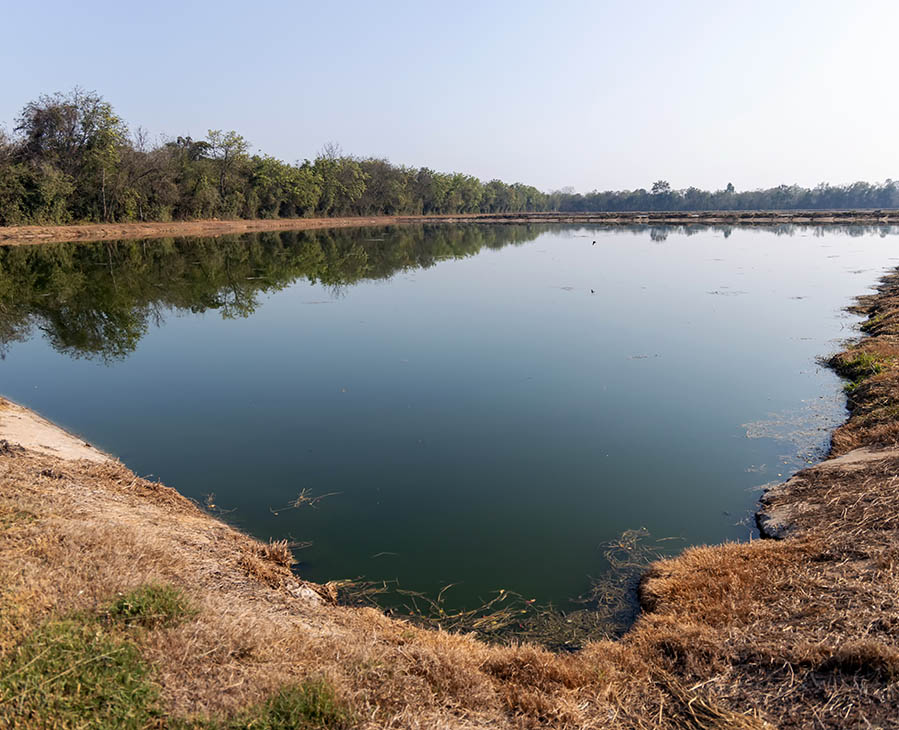
Antibiotics used to keep livestock healthy do not completely disappear from their system after use, said Dr. Kiranmayi Mangalgiri, assistant professor in the Department of Biosystems and Agricultural Engineering. Traces of the medication can remain in wastewater stored in farm lagoons. From there, the contamination can move beyond the farm into other waterways and food, contributing to the spread of antibiotic resistance in animals and people.
Mangalgiri and Dr. Douglas Hamilton of Biosystems and Agricultural Engineering and Dr. Mark Krzmarzick of the Department of Civil and Environmental Engineering are studying whether ozone, a gas used for disinfection, can be carried in nanobubbles to remove these contaminants.
Ozonation is a wastewater treatment method that injects ozone into wastewater to remove contaminants and impurities. Nanobubbles are small gas cavities suspended in liquid. They are much smaller than the conventional cavities used in ozonation and stay suspended longer, giving the ozone more time to dissolve and react in the water.
Mangalgiri’s research team will compare the two treatment types using laboratory-prepared water and wastewater collected from swine lagoons. By measuring how quickly four antibiotics and several resistance genes break down, the researchers will determine whether nano-ozone offers a practical way to make farm wastewater safer to reuse and limit the spread of antimicrobial resistance beyond livestock operations.
This work is supported by the U.S. Department of Agriculture under award 2026-67022-46023 for $299,999.
Looking at black bear populations in the Ozark region
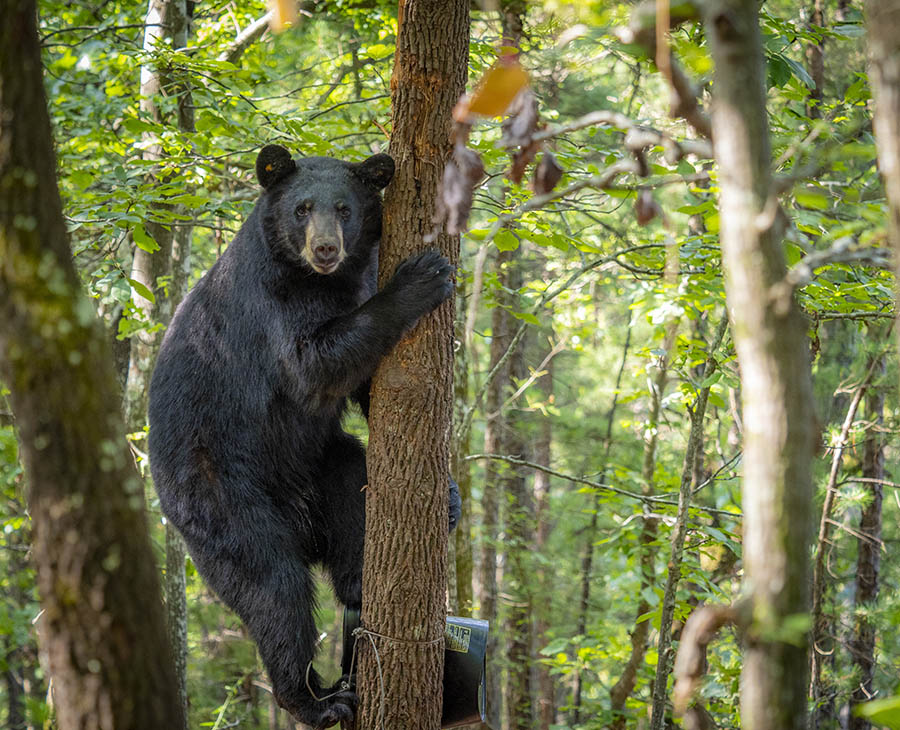
Black bears began returning to eastern Oklahoma in the 1980s after disappearing from the state early in the 20th century. They are now established in the Ouachita Mountains of southeastern Oklahoma and occur in the Ozark region farther north in Oklahoma.
The Ouachita population supports a limited hunting season, while the smaller and more isolated Ozark population raises the question of whether it has grown enough to support a sustainable harvest.
Dr. Robert Lonsinger of the U.S. Geological Survey Oklahoma Cooperative Fish and Wildlife Research Unit, researchers Dr. Sue Fairbanks and Dr. Omkar Joshi of the OSU Department of Natural Resource Ecology and Management and Dr. Dana Morin of Mississippi State University will spend four years examining both populations.
Long-term records from the Ouachita region will be used to model population growth under different monitoring strategies. In the Ozarks, hair collection stations, cameras and DNA analysis will help researchers estimate how many bears live there, the sex ratio, and how connected they are to bears in Arkansas and southeastern Oklahoma.
The project will also build upon a 2018 human dimensions study to see how attitudes, concerns and acceptance of alternative management actions have changed as bear populations have expanded. Pairing those responses with updated population estimates will give wildlife managers a stronger basis for setting harvest limits and deciding where public outreach is most needed.
This work is supported by the Oklahoma Department of Wildlife Conservation with an award of $262,840.