

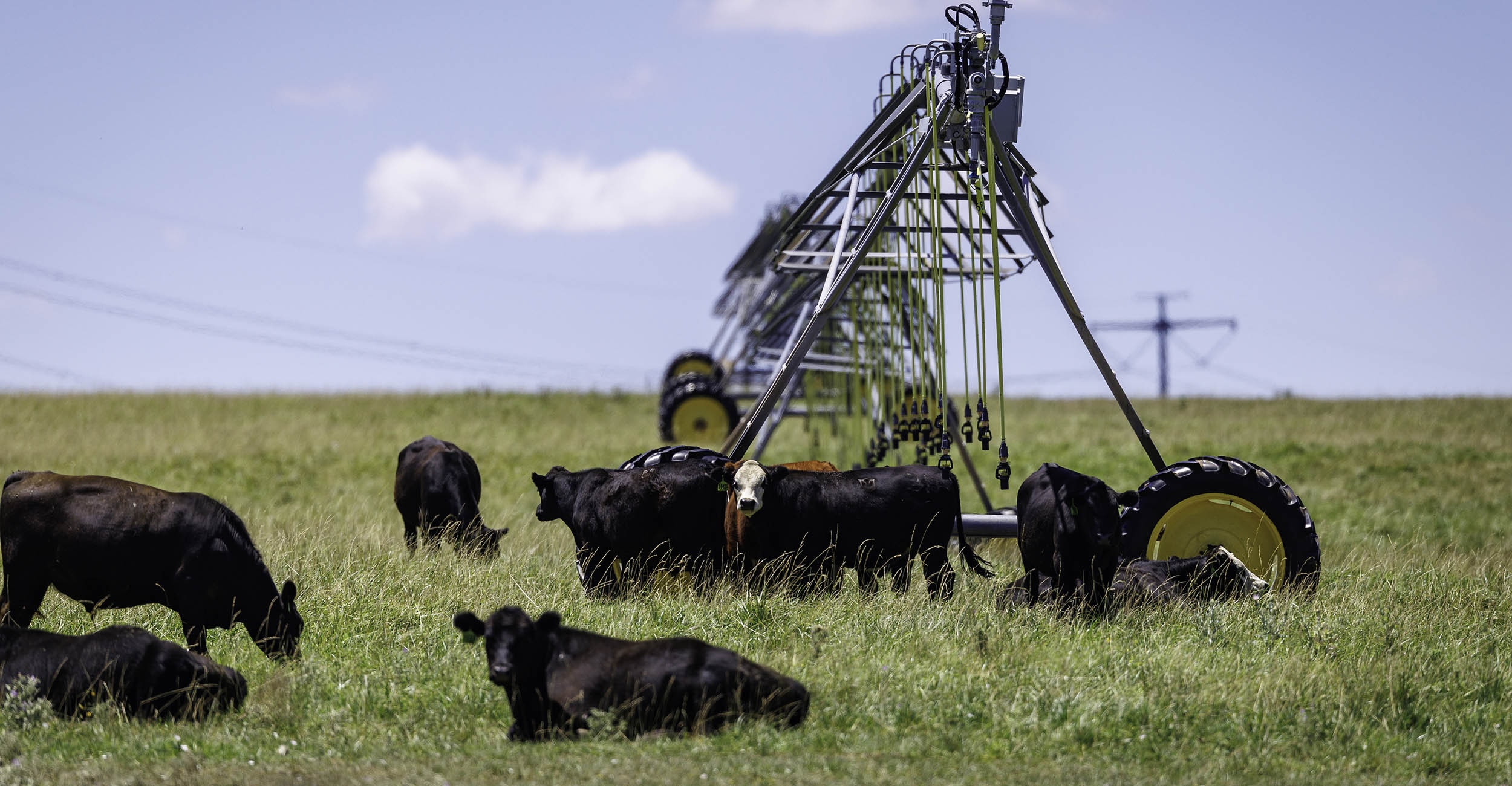
Research shows severe temperatures in the southeast impact cattle production
Tuesday, September 1, 2026
Media Contact: Alisa Gore | Office of Communications & Marketing, OSU Agriculture | 405-744-7115 | alisa.gore@okstate.edu
Reduced rainfall and weeks of hot, even record-breaking temperatures are decreasing forage production and the nutritional quality of forage for cattle, potentially impacting their health and production.
Dr. Paul Beck, professor of animal and food sciences and OSU Extension beef nutrition specialist, and his son, Dr. Matt Beck, assistant professor of beef cattle nutrition at Texas A&M, are examining these effects and highlighting management practices to maintain productive and resilient herds during drought conditions. Poor nutrient availability and heat stress can affect fetal health and development, as well as calves’ early life.
The two researchers recently co-authored a paper recommending the use of smaller, mature cows to better fit our pasture and range environment.
“During a good year, when we have rainfall and plenty of grass, having a flexible stocking rate with the base cowherd stocked at a very conservative rate and some kind of stocker program gives producers options for managing drought conditions,” Paul Beck said. “They can graze grow steers, take in cattle from another producer to develop heifers or buy thin cows and graze them for resale later. There are several options that producers can use to add value but maintain flexibility.”
As a cow’s size increases, the maintenance required increases. Every additional 100 pounds of mature cow body weight requires 500 pounds or more of additional forage per year, and only increases the weaning weight by less than 20 pounds. The cost of the additional weaned weight does not offset the cost of the increased forage requirements.
During dry years, the difference is especially important, as smaller cows require less forage to maintain health and produce larger calves than larger cows do, Paul Beck said, highlighting that setting appropriate stocking rates is an important drought management tool.
Rather than stocking pastures for the most favorable years, producers could set consistent stocking rates based on a dry year’s forage production. In doing so, producers will not have to cull (remove) productive, high-quality cattle due to poor climate and forage conditions. This reduces the need to sell in a bad year and buy back during a good year. This approach creates lower headcounts but more efficient production.
“When drought occurs, you have a hierarchy of animals you can get rid of without having to cull your base cow herd. Destocking is often delayed in droughts because when producers need to start culling, they’re resistant to culling their core cows,” Beck said.
The two researchers said intensifying production may also provide an opportunity for stronger returns. With cow-calf production at an all-time high, producers are generating more income. Still, if they invest in infrastructure and alternative feeding systems for cattle in confinement, they will be less reliant on pasture during challenging conditions.
“Heat and drought conditions are only becoming more frequent in the southeast and Great Plains states,” Matthew Beck said. “Preparing for a dry climate allows producers to remain consistent and have less of a negative impact on herd quality and quantity. Implementing small, mature-sized cows, reducing stocking rates and improving infrastructure can help producers better prepare to withstand the conditions.”
Producers seeking more information on these methods can contact Paul Beck at paul.beck@okstate.edu or Matthew Beck at matthew.beck@ag.tamu.edu, or can read their findings online at sciencedirect.com under the title Effects of climate change on long-term resilience of beef cattle production and potential management strategies for producers to overcome these challenges.
Earlier this year, OSU launched the Beef Center of Excellence, which is a cornerstone of the university’s broader Animal Excellence initiative, to help fund impactful research and outreach for the beef industry. Supported by an advisory board, the Beef Center of Excellence will bring OSU and industry experts together to solve some of the toughest problems in the cattle industry.
Story By: Taylor Yount, student in agricultural communications | taylor.yount@okstate.edu