

OSU undergraduate researchers help uncover how bacteria respond to light
Wednesday, October 7, 2026
Media Contact: Jet Turner | Associate Director of Marketing and Communications | 405-744-9559 | jet.b.turner@okstate.edu
Key Facts
- Nine Oklahoma State University undergraduate researchers contributed to a published study examining how bacteria use light to influence their behavior.
- OSU undergraduates used bioinformatics tools, analyzed genes, documented findings and discussed results alongside faculty and graduate researchers.
- The OSU research team analyzed 984 genes encoding photoreceptor proteins, linking light sensing to bacterial movement and biofilm formation.
- Undergraduate research on bacterial photoreceptors continues through collaboration between OSU’s microbiology and molecular genetics and physics departments.
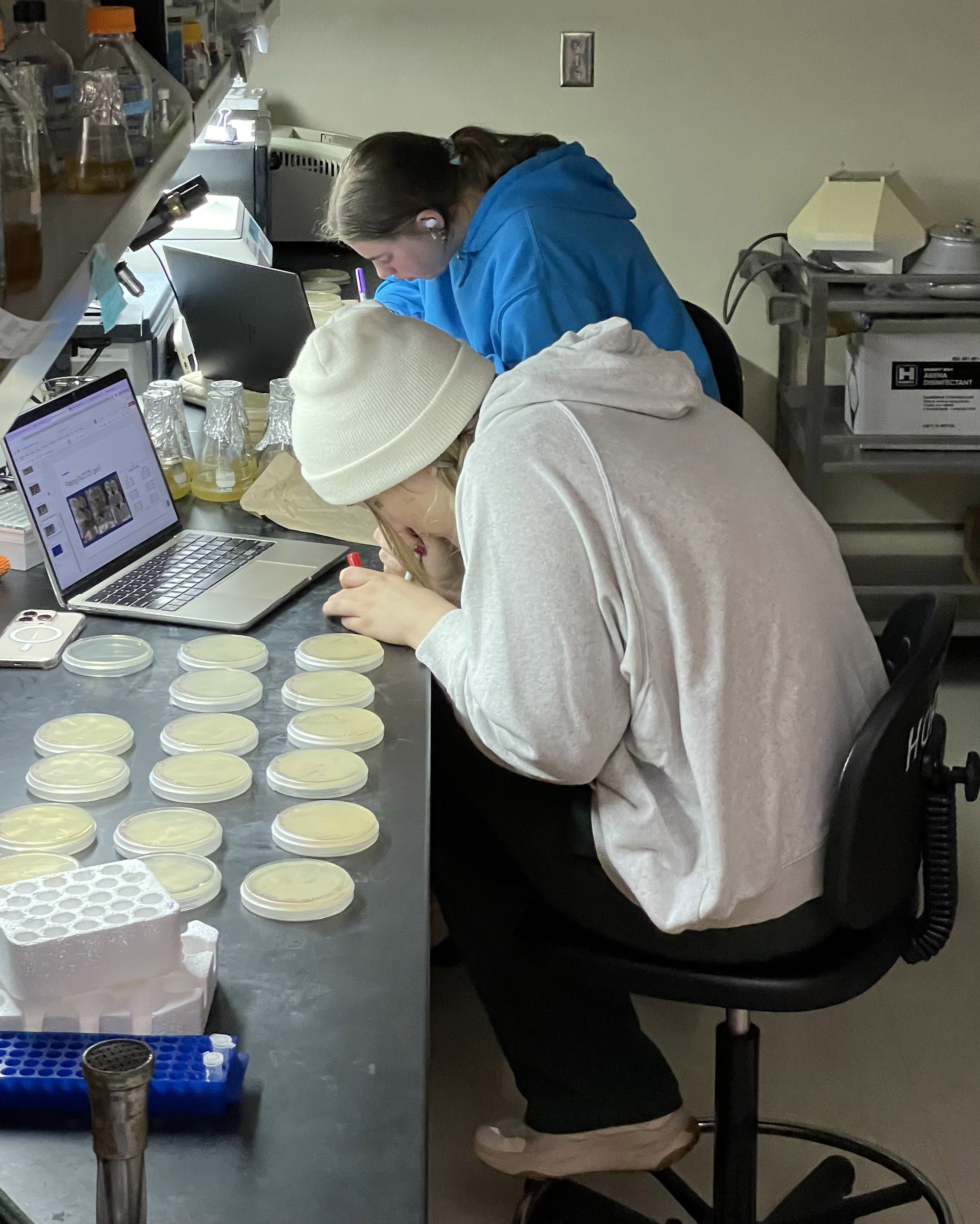
A team of Oklahoma State University undergraduate researchers helped uncover new information about how bacteria sense and respond to light, resulting in a recently published study in the “Journal of Bacteriology.”
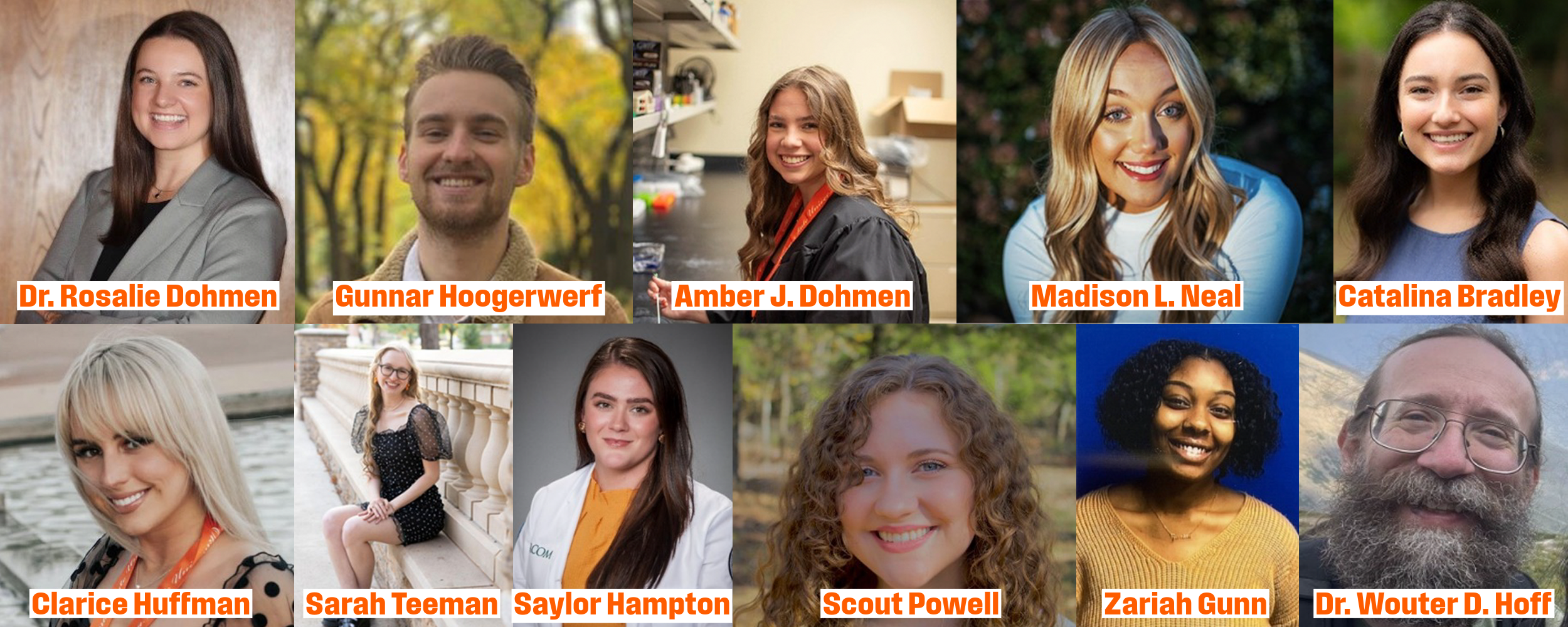
Nine undergraduate students worked alongside Dr. Wouter Hoff, a professor in the OSU Department of Microbiology and Molecular Genetics, and then-doctoral student Dr. Rosalie Dohmen to understand how bacteria use light to influence their behavior.
Many bacteria contain photoreceptor proteins that allow them to detect light, but exactly how that signal is transmitted through the cell and produces a response is not always understood.
The OSU team examined 984 genes encoding photoreceptor proteins, finding that many bacteria may use light signals to change how they move or whether they live independently or form communities known as biofilms.
The project started in 2021 during the COVID-19 pandemic. With traditional undergraduate research opportunities disrupted, Hoff developed the bioinformatics project to help students gain research experience while working remotely. This kicked off a yearslong project with students contributing to different parts of the research.
Gunnar Hoogerwerf, an international visiting undergraduate student from the Netherlands, developed computer code for analyzing protein families. Catalina Bradley, Clarice Huffman, Sarah Teeman and Scout Powell analyzed genes encoding photoreceptor proteins, while Zariah Gunn studied genes involved in producing the light-absorbing molecules that bind to those proteins.
Saylor Hampton studied the movement of bacteria identified through bioinformatics, and Amber Dohmen and Madison Neal helped experimentally study one of the photoreceptors identified by the team.
Huffman, who graduated from OSU in 2022 with degrees in biochemistry and microbiology, cell and molecular biology, said the experience showed her how much can be learned by examining how genes and proteins relate to each other instead of studying individual proteins in isolation.
“It was exciting to see how computational tools could reveal biological connections that might otherwise go unnoticed and generate new questions for future experimental research,” Huffman said.
The students didn’t just observe the research process. After identifying genes related to the photoreceptors, Hoff and Dohmen divided the analysis among the undergraduate researchers. Students used bioinformatics tools to study the genes, documented their findings and discussed their results through email and regular lab meetings.
“This experience showed me that scientific discoveries are built through collaboration, with different people contributing their own skills and perspectives to a larger question,” Huffman said. “Knowing that my work helped contribute to a published study is a meaningful reminder that even a seemingly small contribution to a larger project can help advance scientific knowledge.”
Dohmen played a key role in organizing the undergraduate research team, helping distribute research tasks, planning the timing of the projects and bringing the students’ findings together to reach scientific conclusions. She earned her doctorate under Hoff’s supervision in 2025.
For Hoff, providing students with the opportunity to make those discoveries is one of the most rewarding parts of his work at OSU.
“One of the great pleasures of being a faculty member at OSU is working with very enthusiastic undergraduate students as they are gaining knowledge and as they discover the process of scientific research and the excitement that comes from making scientific discoveries,” Hoff said.
The research didn't end with the publication. Undergraduate researcher Ethan Shepherd is continuing the project with Brenden Heise, a doctoral student in Hoff's lab, and Dr. Aihua Xie in OSU's Department of Physics, studying the structure and molecular mechanisms of one of the photoreceptor proteins identified by the team.
Undergraduate researchers Luke Echols and Henry Fonseca recently joined Hoff's lab and are now working alongside Shepherd on the project.
FAQ
-
Can undergraduate students participate in scientific research at Oklahoma State University?
Yes. OSU undergraduate students can work alongside faculty and graduate researchers on scientific research. Nine undergraduates contributed to this study, conducting bioinformatics and experimental research that resulted in a publication in the Journal of Bacteriology.”
-
What kind of research experience can OSU undergraduate students get in microbiology?
OSU undergraduate microbiology researchers can contribute directly to scientific projects through activities such as bioinformatics, gene analysis and experimental research. In this project, students analyzed genes and proteins, documented findings and discussed results during regular lab meetings.
-
Can undergraduate research at OSU lead to published scientific research?
Yes. Nine undergraduate researchers contributed to an OSU study on how bacteria sense and respond to light that was published in the “Journal of Bacteriology.” Their individual research assignments contributed to the team's larger scientific conclusions.
-
What did OSU researchers discover about how bacteria respond to light?
OSU researchers analyzed 984 genes encoding photoreceptor proteins and found that many bacteria may use light signals to change how they move or whether they live independently or form communities known as biofilms.
-
Are OSU undergraduate students continuing research on how bacteria respond to light?
Yes. OSU undergraduate researchers Ethan Shepherd, Luke Echols and Henry Fonseca are continuing the research in Dr. Wouter Hoff’s lab. The project also involves doctoral student Brenden Heise and Dr. Aihua Xie in OSU’s Department of Physics.