

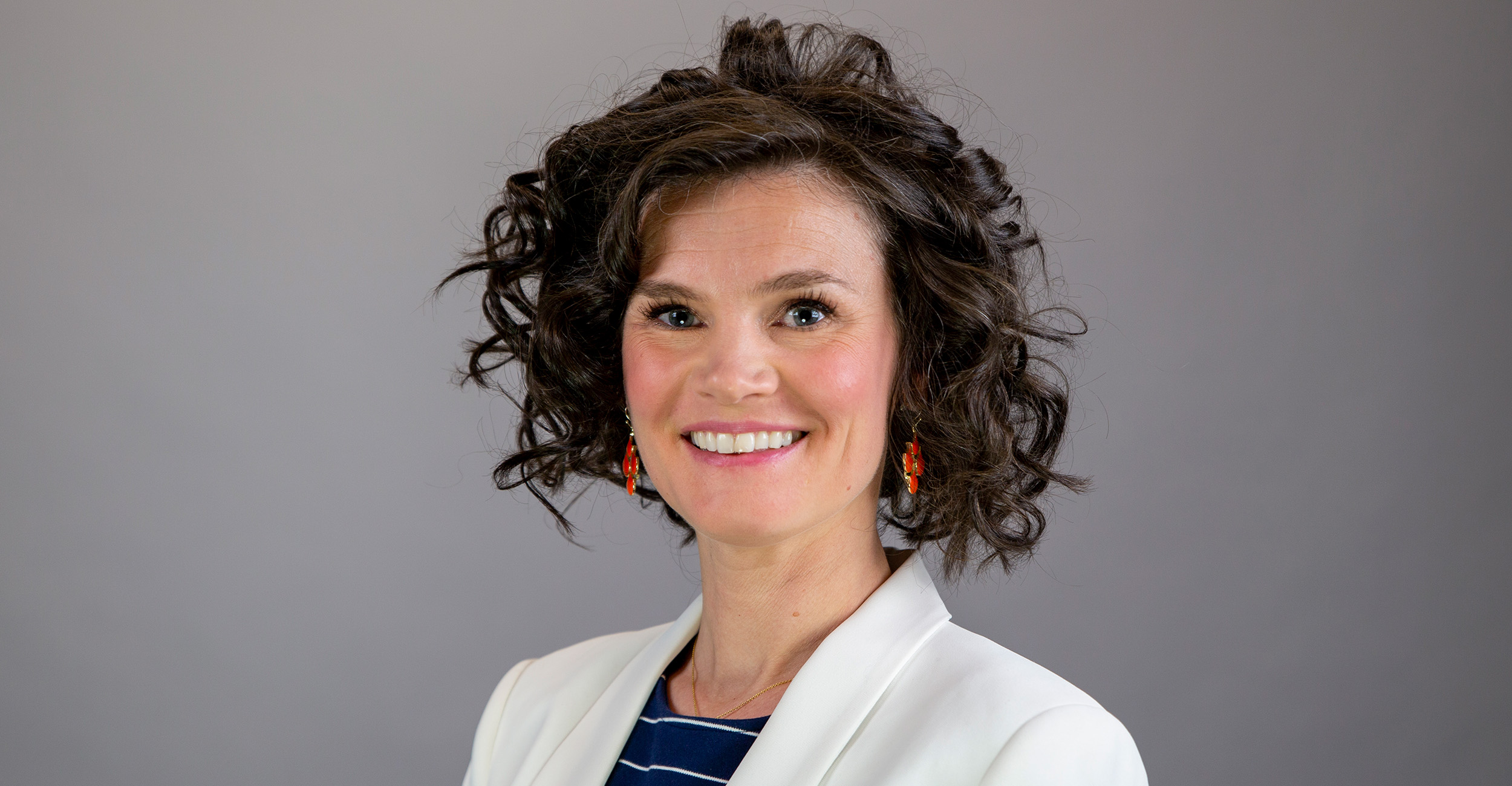
Porck wins OSU research award for studying impact of managers’ chronobiology on decision-making
Wednesday, March 25, 2026
Media Contact: Hallie Hart | Communications Coordinator | 405-744-1050 | hallie.hart@okstate.edu
Imagine you have a brilliant idea for improving your workplace.
That morning, you rush into the office and talk to your manager. You use reasoning that has worked in past meetings, yet this time, your manager takes no action to implement your suggestion.
Would the result have been better if you shared your input after lunch?
If your boss isn’t a morning person, maybe.
Dr. Jeanine Porck, an associate professor and William S. Spears Chair in the Spears School of Business Department of Management, conducts cutting-edge research to answer a practical question: “When is the optimal time to present an idea to your manager?”
Oklahoma State University is supporting her innovative mission.
After submitting a detailed proposal, Porck was selected as one of three winners of OSU’s 2026 President’s Fellows Faculty Research Award, receiving $20,000 to fund her project. OSU recognized the recipients March 24 during the Annual Researchers Reception, hosted by the Division of the Vice President for Research.
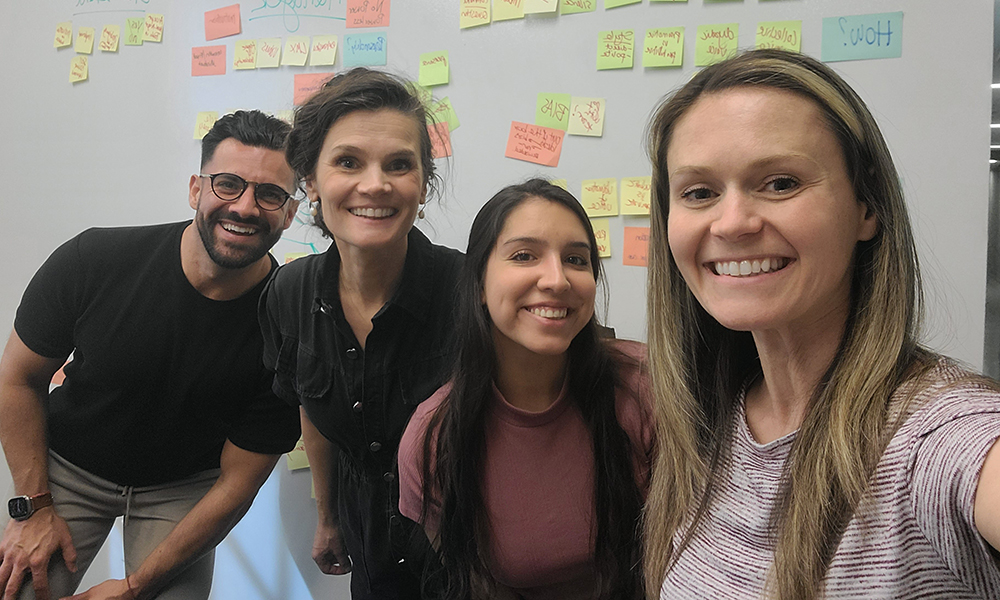
Porck will use the award to expand on prior research conducted with three Spears Business Ph.D. students. Dr. Rodrigo Tello, who works in Spears Business as the MBA program manager, has graduated with his Ph.D. since starting this collaboration with Porck, while Leslie Garza and Nikole Layton are working toward their Ph.D.s.
“With the award, we can actually do this next study, which is very exciting,” Porck said. That’s not just exciting for me. It is exciting because we expect groundbreaking findings. It is exciting because multiple Ph.D. students are involved and actually get to do this cutting-edge research. In addition to that, it’s exciting because we think the practical implications from this matter. They matter to managers, to organizations, and I hope we can even teach them to our students here at Spears.”
What will the award do?
The award enables the researchers to cover their primary expense: rings for managers to wear and the technology that tracks and securely stores their data.
Porck’s team is partnering with Oura Health, the Finnish company behind the wearable device called the Oura Ring. Academic institutions such as Stanford University and Harvard University have also incorporated Oura Rings into their research.
On a person’s hand, the ring appears simple and unobtrusive, more like a wedding band than a smart watch. However, when connected to its mobile app, the device provides health-based, data-driven insights that will inform Porck’s research.
Metrics include sleep quality, circadian rhythm, heart rate and stress level, all of which might influence a manager’s decision-making.
Porck’s proposal blends management research with chronobiology, the study of scientific cycles such as sleep.
“There is a lot of research on chronobiology and what the impact is of the moment in a day when you are most efficient and effective, when you’re sort of at your peak state,” Porck said. “But, almost none of that is done in the management field, so we know very little about how this impacts managers. We know managers matter a lot for organizations and for their teams, so that’s what makes this so interesting.”
How did the idea emerge?
Porck has been working on multiple research projects on managers and how they respond to employee input, or workplace voice.
In 2023, Tello, Garza and Layton collaborated with her on one of those projects, exploring the “what” and “how” of employee input sharing. She continued the research collaboration as Tello’s dissertation chair and supervisor, but the two sometimes found it tricky to schedule meetings.
Porck is a night owl who is most productive in the evenings. Tello is an early riser who goes to the gym and drinks coffee before sunup.
Although their preferred work times didn’t always align, their different routines planted the seed for the idea that became this research project.
Porck read a statistic in a Harvard Business Review article that 45% of managers do not act on ideas brought to them by employees, therefore missing out on chances for innovation. She wondered why. Later, on a cruise ship, Tello read “The Power of When” by Dr. Michael Breus, a book that uses chronobiology to help individuals create optimal routines.
The researchers created their light bulb moment by merging Tello’s “when” with Porck’s “why.” Their survey of more than 300 managers supported the idea that time of day does, in fact, correlate with managers’ levels of responsiveness.
In the study, managers who self-identified as morning people viewed employee requests as more urgent in the morning and less urgent later in the day. The opposite trend emerged for managers who self-identified as evening people.
What’s next?
Porck decided to dive deeper.
“We love those findings, but that is only one study,” Porck said. “That is never enough to fully prove your point in research. So, with this study, specifically, we want to follow up, and we want more data.”
For this project, the research team will gather data from managers’ surveys and from Oura Rings, which the managers will be instructed to wear.
Porck wants to keep the findings relevant to a wide audience, so she plans to survey managers from various industries and company sizes, much like the initial study did.
Of course, Porck noted that a manager’s chronobiology is not the only factor influencing receptiveness to employees’ ideas, but it is an often-overlooked variable.
The implications matter to everyone in a company, and it isn’t just about figuring out when to talk to your boss. A typical corporate workday starts at 8 a.m., but is that ideal if an office happens to be full of evening people?
The results of Porck’s groundbreaking research could inform a number of time-based workplace practices and policies.
“It’s interesting how we set our day assuming that everybody will show up the same way if we have a meeting at 4 o’clock,” Porck said. “Learning more about chronobiology, I don’t think that’s the case. If you want to make a very important decision, maybe you need to think about what is the right time to make that decision as well, rather than just what the decision is.”
Visit the website to discover more about Spears Research.