

Research snapshot: Discover how Spears Business is impacting the world
Monday, November 9, 2026
Media Contact: Hallie Hart | Communications Coordinator | 405-744-1050 | hallie.hart@okstate.edu
Key Facts
- Dr. Aman Kabra’s recent publication introduces a three-dimensional framework for evaluating experts in a group.
- Dr. Harounan Kazianga’s recent publication examines the lasting educational, economic and agricultural effects of a public health initiative in Burkina Faso.
- Dr. Matthew Coyne received a Great Wine Capitals grant to study the impact of natural elements on wine tourism and mental well-being.
Research begins with a question, and Spears School of Business faculty are finding answers to improve industries and lives.
Their insights offer guidance to teams making decisions in workplaces around the world. They reach winemakers from California to France. They also inform global medical practitioners about the long-term economic outcomes of a public health initiative in Burkina Faso.
Over the past year, Spears Business researchers at Oklahoma State University have published in top-tier journals, secured highly competitive grants and received recognition from prestigious institutions.
The core mission? Generate findings that impact the world, combining academic prestige with applied research.
Here are a few of the questions guiding recent Spears Business research achievements:
How does a group identify an expert?
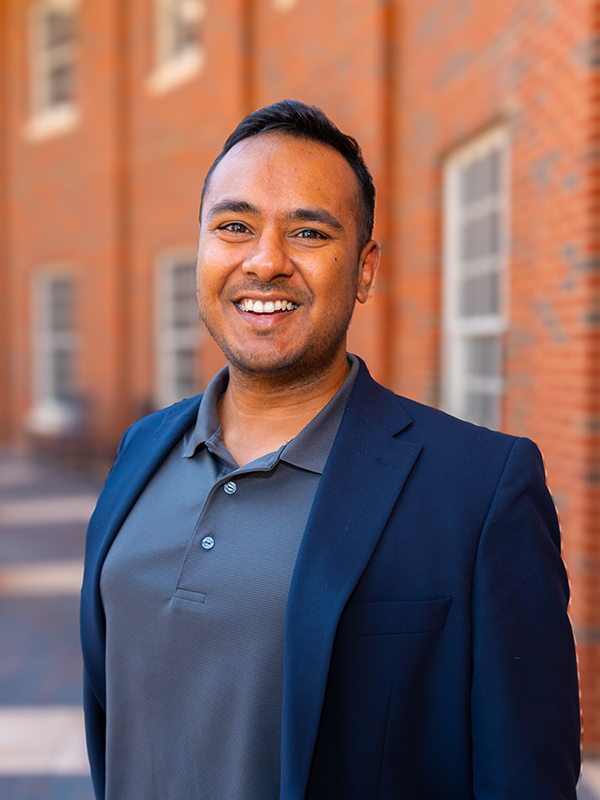
Dr. Aman Kabra could be considered an expert on evaluating experts.
His recent publication, “Expertise Evaluation: A Dimensional Framework for Broad-Based Theory Building,” appears in Organizational Behavior and Human Decision Processes, a Financial Times Top 50 journal.
Kabra, a new assistant professor in the Department of Management, and his co-authors developed a three-dimensional framework for understanding how groups evaluate expertise. Their findings have broad relevance to C-suites, military units, nonprofit organizations and any other workplace where teams make critical decisions.
“It’s more of an application-oriented approach that we wanted to take with this paper,” said Kabra, who earned his Ph.D. from Pennsylvania State University in May. “If organizations started using expertise more, imagine how the inefficiencies would lower.”
Developing expertise is only part of the challenge. Kabra notes that major companies like Google and Apple invest significant resources in employee training and education, but having expertise is not the same as knowing how to use it.
When team members gather to make a decision, how do they determine who knows the most about the issue at hand?
Identifying the right expert could make the difference between a successful project and a disastrous result, but peer pressure and bias can distort these judgments. For example, a team might associate age with expertise, even when the two don’t necessarily correlate.
Kabra said organizations can improve how they evaluate expertise by considering whether their judgments are based on perceptions or verified abilities, whom individuals are compared against and how group dynamics influence those judgments. A highly technical project might warrant careful verification of someone’s expertise, while a lower-stakes task might not require the same scrutiny.
Kabra’s framework captures these considerations through three dimensions: verification level, reference explicitness and degree of interdependence.
And the expert might not be the highest-ranking employee in the room.
“I would not necessarily equate ‘leader’ with expertise,” Kabra said. “Those are very different games. The job of the leader, though, is identifying the expertise, and that’s where the paper comes in.”
How does public health affect educational and economic outcomes?
Around the world, many positive changes begin with healthcare advancements.
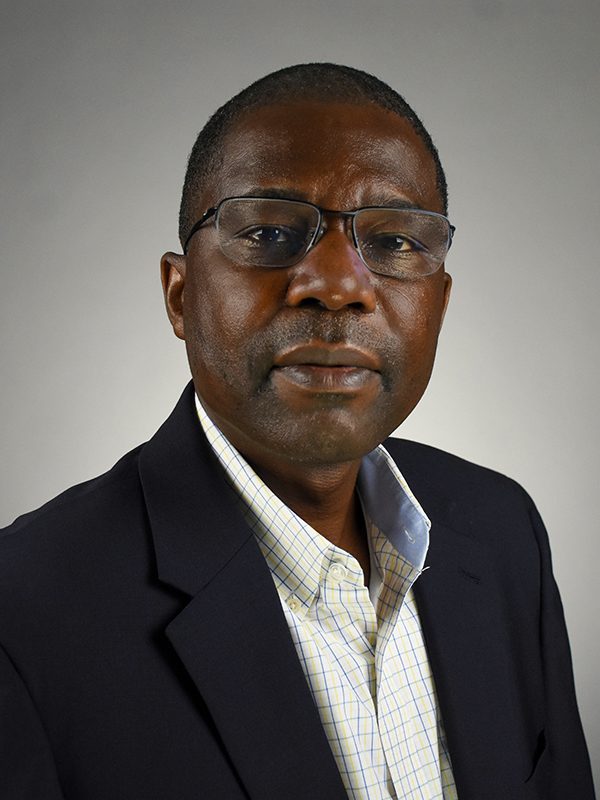
“We have the conventional wisdom that, in general, the healthier your population is, the better off you are,” said Dr. Harounan Kazianga, Carson Priority Professor in the Department of Economics. “But, it’s really hard to put a number on that.”
Kazianga’s recent publication shows it is possible.
He and his co-authors analyzed decades of data to measure the long-term impact of a public health initiative in the West African nation of Burkina Faso. Their paper, “The Lasting Effects of Early Childhood Interventions: The National Vaccine Commando Program in Burkina Faso,” appears in the Journal of Development Economics.
This spring, Kazianga’s work was recognized in an article by public-private health partnership Gavi, reaching a global audience.
In 1984, Burkina Faso introduced the Vaccination Commando Program, which raised the country’s vaccination rates from 17% to 77% against diseases such as measles, yellow fever and meningitis.
Kazianga and his co-authors not only focused on immediate effects like reduced child mortality, but also linked lasting educational, economic and agricultural outcomes to the public health program.
Comparing provinces with high participation rates in the VCP to those with low rates, their findings show an estimated 12% increase in formal sector employment and a 6.4% jump in agricultural productivity, as well as higher educational attainment.
Their study is one of the first to include agricultural outcomes in this type of analysis. Kazianga, who grew up in Burkina Faso and the adjacent country of Côte d’Ivoire, knew data on formal sector employment would not fully represent Burkina Faso’s economy.
“That’s a small fraction of your labor force,” Kazianga said. “You’re missing a lot of the benefit if you don’t account for the part of your labor force that will end up in the informal sector or in agriculture.”
While misinformation creates growing challenges around global healthcare, Kazianga’s work uses data to factually communicate the often-overlooked economic outcomes of public health initiatives.
He sees the importance of business research across disciplines.
“It’s essential,” Kazianga said. “As an economist, the greater the extent you can collaborate with practitioners and have your study inform decision-making, the more useful your research is.”
How does nature impact wine tourism?
Picture a group of tourists visiting a vineyard.
Everyone is tasting wine, but the beverage isn’t the only factor shaping the experience. What does the landscape look like? Are there hills to climb? What are the nearby sounds — birds chirping, wind whistling or water bubbling in a fountain?
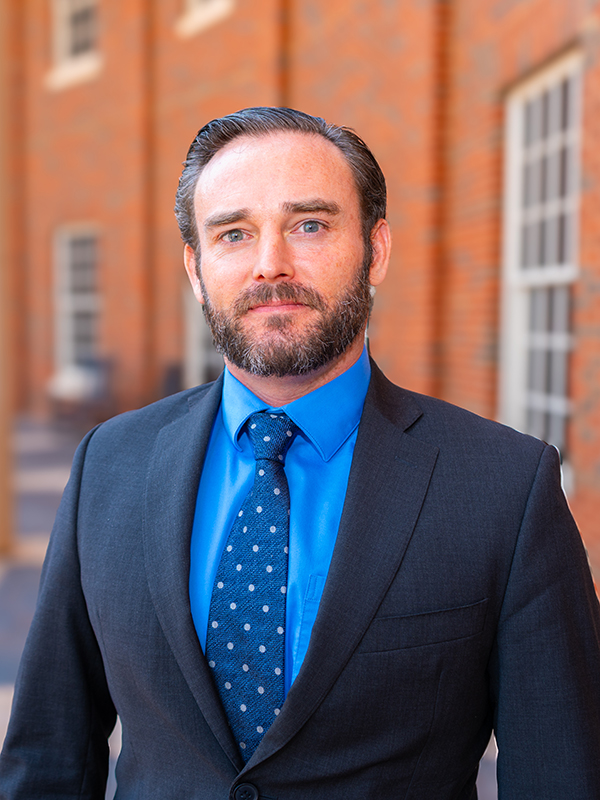
Dr. Matthew Coyne, assistant professor in the Spears Business School of Hospitality and Tourism Management, was awarded a Great Wine Capitals International Research Grant to study these natural elements of wine tourism. Coyne’s research proposal was one of only two selected from a pool of 31.
Through interviewing winemakers and tourists in Napa Valley, California, and Mendoza, Argentina, he strives to guide industry practitioners in improving winery design to facilitate positive guest experiences. His work is rooted in a concept called biophilic design, which brings people closer to the natural world through architecture.
“The core idea is that since humans evolved in nature, when we’re around nature, it tends to make us a little bit happier and less stressed out,” Coyne said. “This is something that has been studied in a wide variety of areas. Researchers have looked at how, if you’re recovering in a hospital, it can have positive effects if there are more plants and more greenery.”
Coyne said the concept also applies to servicescapes like hotels, where it’s common for fake trees or potted plants to spruce up a lobby.
At a vineyard, winemakers don’t need to decorate with artificial greenery. Natural elements are everywhere, but it’s up to industry practitioners to figure out how to build winery tours around those features. Coyne said a simple change, like adding a bench that invites visitors to stop at a scenic overlook, might improve perceptions of the whole tour.
Coyne’s grant of 7,500 euros will fund his field research. An additional 3,000 euros allow him to present his findings at a Great Wine Capitals conference with the chance to inform practices at wineries worldwide.
“These same principles would apply to any sort of hospitality experience that you would have at a winery, whether it’s your daily tour and tasting, or if it’s a wedding or special event,” said Coyne, a certified sommelier. “There can be some really rich ways to experience nature in some of the specialty events at wineries.”
Discover more
- What happens to a family business when a family member experiences a health crisis? Dr. Kincy Madison, professor in the School of Entrepreneurship, and her co-authors explore this topic in the Journal of Business Research.
- How does social exclusion manifest on the internet? Dr. Andy Luse, associate professor in the Department of Management Science and Information Systems, worked with a research team to create a scale for analyzing online social exclusion. Their findings are published in Decision Support Systems.
- How could business-to-business trade shows be less overwhelming for attendees? Dr. Courtney Suess Raeisinafchi, associate professor in the School of Hospitality and Tourism Management, examined the impact of biophilic design elements, such as greenery and wood flooring in booths, on participants’ well-being. She and her co-authors published their findings in the Journal of Hospitality and Tourism Research.
Frequently Asked Questions
-
What does research look like in OSU's Spears School of Business?
Oklahoma State University’s Spears School of Business is home to eight academic units, each with distinct research activities. Spears Business research intersects with disciplines that include healthcare, agriculture and cybersecurity, combining academic prestige with practical applications to improve industries and lives. Browse the Experts Directory to learn about specific faculty research interests.
-
Do Spears Business faculty publish in top journals?
Yes. In 2025, Spears Business faculty published 62 articles in A+ or A journals. Three academic units each produced seven A+ publications.
-
Is Spears Business research globally recognized?
Yes. For example, at No. 9 worldwide and No. 8 in the United States, the School of Entrepreneurship has climbed to its highest-ever ranking in the Global University Entrepreneurship Research Productivity Rankings. From 2014-23, Department of Management Science and Information Systems faculty produced the second-most articles in Decision Support Systems, a top-tier global journal. Visit the website to see the full list of rankings for programs and departments.
-
I am a student. When can I start doing research with Spears Business?
Students can begin research right when they set foot on campus. Through the Freshman Research Scholars Program, incoming freshmen can engage in cutting-edge research under the guidance of Spears Business faculty researchers. After freshman year, students have many other opportunities through faculty mentorship and events like SAS Analytics Day to compete and present research.
-
How do I learn more about Spears Business research?
Visit the website to learn more about research opportunities and achievements.