


Could the length of the night predict your next wildlife encounter?
Monday, October 26, 2026
Media Contact: Jordann Lucero | Media Relations Coordinator | 405-744-5827 | jordann.lucero@okstate.edu
Key Takeaways
- OSU researchers found that night length affects activity timing for some urban wildlife species, with responses differing by level of urbanization.
- Master’s student Kit Gurin is analyzing millions of time-stamped wildlife photos from more than 60 cities through the Urban Wildlife Information Network.
- About 30 cameras maintained by OSU’s Gilbert Quantitative Ecology Lab in Stillwater contribute wildlife observations to the international research network.
- Researchers hope understanding wildlife activity patterns can eventually help forecast higher-risk encounters between animals and people.
Using thousands of wildlife photos from cities around the world, OSU researchers are studying how changing night lengths affect animal behavior — and whether their findings could help predict reduce dangerous encounters
A gray fox. A bobcat. A raccoon.
When the sun goes down, these animals and all sorts of other critters come out around the Oklahoma State University campus, around the city of Stillwater and in communities worldwide.
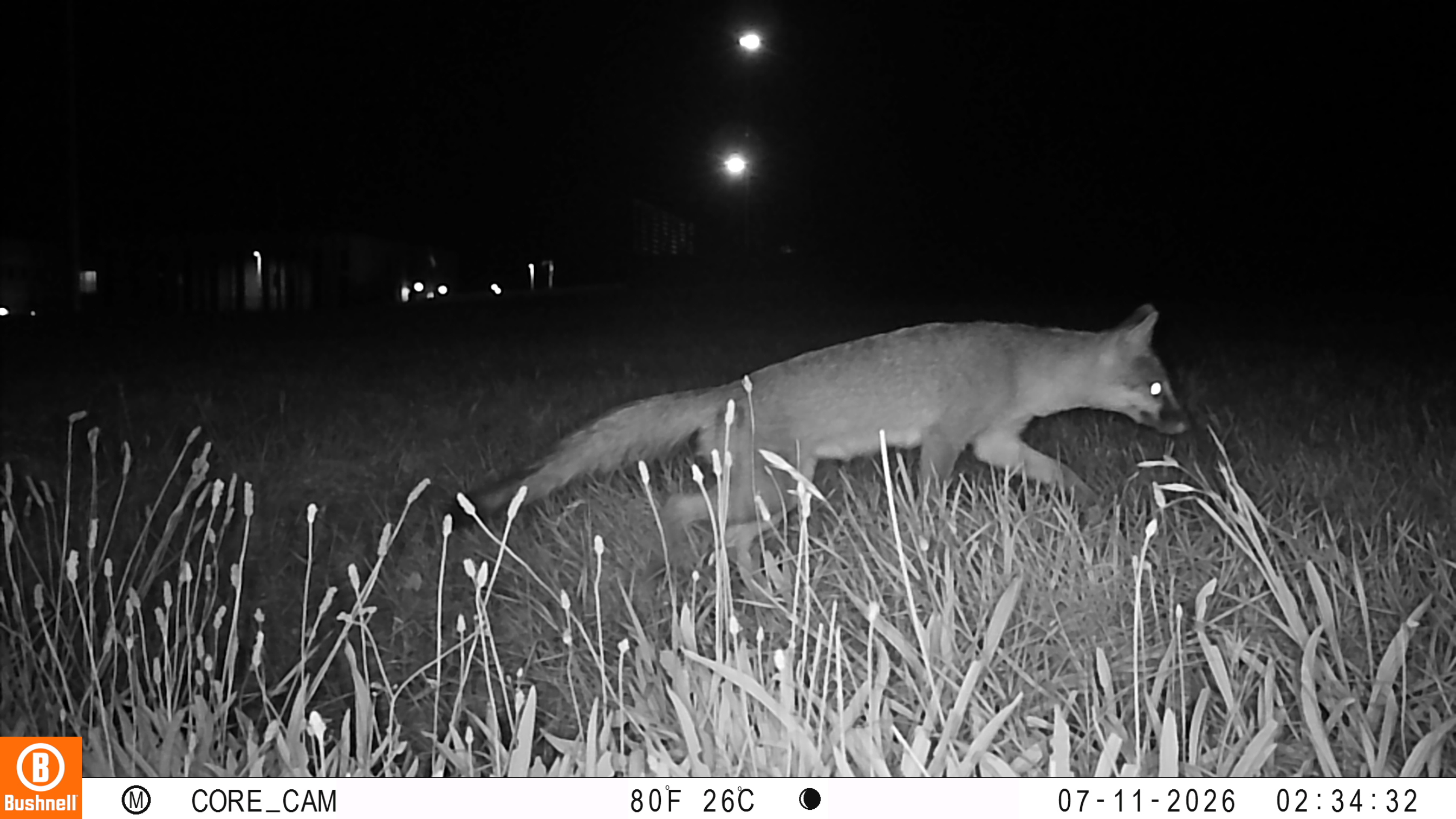
“There's been previous work that's shown that these animals are sort of taking the cover of night in urban areas,” said Dr. Neil Gilbert, an assistant professor of biology. “They're trying to avoid humans, but we still really don't know what the implications of that are.”
Research currently being done at OSU looks at how animal behavior might change if nights are longer or shorter. Researchers are hopeful this will lead to a future where animal encounters can be forecasted, and higher-risk forecasts can keep animals, and humans, safe. In the United States alone, the Federal Highway Administration estimates more than 1 million wildlife vehicle collisions injure more than 26,000 people every year.
“This night-length research is a piece of the puzzle that really no one has looked at until Kit,” Gilbert said.
Kit Gurin is a master’s student working under Gilbert in the College of Arts and Sciences’ Department of Biology. She’s focused on urban wildlife behavior.
“We overlap with wildlife, whether we see it or not, and as urbanization increases across the globe, then we overlap with animals even more. So it's important to study it now more than ever,” Gurin said.
OSU is an Urban Wildlife Information Network partner. This partnership gives Gurin access to a network of cameras in more than 60 cities, including about 30 cameras OSU's Gilbert Quantitative Ecology Lab maintains in Stillwater.
“We have millions of photos from all over the world that have these time stamps saying where the animal was and when they were there. We can use these time stamps and the locations from the photos to understand differences and how animals are using space and when, along a gradient of urbanization,” she said. “So, whether you're right downtown in the middle of Stillwater or right downtown in the middle of Chicago, versus in the suburbs or a little bit further out, are animals using those spaces differently?”
Caught on Camera Animals caught on camera traps around Stillwater
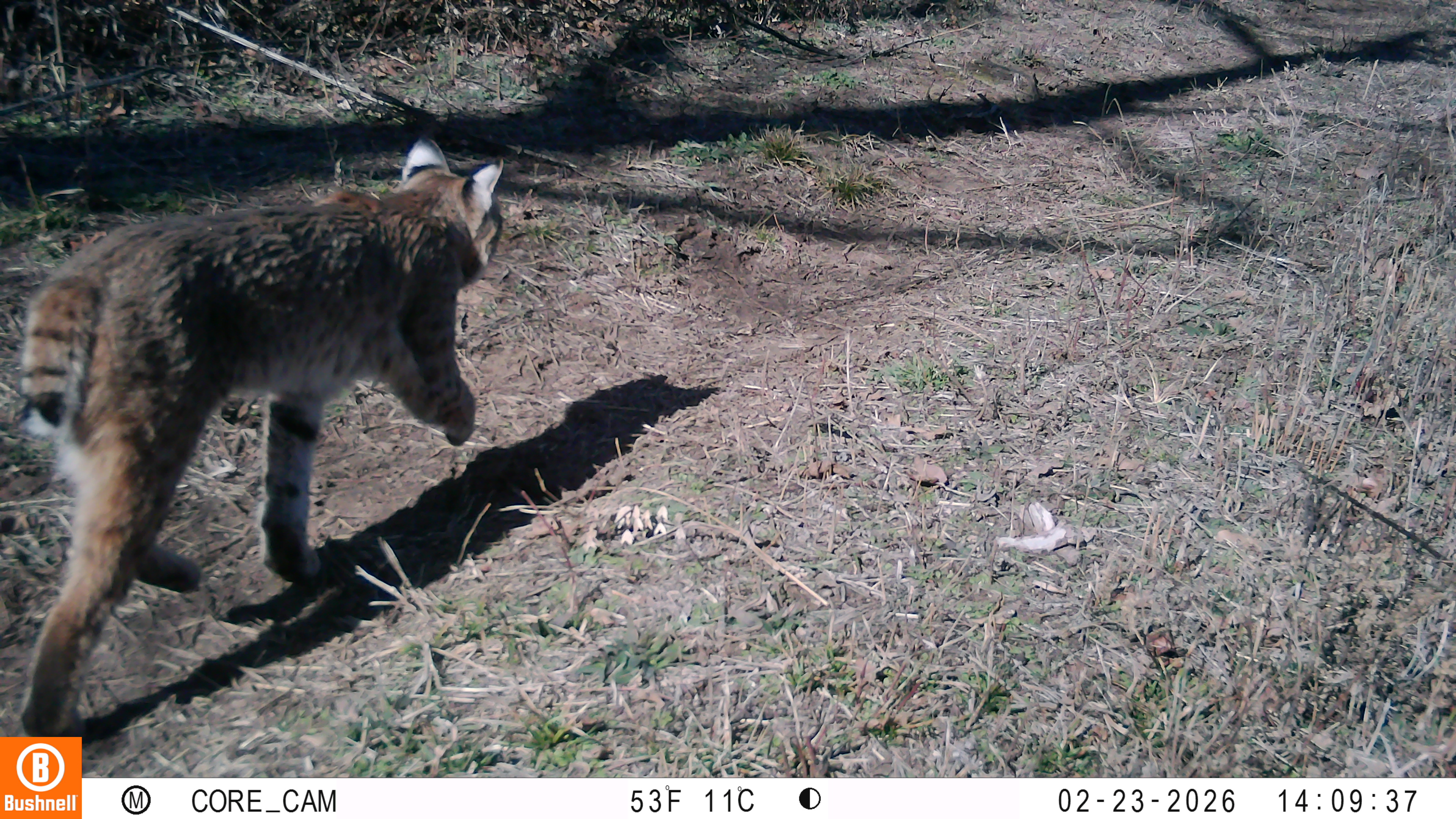
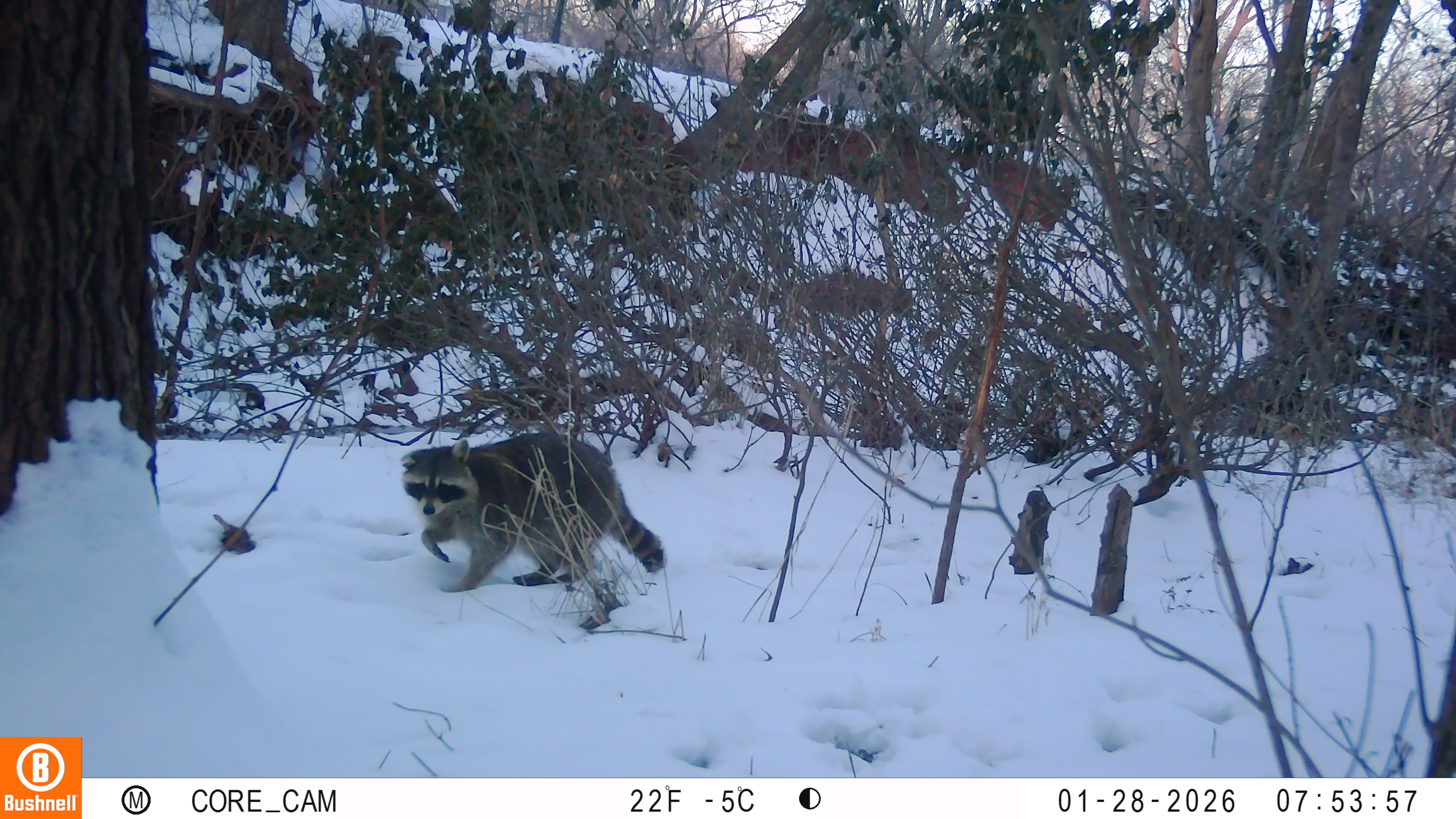
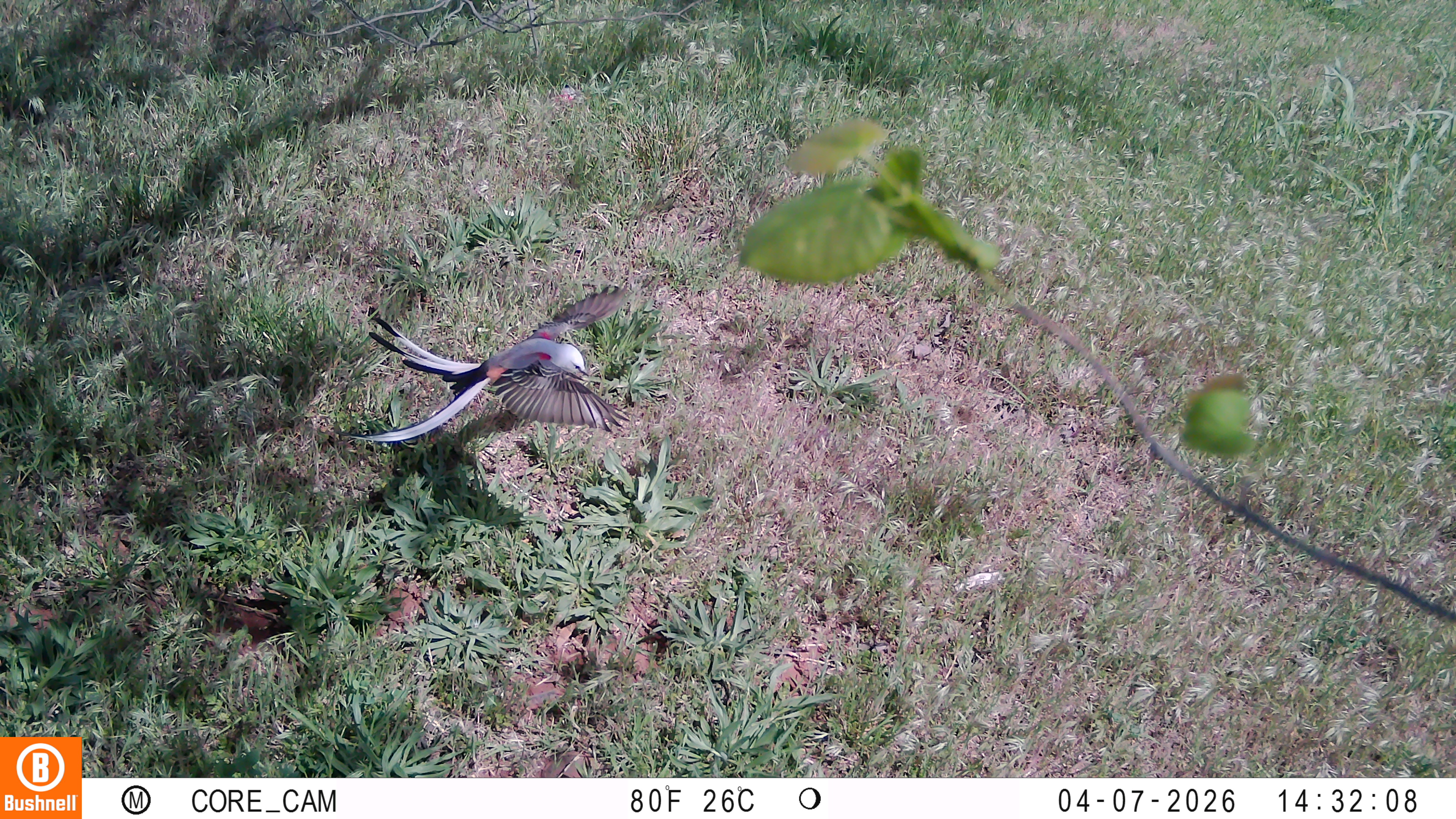
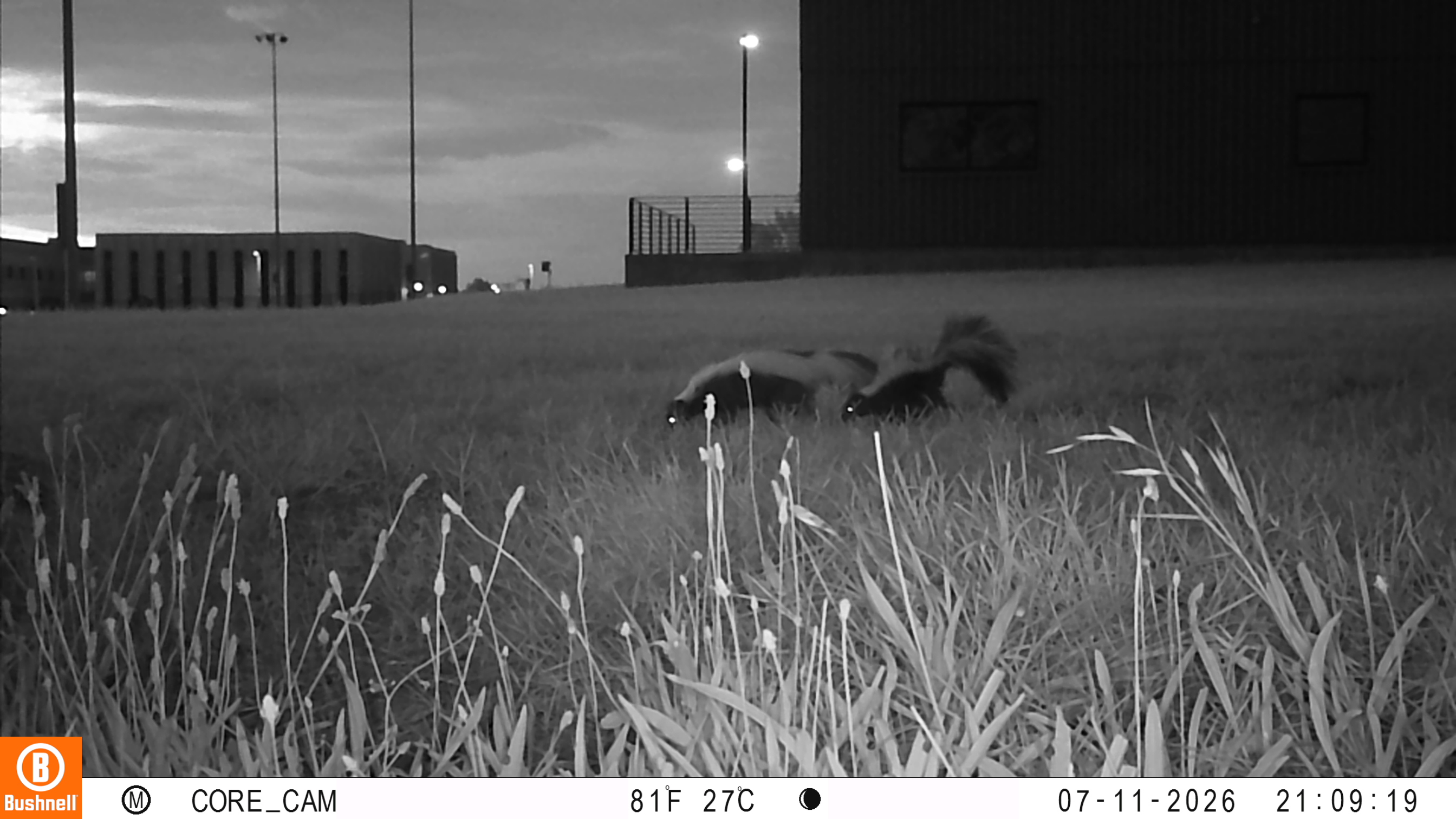
Gurin can compare activity in cities where nights might be much longer than they are in Oklahoma. For example, the project has a transect in Saskatoon, Saskatchewan, where winter nights can be nearly 15 hours long. Gurin can also draw on the ideas and expertise of other researchers in the network.
“It's fun to be on calls with these folks and talk to someone that's a scientist at a zoo who thinks about things very differently from me, an academic working at a university,” Gilbert said.
Gurin is finalizing her work and preparing to present her research as a finalist of OSU’s Three Minute Thesis competition this week.
While still in the analysis phase of the project, she has determined that, for some animals, night length makes a big difference in their behavior. For others, it doesn’t. It’s common for species and context to vary like that, she said.
“But the broad results are that night length influences these activity timing responses for some animals, and it influences their behavior differently whether you're in high urban areas or low urban areas,” she said.
Frequently Asked Questions
-
How does night length affect urban wildlife behavior?
OSU’s research indicates that night length influences activity timing for some wildlife species, while it makes little difference for others. The response also differs between areas with high and low levels of urbanization.
-
How is OSU studying urban wildlife activity?
OSU researchers are analyzing millions of wildlife photographs with timestamps and location information from the Urban Wildlife Information Network, which includes cameras in more than 60 cities. They use those records to examine when and where animals are active across different levels of urbanization.
-
Where does OSU collect wildlife camera data in Stillwater?
OSU’s Gilbert Quantitative Ecology Lab maintains about 30 cameras in Stillwater as part of the Urban Wildlife Information Network. The network allows researchers to compare Stillwater wildlife activity with observations from cities elsewhere.
-
Who is conducting OSU’s research on night length and urban wildlife?
Kit Gurin, an OSU master’s student studying urban wildlife behavior, is conducting the research under Dr. Neil Gilbert, an assistant professor of biology in the College of Arts and Sciences’ Department of Biology.
-
Could OSU’s research help predict dangerous wildlife encounters?
Researchers hope the findings can eventually contribute to forecasting when wildlife encounters are more likely. The current project is still in the analysis phase, so the article does not establish a working wildlife-encounter forecasting system.