

Driven to heal: How OSU students are turning passion for research into real-world impact
Monday, April 13, 2026
Media Contact: Jeff Hopper | Communications and Media Relations Manager | 405-744-5827 | jeff.hopper@okstate.edu
According to the National Center for Health Workforce Analysis, the United States will face a 12% shortage of approximately 128,000 health care workers across all specialties — including a 5,600-worker shortage in Oklahoma by 2030.
Oklahoma State University is committed to developing workforce-ready graduates prepared to meet those needs.
The OSU College of Arts and Sciences houses disciplines that turn research into real-world impact. From biotechnology and physiology to data-driven health sciences, faculty researchers and mentors guide students through hands-on research, collaborative partnerships and an educational structure that addresses the demands of an evolving workforce.
"The work happening across our college is a testament to what becomes possible when exceptional faculty, rigorous programs and passionate students come together with a shared sense of purpose,” said Dr. Melinda Cro, dean of the College of Arts and Sciences at OSU. “Oklahoma and the nation need health care professionals, researchers and problem-solvers who are ready to lead from day one — and our students aren't waiting until after graduation to answer that call. They're doing it right now, in our labs, in our classrooms and in their communities. That combination of hands-on opportunity, world-class mentorship and a deep spirit of service is what sets an education in OSU's College of Arts and Sciences apart, and it gives me tremendous pride and confidence in the future we are building together."
Students are working alongside experts to identify breakthroughs in auditory processing and health-related data analysis, while maintaining a dedication to the underlying theme of all fields of health care — helping people.
Answering the call for women’s health
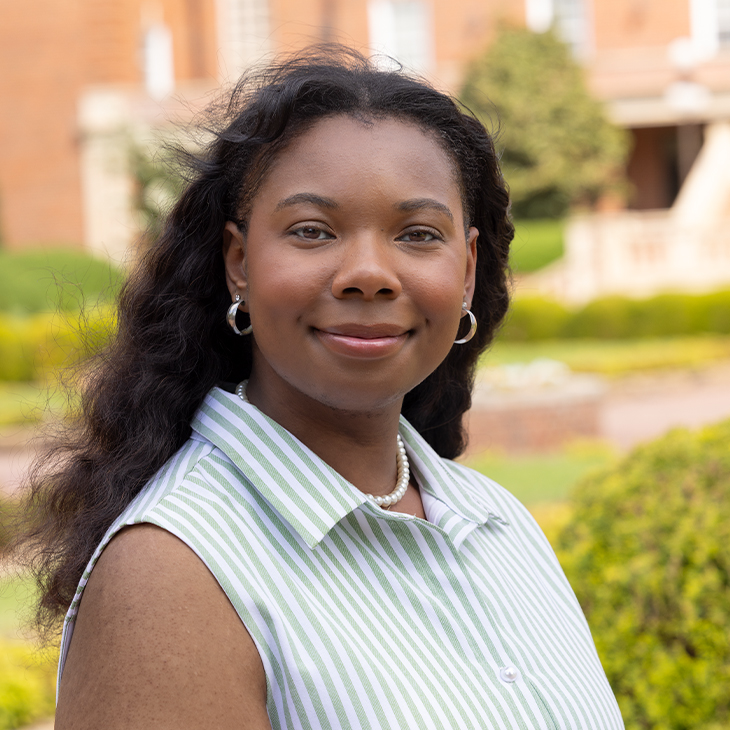
Chloe Watson-Fuller has always known two things since she was a kid: she wanted to pursue a career in medicine and attend OSU.
She grew up in close proximity to OSU-Tulsa’s downtown campus and constantly saw advertisements for both OSU-Tulsa and for OSU’s Center for Health Sciences. As a self-described “STEM kid,” Watson-Fuller began attending as many science, technology, engineering and mathematics outreach activities as she could.
“I think I stepped foot on campus for the first time in the sixth grade,” she said. “The Center for Health Sciences hosted a pre-med day, and we got to do rotations and got to talk to doctors. Then, in high school, I attended another outreach program where I spent four days with students already in the program and toured both the Tahlequah and Tulsa campuses. All the amazing outreach programs were what drew me to OSU.”
As a sociology and pre-med junior, Watson-Fuller wants to pursue a career as an OB-GYN, which is an endeavor she chose because she wants to help people and wants those seeking health care to feel like more than just patients.
“That’s why I chose sociology as a major,” Watson-Fuller said. “It’s not a common major for those pursuing medical degrees, but the social aspect of health care is the part that interests me the most — helping people.”
She also credits her interest to a lack of professionals in the field — especially in Oklahoma — creating maternal health deserts where women don’t have access to simple women’s health care.
“There are so many counties across the state where you can’t find any kind of women’s health care, whatsoever,” Watson-Fuller said. “You’ll find more specialists in larger cities like Tulsa, but even then — it’s not enough.
“I was approached at a conference once after acknowledging that I was interested in women’s health care. The person said that they hoped I would stick with it because they believed that there were only three black female OB-GYNs in the entire state.”
Finding purpose in research and patient care
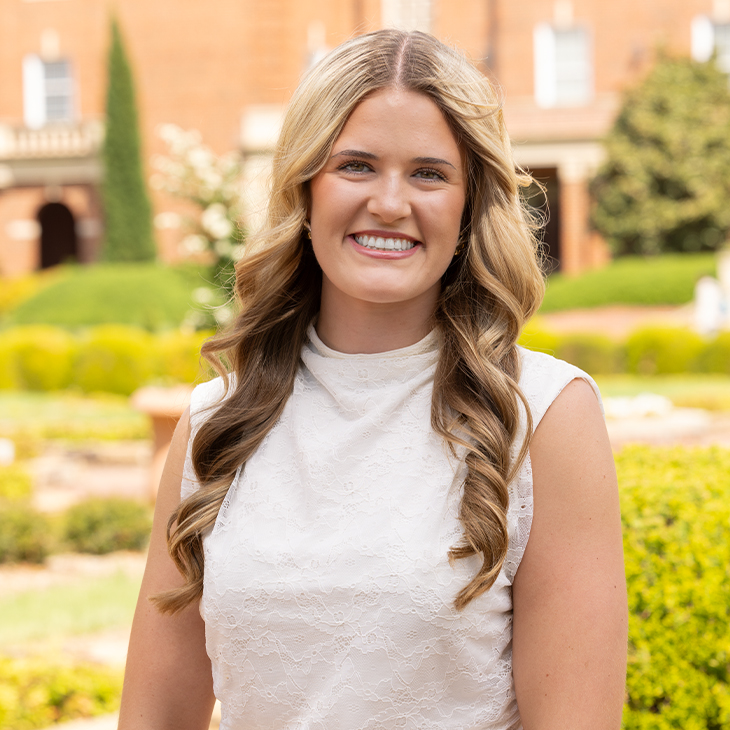
Olivia Emerson’s journey to OSU is a family affair — at one point, she attended OSU with all three of her siblings.
The opportunity to attend college with her siblings certainly made Stillwater feel like a slice of her Jenks home. However, another factor played a large role in choosing OSU over other potential schools — the ability to get involved in research from the moment she stepped on campus was something Emerson knew she wanted to do.
“I’m extremely grateful I chose to attend OSU,” Emerson said. “A lot of different colleges don’t offer the undergraduate research opportunities that OSU does, and that was something I knew I wanted to do — something I wanted to put on my resume.”
The physiology and pre-med senior has always had a love for science and knew that lab work and research were things she wanted to pursue in a career. Ultimately, Emerson wants to help people and, hopefully, provide answers to the problems others face every day.
“When my grandma passed, I felt so taken care of and looked after by those health care professionals,” Emerson said. “It was really a lightbulb moment for me. I knew then that I wanted to provide that same level of care for others when they’re going through something so difficult.
“After I got to OSU, being able to pour myself into volunteer work and the research work I’ve been able to pursue here has both reaffirmed my desire to work in the medical field.”
Emerson is part of Dr. Elizabeth McCullagh’s lab and has focused on research surrounding Fragile X Syndrome, a genetic neurodevelopmental disorder and a leading genetic cause of autism spectrum disorder.
Her research efforts have afforded her opportunities to present at conferences and obtain scholarships, such as the Niblack Research Scholarship.
“Working with Dr. McCullagh has been amazing,” Emerson said. “Not only does her research examine challenges that people face every day — like genetic causes of autism — but she’s also a role model to women in science. She is so heavily involved in research and helping find answers, but she also has a family and really cares about her students.”
After her upcoming graduation, Emerson plans to pursue a job in the medical field to help boost her resume before applying to medical school and realizing her dream of helping others as a health care professional.
Going beyond the statistics
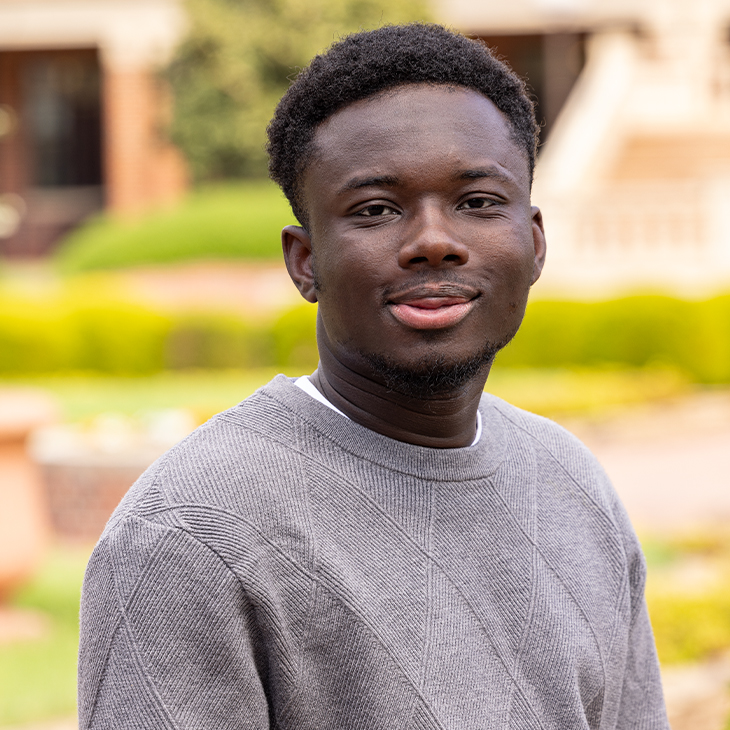
Growing up in Ghana, Samuel Osarfo knew he wanted to pursue higher education in the U.S., but he never imagined a place like Stillwater, Oklahoma, would be his ultimate destination.
Osarfo was a self-proclaimed “bad student” in junior high. His math grades were less than ideal. However, he credits his high school math teacher with igniting his passion for mathematics and statistics.
“My math was not great,” Osarfo said. “My high school instructor gave me the opportunity to come to him all the time with questions and would explain concepts to me to make sure I understood. He made me feel like I could do something with numbers, and so I did my undergrad in statistics and mathematics in Ghana. It’s been a long journey.”
Osarfo began his research as an undergrad in Ghana, analyzing COVID-19 patient data and helping develop a model to track deaths across the continent.
A compelling factor in choosing the next step in his educational journey was conducting research to develop statistical methods that would benefit people. Osarfo discovered that faculty members in Stillwater were conducting research and served as experts in areas that interested him. So, he chose to come to OSU to pursue advanced education and realize his dreams.
“I don’t believe statistics should just be about numbers,” Osarfo said. “We should be able to apply statistics to solve real-world problems, and we can do that by developing statistical methods that give us better insight.”
The focus of Osarfo’s doctoral research aims to do just that. He has helped develop a high-dimensional mediation analysis method that could help better understand health challenges. Most existing methods don’t account for the complex relationships among the multitude of variables in health care data — such as RNA sequencing data — but the model his team developed does.
His team has developed a working model and recently collaborated with the Living Brain Project to analyze RNA sequencing data from brain tissue donors to identify and better understand how Parkinson’s disease alters the brain at the molecular level.
The analysis identified several genetic markers linked to different symptoms associated with Parkinson’s. The teams’ findings are currently under review, but they hope to publish their results soon.
Osarfo’s journey to OSU may have been a long one, but as each day passes, he’s closer to his ultimate goal of helping people.
“My main goal is to be a biostatistician,” Osarfo said. “I want to develop methods that help health care professionals better understand health challenges. If we can better understand the challenge, we can develop better drugs and better treatments.”