


OSU recognizes faculty who shape undergraduate research through mentorship
Tuesday, April 28, 2026
Media Contact: Sydney Trainor | OSU Brand Management | 405-744-9782 | sydney.trainor@okstate.edu
Most university professors have been well-versed in research for their entire careers. Along with teaching, research is a large part of their job.
But, they weren’t always fluent in the world of academia. Once, they were students and needed help, just like the students who now sit in their classes.
Now, at Oklahoma State University, faculty mentors are paying it forward by guiding students beyond the classroom and into their own meaningful academic and personal discovery.
That impact was on full display April 21 at the 5th annual Undergraduate Research Symposium, where three faculty members were honored with the OSU Excellence in Research Mentoring Award for their commitment to undergraduate research.
This year, 21 undergraduate students submitted nominations for 18 unique faculty members. From that pool, three faculty members were selected to receive the award.
The 2026 recipients are Dr. Mary Foltz, assistant professor of civil and environmental engineering; Dr. Stephanie Sweatt, professor of psychology; and Dr. Winyoo Chowanadisai, associate professor of nutritional sciences.
What makes this award special is how faculty members are nominated, and the criteria extend beyond traditional lab-based research.
“I have to tell you, this award is unique, because it begins with a nomination from an undergraduate student,” said Dr. Christine Johnson, associate vice president for research. “A faculty member cannot be considered for this award unless an undergraduate student has the motivation and gumption to actually spend some time to nominate the faculty member.”
This student-centered approach reflects Oklahoma State University’s Cowboy Code, a set of values that emphasize integrity, respect and service to others, principles that guide how faculty mentor and support undergraduate researchers.
While the honor recognizes excellence in supervising undergraduate researchers, it also celebrates faculty who create student-centered experiences, serve as role models, and engage students in areas that may not be widely represented in research.
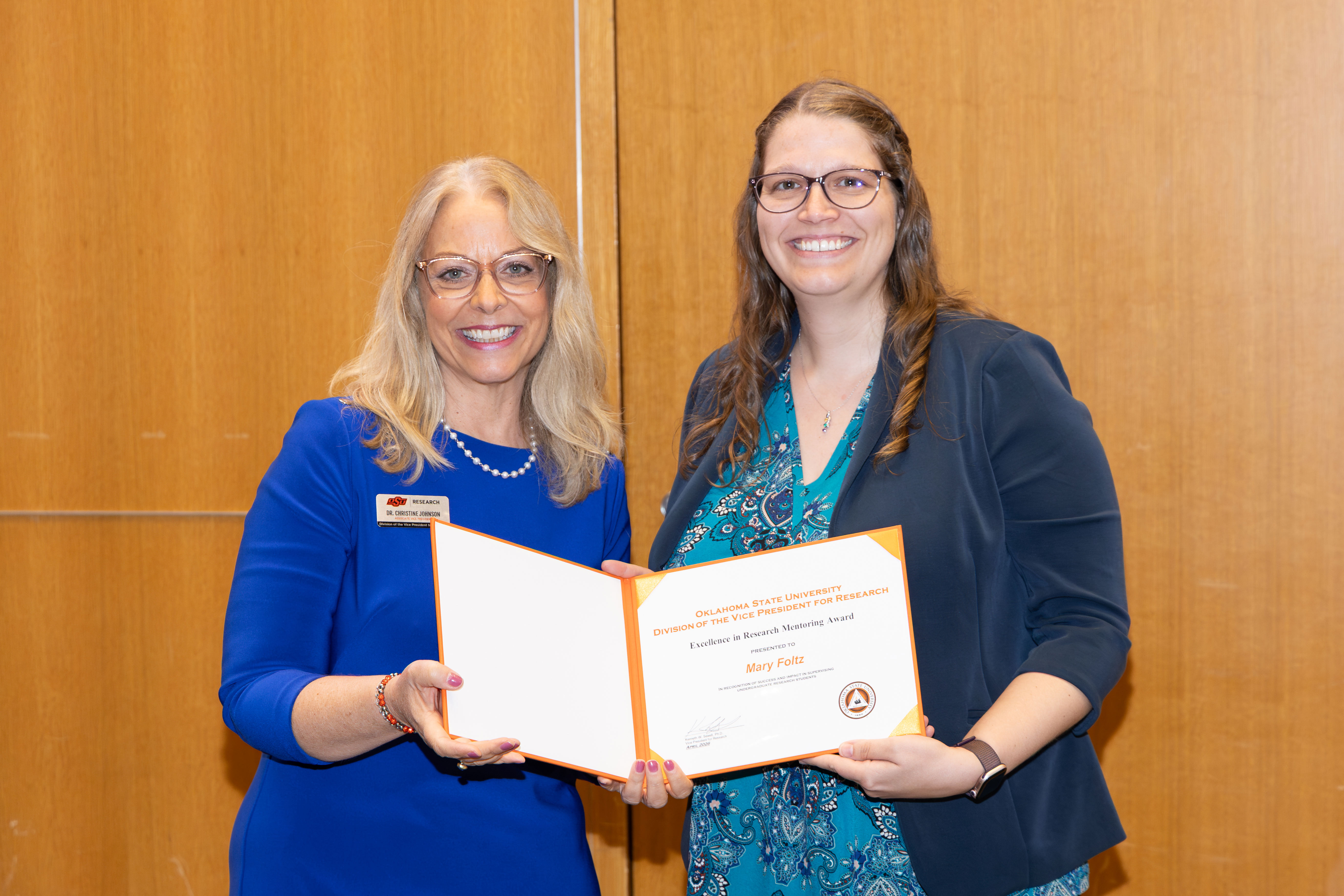
Foltz, who focuses on environmental engineering in the School of Civil and Environmental Engineering, supports undergraduate mentoring at a broader scale. She co-established and co-coordinates the Oklahoma Water Research Mentorship Program, which connects undergraduate and high school students across the state with professionals and graduate mentors in structured mentorship trios.
"It means a lot when students let me know that I have made an impact on them, and getting this award emphasizes that my approach to mentorship has been successful,” Foltz said. “It gives me encouragement to keep mentoring and impacting students, which I have always thought was my calling in life.
“I share nearly everything with my students, from resources and space to thoughts and knowledge. I am extremely open with my students, sharing my personal experiences, failures, fears and approaches, and making expectations transparent and continually communicated.”
Foltz has served as Vicktoria Holdaway’s faculty advisor for nearly two years. As a transfer student, Holdaway initially struggled with the transition to OSU, but credits Foltz with creating an environment that supports both personal and professional growth.
“What has meant the most to me is the way Dr. Foltz treats me as an equal, regardless of how underqualified I may initially feel,” Holdaway said in a letter of support. “From my first semester in her group, she made it clear that my ideas were valued. Rather than simply assigning tasks, she gave me the space to develop an approach, think critically, and propose a solution. When I bring her a plan or idea, she offers constructive feedback that strengthens my reasoning without disregarding the original proposal. The independence and guidance she gives me has really allowed me to grow in many areas. It has ultimately built my confidence in both research and in the way I present myself as a contributor to a project.”
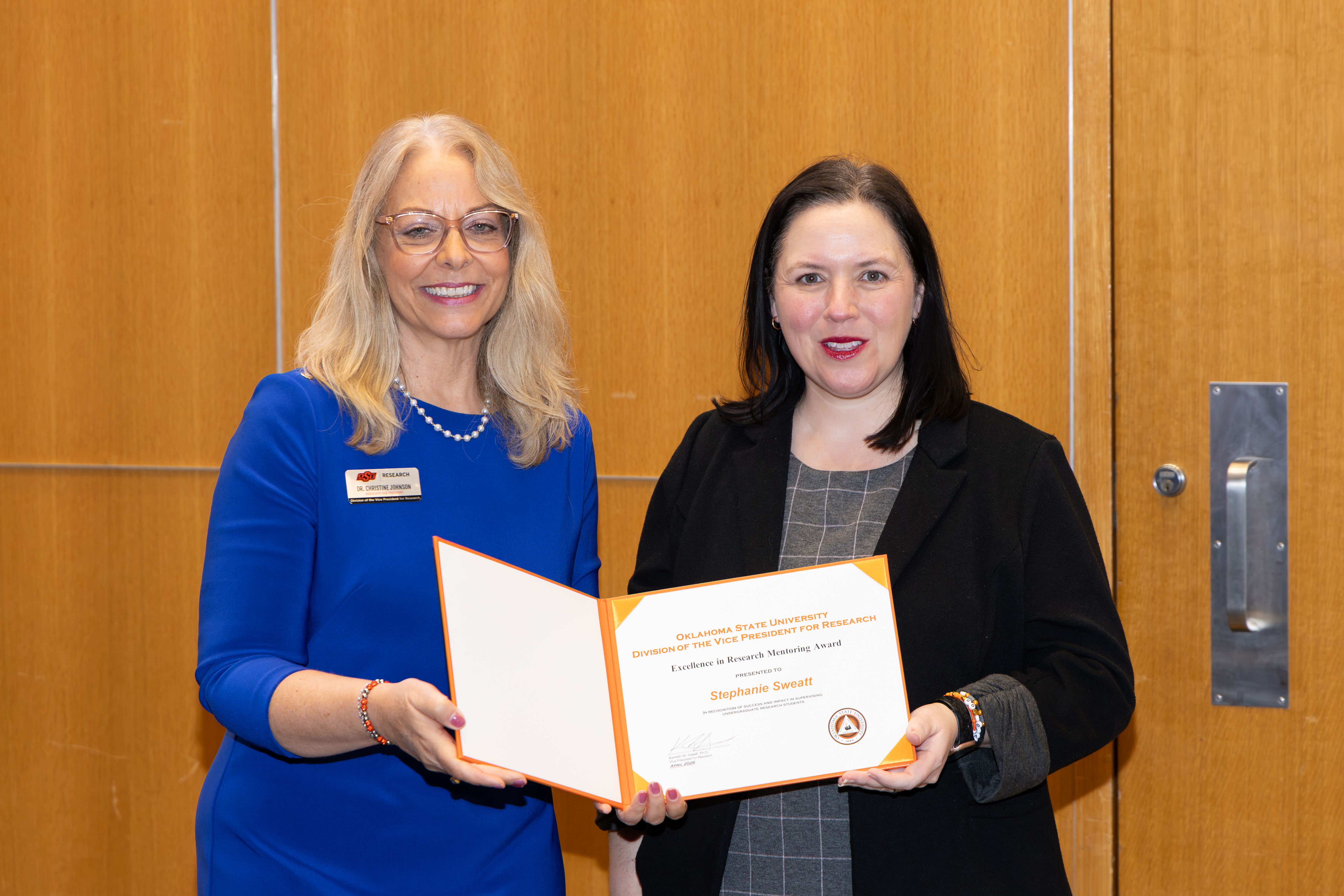
For Sweatt, mentoring is one of the most rewarding aspects of her role in the College of Arts and Sciences. In her lab, she continually looks for ways to involve students, whether through poster presentations or paper submissions.
As a personality researcher, she understands there is no one-size-fits-all approach to mentoring.
“Receiving a nomination for this award by my undergraduate students is one of the most meaningful honors of my career,” Sweatt said. “A driving force for becoming a professor was my interest in mentoring. I am intensely aware of the hidden curriculum that many first-generation students, women and individuals from underrepresented backgrounds navigate. The nomination for this award is a reminder that always valuing students as people first is the right approach for my lab. Receiving this award truly reminds me of the most rewarding and meaningful aspects of my job.”
As a sophomore with no prior research experience, Sophia Marrero applied to be a research assistant in the Personality and Psychology Lab. When she first began, she doubted her ability to contribute meaningful research, but Sweatt helped her grow into a more confident and independent researcher.
“Beyond her investment in the academic and career growth of her students, she cares deeply about our well-being and personal development,” Marrero said. “She begins each of our lab meetings by inviting us to share recent positive moments from our lives or ‘good things.’ This gesture is just one of many ways in which she creates an uplifting lab environment and demonstrates investment in our lives.”
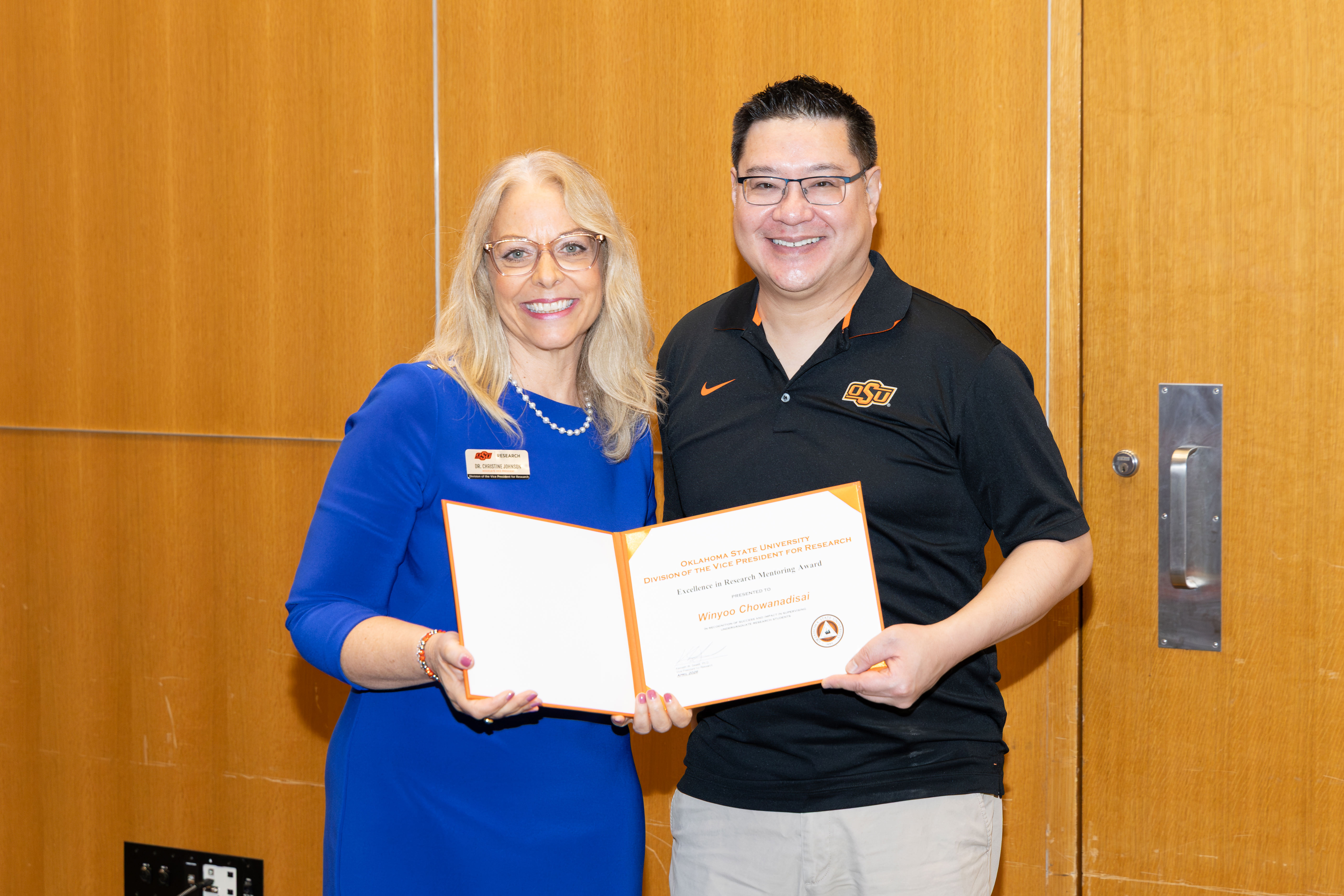
As an undergraduate, Chowanadisai had a faculty mentor who empowered him to take ownership of his research and helped him discover a lifelong career path. That experience has stayed with him, and now shapes how he mentors his own students.
“I was so honored to be recognized with this award, and especially by the nominations from my students,” Chowanadisai said. “It is a joy discussing science with the undergraduates in my lab, forming and testing ideas, working through problems, and when things turn out just right, writing and publishing our discoveries. One of my favorite moments is when students realize that they do have the ability to make important contributions to science.”
Parker Huizinga has been an undergraduate researcher in Chowanadisai’s lab for more than two years. During that time, he has experienced Chowanadisai’s commitment to student development and mentorship firsthand.
“Dr. Chowanadisai consistently modeled positive behaviors and successful performance as a researcher and mentor. He leads with integrity, curiosity and humility, setting a standard for rigorous scientific inquiry while emphasizing collaboration and respect,” Huizinga said. “His approach to research is thoughtful and ethical, and he consistently encouraged me to think critically, ask meaningful questions and view challenges as opportunities for learning rather than failure.”