


OSU student helps rural, tribal communities with diabetes, influenza research
Wednesday, April 29, 2026
Media Contact: Sydney Trainor | OSU Brand Management | 405-744-9782 | sydney.trainor@okstate.edu
For Carsten Beets, the path to cutting-edge medical research began in the back of an ambulance.
At 19, Beets was running emergency calls in Enid, Oklahoma — responding to cardiac arrests and trauma cases in a system stretched thin by limited rural resources. It was an experience that sharpened a purpose first shaped years earlier, watching his father work as an ER physician in underserved communities across the state.
Now a dual major in biochemistry and microbiology at Oklahoma State University, Beets is preparing to take that purpose even further — presenting research that could help explain why some of Oklahoma’s most common health challenges turn deadly when combined.
“Two of the biggest problems in the United States are diabetes and influenza,” Beets said. “In Oklahoma, they’re even bigger, especially in rural and tribal populations with lower access to healthcare.”
Across the country, roughly 38 million Americans live with Type 2 diabetes, a condition marked by insulin resistance. Influenza, meanwhile, infects millions each year. But when the two overlap, the consequences become far more severe. People with diabetes face a significantly higher risk of death from the flu, a statistic that prompted Beets and his research team to ask why.
Inside the lab, that question led to a deeper look at how the body processes glucose during infection.
Using both human lung cells and mouse models, Beets and his team studied a key molecule involved in insulin signaling. What they found points to a dangerous shift at the cellular level. In diabetic conditions, influenza appears to hijack the body’s glucose system, increasing sugar uptake in cells, and allowing the virus to replicate more aggressively.
The very fuel the body uses to fight infection may be helping the virus spread.
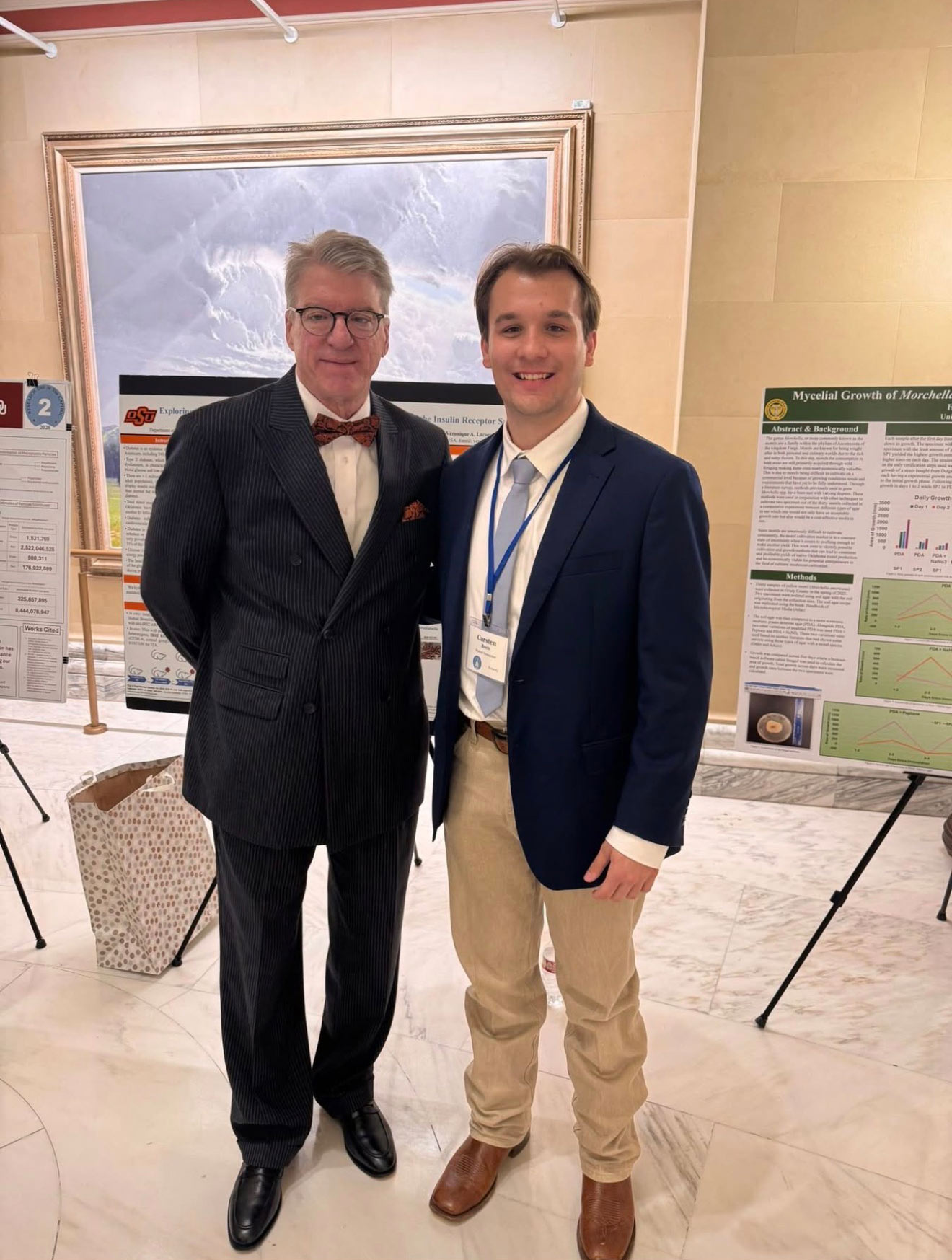
“We showed that when someone with diabetes gets sick, the infection can cause changes in how their cells function,” Beets said. “That may be part of why they have a higher chance of dying.”
The research also revealed increased inflammation and signs of cardiac damage in infected diabetic models, compounding risks for patients already facing chronic health challenges.
For Beets, the implications extend far beyond the lab.
Growing up Cherokee by blood and immersed in Creek culture, he has seen firsthand how health disparities affect Native communities. Combined with his experience in rural emergency care, those perspectives continue to shape both his research and his long-term goals.
“I want to come back to Oklahoma and work with tribal communities,” Beets said. “At the same time, I want to push into academic medicine and do high-level research that can actually change outcomes.”
That balance between community impact and scientific advancement defines his next step. After graduation, Beets will attend the University of Minnesota Medical School with plans to pursue trauma and critical care surgery.
Before that, he will present his work to Oklahoma’s leaders at Research Day at the Capitol, an opportunity to translate complex science into real-world impact.
“It’s not just about presenting research,” Beets said. “It’s about talking directly to lawmakers and showing where Oklahoma can improve, whether that’s healthcare access, education or funding for studies like this.”
In a state where health outcomes consistently rank among the nation’s lowest, he believes that kind of connection matters.
Better understanding the link between diabetes and influenza could eventually lead to improved treatments, reduced hospital strain and lower costs for taxpayers, especially in communities already under pressure.
For Beets, the mission is clear: take what he has learned in classrooms, clinics and labs — and bring it back home.
“I’ve been given opportunities because of the people before me,” Beets said. “Now it’s about taking that and building something that helps others.”
Story By: Page Mindedahl | page.mindedahl@okstate.edu