

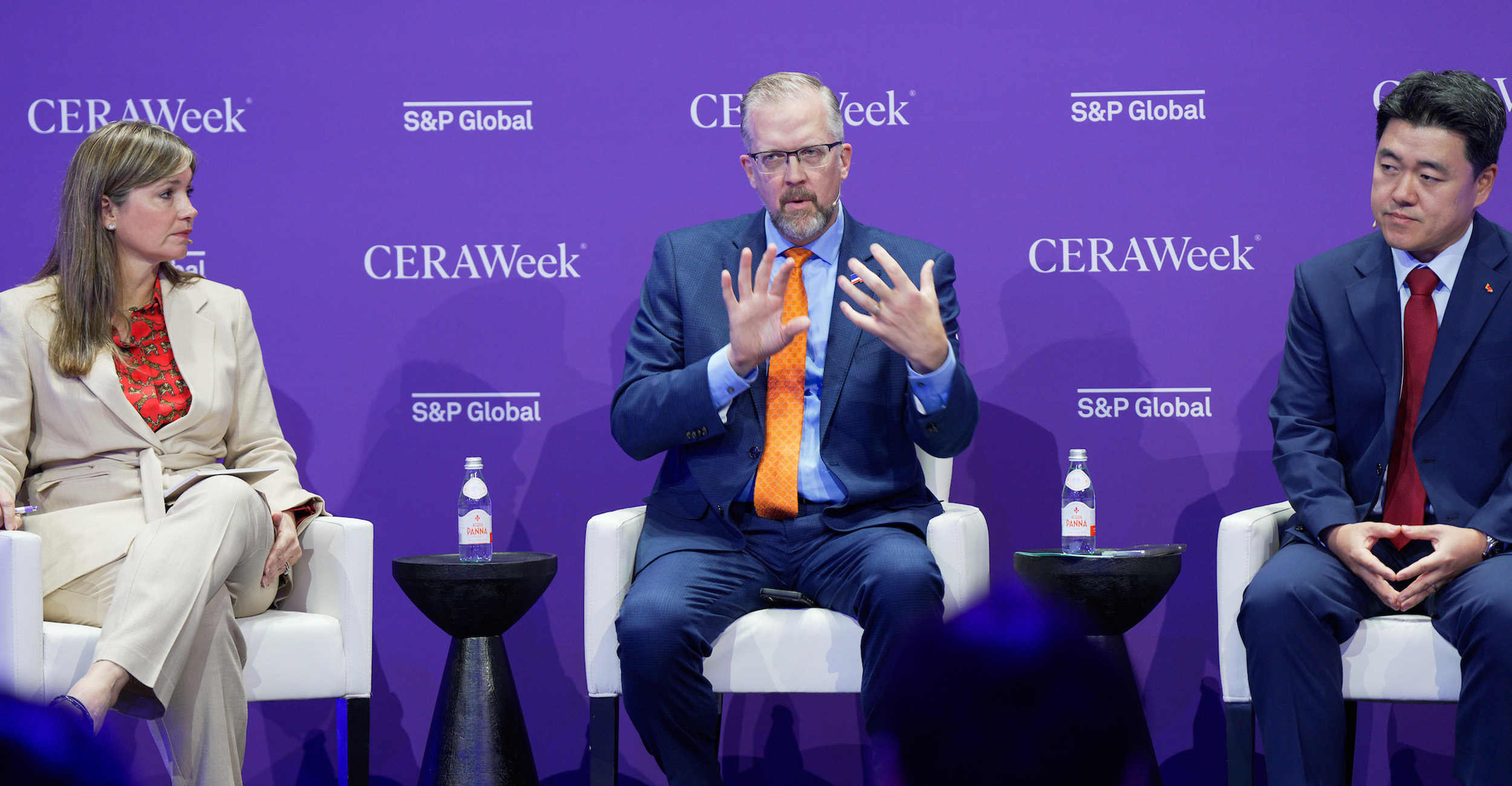
The Hamm Institute for American Energy hosts critical discussions during CERAWeek 2026
Thursday, March 26, 2026
Media Contact: Dara McBee | Hamm Institute for American Energy | 580-350-7248 | dmcbee@hamminstitute.org
This year's CERAWeek theme, Convergence and Competition: Energy, Technology and Geopolitics, reflected the forces now reshaping global energy leadership.
The Hamm Institute for American Energy at Oklahoma State University engaged across several of the week's most substantive sessions, contributing research and frameworks on four interconnected challenges: powering AI infrastructure, allied energy security, workforce development and trilateral cooperation.
Powering AI Reliably
Load growth driven by artificial intelligence is accelerating faster than the systems built to support it. Generation, transmission, permitting and capital deployment were not designed for this pace.
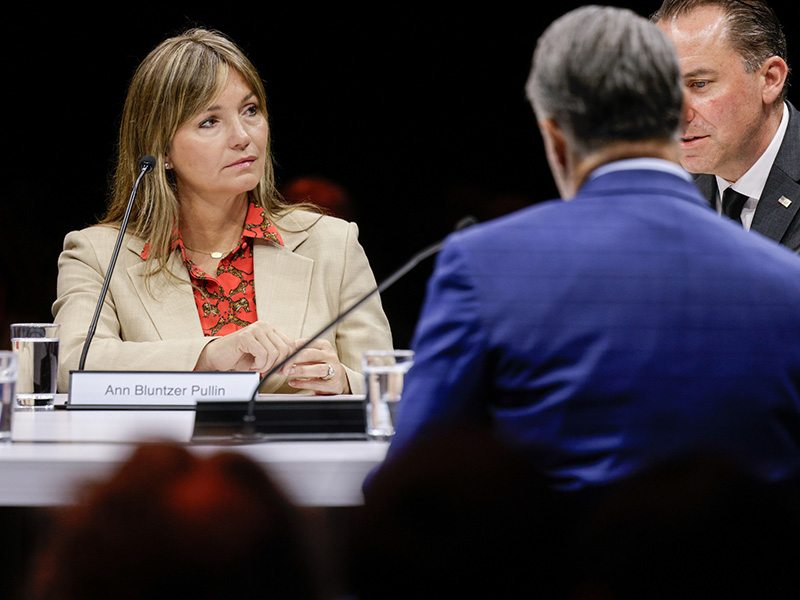
Dr. Ann Bluntzer Pullin, Hamm Institute executive director, chaired "Permits, Policy, and Capital: Clearing the Bottlenecks to Power AI Reliably." The session drew on the American Energy + AI Initiative, a cross-sector effort the Institute leads with more than 30 partner organizations across energy, technology, manufacturing, finance and infrastructure.
The conversation moved past demand forecasts and focused on execution: what it will take to finance, permit, build and deliver reliable power at the scale this moment requires.
Building the Workforce to Match the Moment
Every major energy pathway faces the same constraint: the current talent pipeline is not producing workers fast enough to meet the scale of infrastructure growth now underway.
In the session on Industrial-Academic Collaboration for Future Skills, the institute's position within OSU allowed it to connect academic research priorities directly with the workforce needs companies are facing now. The discussion centered on how partnerships can become more targeted, more scalable and measurable against clear outcomes.
Strengthening Allied Energy Security
At the Asia Pacific Forum, the Hamm Institute contributed to a broader conversation about one of the most consequential regions in the global energy system.
Asia Pacific sits at the center of future energy demand, trade flows, supply chain competition and geopolitical risk. As countries across the region work to balance affordability and security, the stakes extend well beyond regional markets. They will shape global investment patterns, resource competition and the strategic role of energy in the decades ahead.
The forum reflected that complexity, bringing together leaders to examine how governments and industry can respond to rising demand, shifting trade dynamics, supply chain vulnerabilities and the growing influence of digitalization and AI on energy systems.
Trilateral Collaboration with Practical Purpose
The Collaboration Spotlight, “How Trilateral Collaboration Unlocks Deployable Energy Solutions,” highlighted how the Hamm Institute’s Trilateral Energy Security Committee addresses the barriers that typically slow cross-border energy cooperation, including permitting misalignment, financing gaps, regulatory differences, and the absence of shared infrastructure frameworks.
TESC researchers from OSU, the Korea Energy Economics Institute and The Institute of Energy Economics in Japan are developing actionable approaches to support cross-border energy investment, infrastructure planning and policy alignment.
The session featured contributions from OSU Global’s Andrew Ranson and Dr. John Schoeneman, alongside Joey Jun, CEO and president of LNG Americas Inc. at SK Innovation E&S. Together, they outlined not just the case for trilateral cooperation, but the practical steps required to advance it toward execution.
American Energy Leadership
The executive session “Energy Dominance: America, Energy and the World” addressed a question central to the institute’s mission: Does the United States have the resources to lead on energy.
The open question is whether the country can align infrastructure, exports, permitting, capital and long-term strategy well enough to deliver on that potential at scale. Bluntzer Pullin was among the U.S. energy leaders participating in the panel, which examined what it will take to translate resource strength into durable strategic advantage.
Looking Ahead
CERAWeek 2026 made clear that the energy sector's most pressing challenges: powering AI infrastructure, securing allied supply chains, building skilled workforces, and advancing cross-border cooperation, do not resolve within a single sector or a single country.