

Cleary forging a path for change, one decision after another
Tuesday, May 12, 2026
Media Contact: Kirsi McDowell | Communications Coordinator | 405-744-8320 | kirsi@okstate.edu
Sometimes the reality of being a teacher means leaving work with a heavy heart.
For Rebekah Cleary, an elementary education graduate and 2026 Senior of Significance, that reality hit hard as she spent more time in the classroom during her student teaching experience. However, her passion to do what’s right has helped her overcome the many struggles that come with being an educator.
As a teacher, Cleary pointed out, you are responsible for educating children from all walks of life — including those who have experienced trauma and adverse childhood experiences.
“Everyday I found out something absolutely devastating about a student’s life,” Cleary said. “But I still have to teach them and support them.”
Despite the emotional weight teachers often carry, Cleary said she has always felt drawn to education. Her motivation to prepare the next generation of students became clear when her high school introduced its first special education program.
After the program's creation, Cleary began tutoring special needs students. This experience inspired her to pursue an undergraduate certificate in special education, which she received alongside her bachelor's degree.
Although Cleary was unable to major in special education because it was not yet offered as a degree when she chose her path of study, she believes the certificate will help her create a more inclusive classroom. In addition to working with special education students during high school, Cleary has also supported Opportunity Orange Scholars (OOS), Oklahoma State University’s program for students with disabilities. She also works as a caregiver for disabled elderly individuals, further reflecting her commitment to serving others.
“Once I decided I was going to go into education, the only way it would happen was if it was special education,” Cleary said. “Because that was the gap I saw. That people weren’t receiving the level of education they needed or they weren’t being treated with the dignity they deserve.”
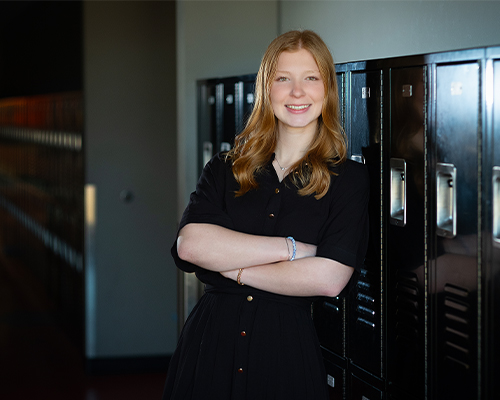
Cleary has been actively involved in the OSU community. Her most notable roles included assisting OOS and honing her leadership skills as the College of Education and Human Sciences student council president.
The college’s coordinator of student career development Kennedy Essmiller serves as the student council advisor. Essmiller became the student council advisor during Cleary’s junior year, which meant Cleary was more familiar with the organization from her previous time with student council. Because of this, she was able to help Essmiller adjust to her new role, and the two frequently communicated about how to best support the council.
“[Cleary] was the one who taught me and a former advisor about what student council is and why it’s important,” Essmiller said. “She was really instrumental in laying out what the organization needed from me at the beginning of my tenure as advisor.”
Essmiller said Cleary’s drive to do what is right extends beyond her regular duties as president. Essmiller said Cleary would frequently check in with her and other members to ensure life outside the council was going well.
“[Cleary] stands by the other members of student council when they’re having harder times,” Essmiller said. “She’s a big people person and she cares deeply about those she works with.”
In addition to helping improve the mental health and reduce the stress of council members, Cleary also expanded the club’s accessibility. Inclusion does not stop at the classroom for Cleary, and despite some initial pushback, she was able to bring more people into the organization.
This began with Cleary’s decision to remove the business casual dress code for the initial student council interview. Cleary said she drew inspiration from the Cowboy Code tenet “Being a Cowboy isn’t in our clothes, it’s in our character,” when she decided to remove the dress requirements.
“Somebody’s clothes don’t define them, it’s who they are and what they are able to do,” Cleary said. “I think by doing this [student council] has been able to reach a lot more corners of our college than we have before — by striving to make a more inclusive environment.”
As a new graduate, Cleary will be joining the faculty at her former school, St. Philip Neri Catholic School, as its first special education teacher. Cleary said it is an honor to not only help make schools more inclusive, but also to give back to the community that set her on this path.
“It’s really an honor but also nerve-wracking going into such an administrative role right out the gate,” Cleary said. “I’m hopeful though because it says a lot about [the administration’s] trust in me, and in their understanding of the quality of OSU’s teacher education programs.”
Story By: Annie Ross | annie.ross@okstate.edu