

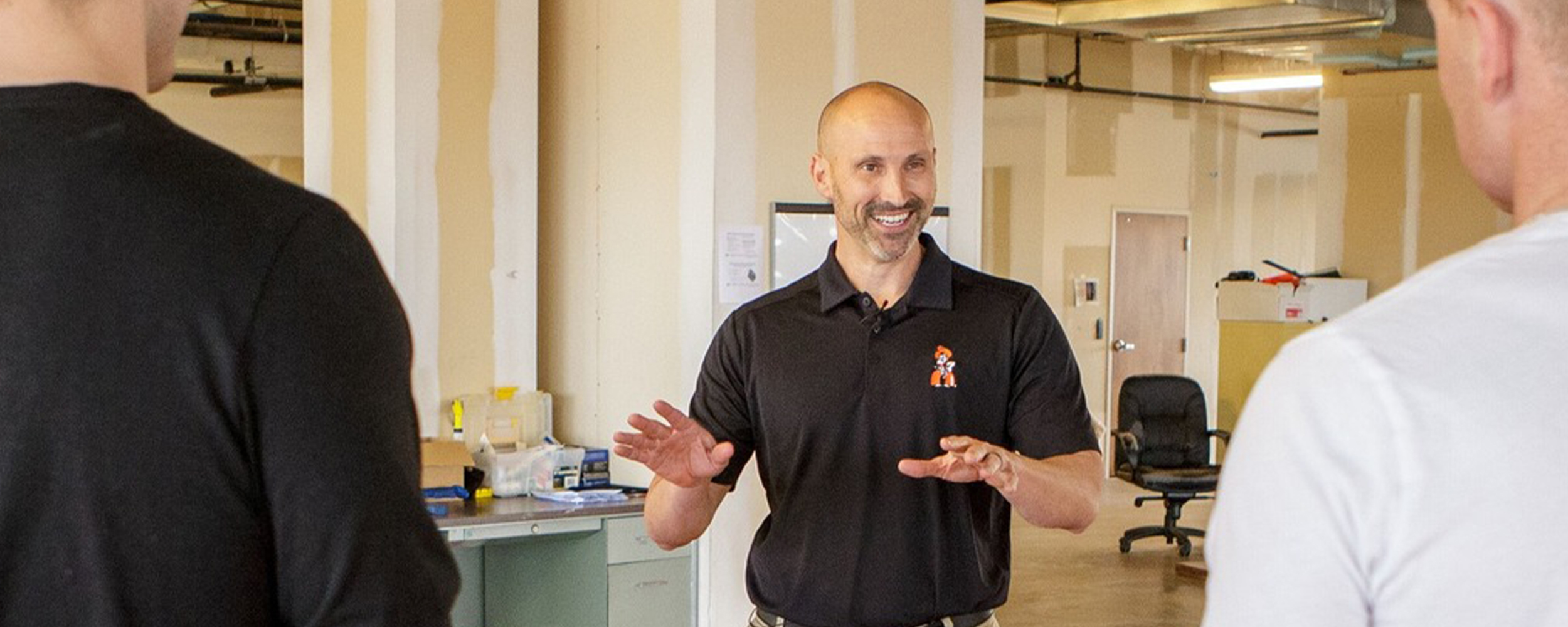
Fit to Lead: Health and human performance professor bridging the gap between sport and tactical fitness
Wednesday, May 20, 2026
Media Contact: Kirsi McDowell | Communications Coordinator | 405-744-8320 | kirsi@okstate.edu
It’s not only about research for Oklahoma State University’s applied exercise science professor Dr. Jay Dawes, but also giving back to the community of first responders.
For his research, field-work and lasting contribution to the fitness world, the National Strength and Conditioning Association will bestow a Ph.D. student with a scholarship in honor of Dawes.
“I felt honored,” Dawes said. “It was really kind of overwhelming. I’m not speechless too often, but I was when I found out.”
With more than 20 years of experience and 200 publications, Dawes has made himself a household name in the fitness industry, making his recent honor no surprise. Among his publications include three fitness books. Two of which he co-authored and a third book he wrote by himself titled, “Complete Guide to TRX Suspension Training.”
Among his many roles, Dawes is a co-director of the Tactical Fitness and Nutrition Lab. Although the lab features many research methods, Dawes finds himself favoring the hands-on work he does with the departments partnering with the lab.
Much of the hands-on work includes observing current fitness patterns among first responders, and creating a fitness plan catered to the demands of an individual's field of work. Dawes noted it isn’t common for responders such as police officers and firefighters to follow a conditioning routine outside of work hours, despite the vitality of a first responder’s physical performance.
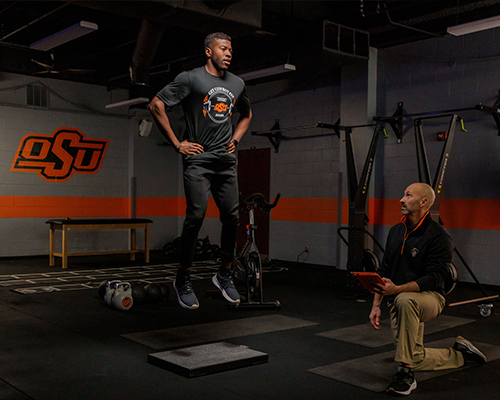
As a result, Dawes is implementing traditional sport fitness tactics to various first responder organizations in the Stillwater area. Among these departments are the Stillwater Police Department, Stillwater Fire Department, OSU Police Department, OSU Fire Department, Meridian Technology Center’s criminology program, Council on Law Enforcement, Education and Training (CLEET), and many more organizations across Oklahoma.
“These are some of the most physically demanding jobs in the world,” Dawes said. “A lot of the time [the first responders] don’t get the resources to support the physical capabilities to perform those tasks.”
However, it isn’t just fitness that determines one's ability to perform certain physical tasks — diet and nutrition play an essential role in that as well.
Working alongside Dawes, is Dr. Jill Joyce, an associate professor of nutritional sciences and co-director of the lab. Joyce’s research caters to the opposite end of the spectrum where she analyzes the nutritional aspects of tactical fitness.
Joyce said the pair work well together because they’re both after one mission: improving the lives of the communities they serve.
“Our primary goal is being able to advance the knowledge to serve these communities. To make them better,” Joyce said. “The fact that we both are aligned in that belief is amazing because if we weren’t, I think we would have a different way of approaching things.”
Joyce noted that the lab is not traditional, rather it takes place out in the workforce. The duo's teamwork continues to excel as Dawes focuses on the physical and physiological aspects of first responders, while Joyce analyzes Dawes findings to determine how an individual should be supported nutritionally.
In addition to first responders, Dawes also supports student researchers in the lab. By encouraging outside-the-box thinking and emphasizing the importance of safety, Dawes is also preparing the next generation of tactical fitness researchers to continue the mission.
Both Dawes and Joyce encourage hands-on experiences for students to ensure they are prepared for the workforce. This can include getting students involved in communities, teaching them proper equipment usage and one of the most vital aspects — understanding the people who need support.
“It’s really neat to not only teach students the science and research aspects but also the people piece,” Joyce said. “[Dawes] is a very hands-on, let the students be hands-on professor.”
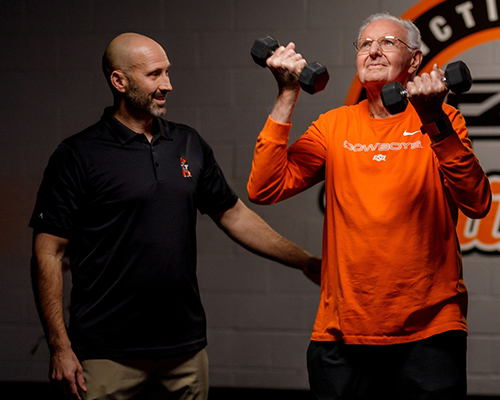
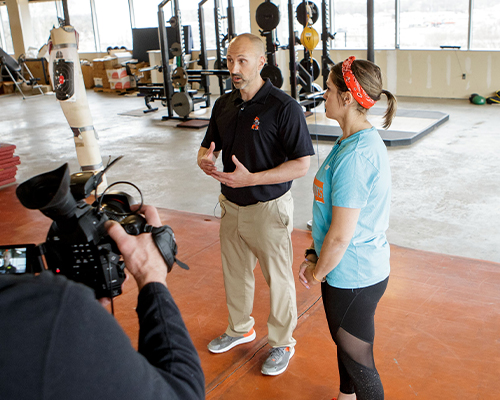
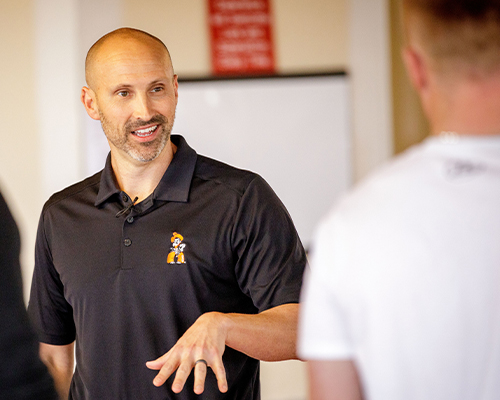
Notably, Dawes is not only an OSU alumni himself but also a graduate of the School of Kinesiology, Applied Health and Recreation. From 1999 to 2002, Dawes was enrolled in the health and human performance master’s degree program. In 2003, he began working toward his Ph.D. in OSU’s health and human performance program.
After meeting Dawes as a Ph.D. student in 2003, OSU professor Doug Smith knew he would one day make a great addition to the department.
“His energy, his positivity and then the fact that he gets stuff done – it’s not just chatter,” Smith said. “There’s work, publications, funding and other things that Dawes goes after.
“So, [Dawes] has been a very strong part of the health and human performance program, and I see that continuing to get stronger.”
Smith acknowledged the passion Dawes shows for success in both the school and program. He recalled projects they have worked on together as colleagues rather than mentor and student, and can attest to the professionalism OSU graduates bring to the workforce.
“Dawes’ motivation and energy has only grown since he graduated from OSU. There are great discussions about research ideas and class issues,” Smith said. “[Dawes] is a great colleague for me, and I think for everybody in the health and human performance program.”
For the most up to date insight about Dawes’ work and the benefit of tactical fitness, follow OSU Tactical Fitness on Facebook.
Story By: Annie Ross | annie.ross@okstate.edu