


Kara Lab develops new method to improve spacecraft landing safety
Tuesday, December 9, 2025
Media Contact: Desa James | Communications Coordinator | 405-744-2669 | desa.james@okstate.edu
There is a moment in every atmospheric entry when a spacecraft is no longer just a machine following equations.
It becomes something more precarious: a body moving through violent, shifting air as unseen forces work persistently to knock it off balance.
For decades, engineers have worked to predict exactly what happens in that moment. In the College of Engineering, Architecture and Technology, a team of researchers is reshaping how those predictions are made, answering a quiet but consequential call to make spaceflight safer.
Dr. Kursat Kara, associate professor in the School of Mechanical and Aerospace Engineering, along with doctoral researchers Shafi Al Salman Romeo and Ashraf Kassem, has developed a new framework to better understand how space capsules behave as they descend through an atmosphere. Their work focuses on dynamic stability, which is the ability of a capsule to correct itself as it experiences disturbances during entry.
It may sound abstract, but the implications are immediate and tangible: safer crews, protected instruments and spacecraft that land closer to where they are supposed to.
The problem with ‘wobble’
When a capsule reenters an atmosphere (Earth’s or another planet’s) the air around it becomes chaotic. Shock waves form. Flow fields fluctuate. Forces change rapidly and unpredictably.
“A dynamically stable capsule essentially calms itself,” Kara said. “If it gets disturbed and starts to wobble, those motions fade away. The vehicle ‘self-corrects,’ keeping its heat shield properly oriented into the flow.”
That stability is not optional. It’s essential. If a capsule becomes unstable, even briefly, the consequences can cascade quickly. Portions of the vehicle not designed for extreme heating may become exposed. Structural loads can spike. The trajectory may drift, pulling the vehicle away from its intended landing zone. Even parachute deployment, an event that depends on predictable orientation and motion, can be compromised.
In other words, stability is the difference between a controlled descent and a mission at risk.
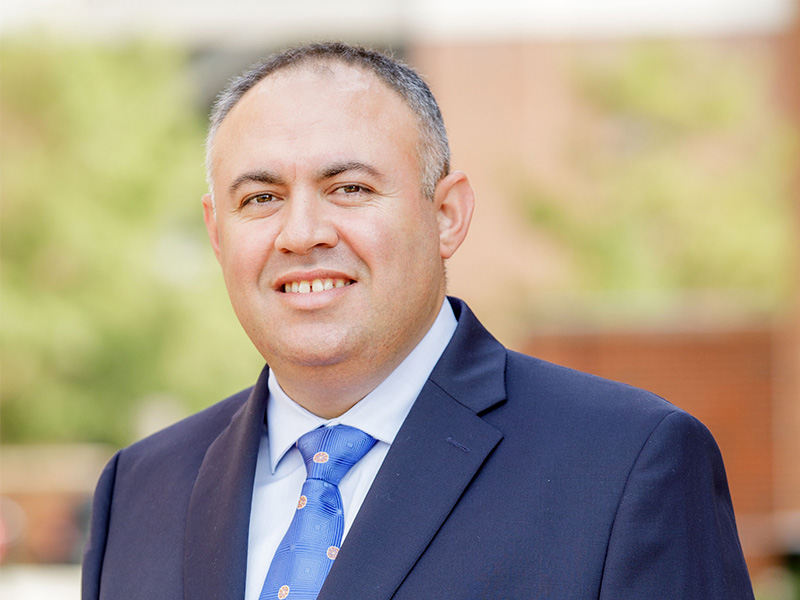
Dr. Kursat Kara
Associate Professor of Mechanical & Aerospace Engineering
Seeing part of the story
Engineers have long relied on three primary tools to understand this problem: wind tunnel tests, ballistic-range experiments and high-fidelity computer simulations. Each brings valuable insight, but each also leaves gaps.
Wind tunnel testing, for instance, allows precise observation but often requires a mounting system that can interfere with airflow.
Ballistic-range testing frees the model to move naturally through the air but captures only brief glimpses of the motion. Kara compares this to watching scattered frames of a much longer film.
Meanwhile, computational fluid dynamics simulations offer detailed, continuous data yet depend heavily on modeling assumptions that can introduce bias.
Individually, these methods are powerful. Together, they are incomplete.
That incompleteness becomes especially critical when dealing with blunt-body vehicles — the capsule shape used in many NASA missions. These designs experience large angles of attack and complex motions during entry, making their behavior inherently nonlinear.
“No single method tells the full story,” Romeo said. “The physics are just too complex.”
Recognizing that gap was the starting point. Answering it required a new way of thinking.
Bringing it all together
The team’s solution is a Data-Fusion-based Nonlinear Parameter Identification framework or DF-NPI for short.
At its core, the framework does something deceptively simple. It treats experimental data and simulation results not as competing truths, but as complementary pieces of evidence. Instead of asking which is right, it asks how they can agree.
Using a probabilistic approach grounded in statistics and probability sampling, DF-NPI blends these data sources into a single, unified model. It reconstructs flight trajectories and estimates how stability changes across different conditions, all while explicitly accounting for uncertainty.
In practical terms, the framework answers two key questions:
What stability behavior best explains both the experimental and simulated data?
How confident are researchers in that answer?
“Capturing uncertainty is critical,” Kassem said. “By incorporating it directly into the model, we gain a much clearer picture of how a vehicle will actually behave during descent.”
It is a shift away from deterministic predictions toward a more nuanced, evidence-based understanding that mirrors the complexity of the real world.
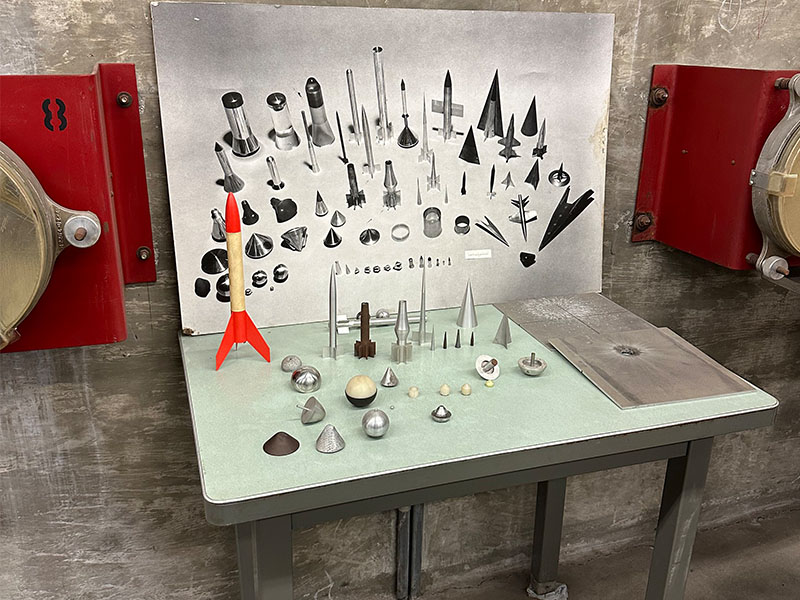
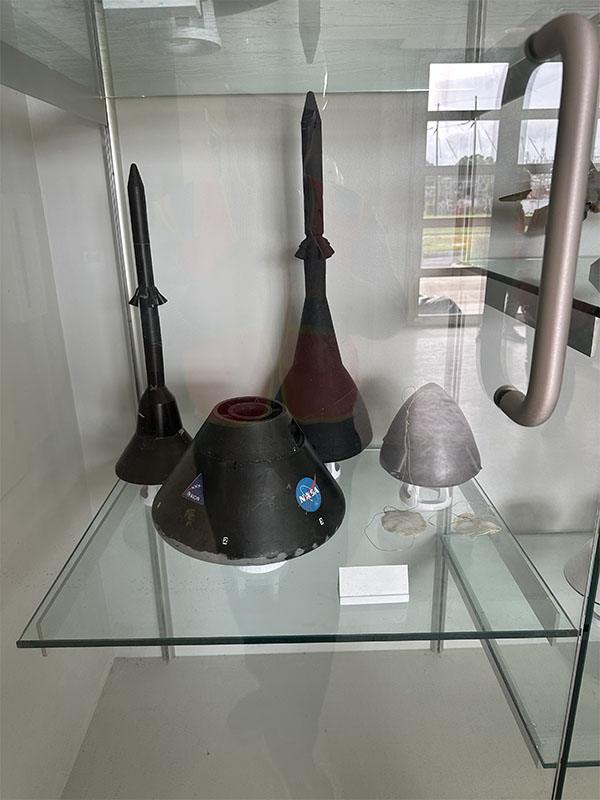
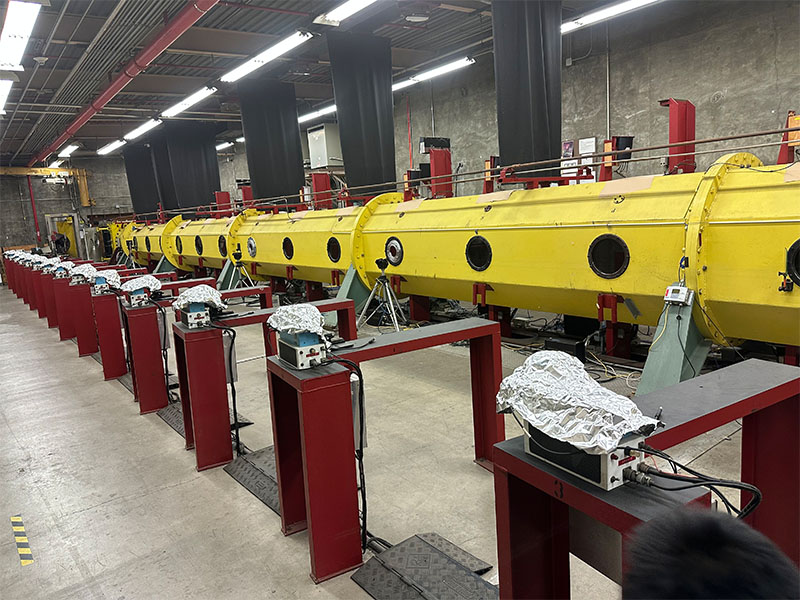
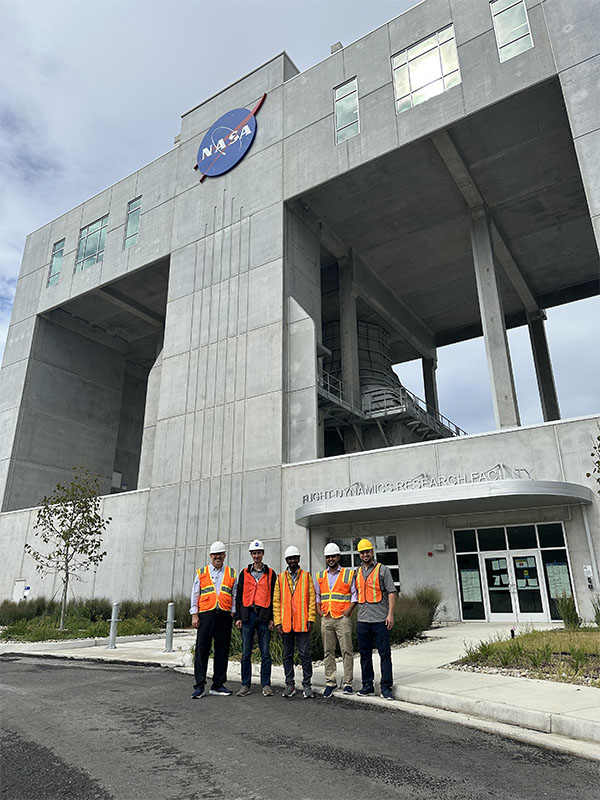
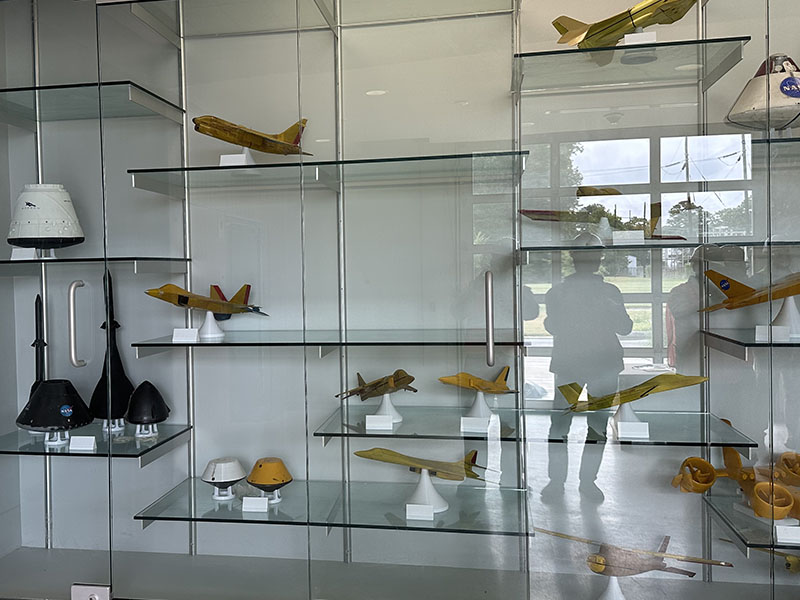
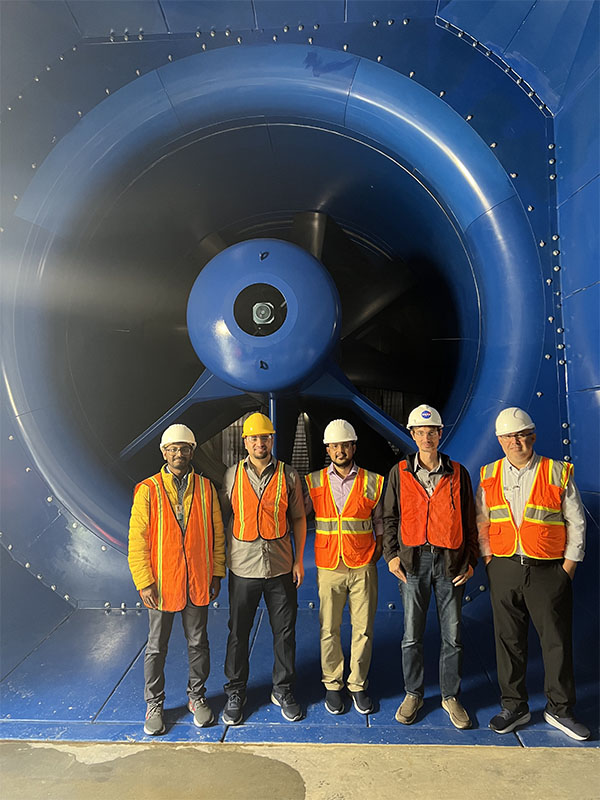
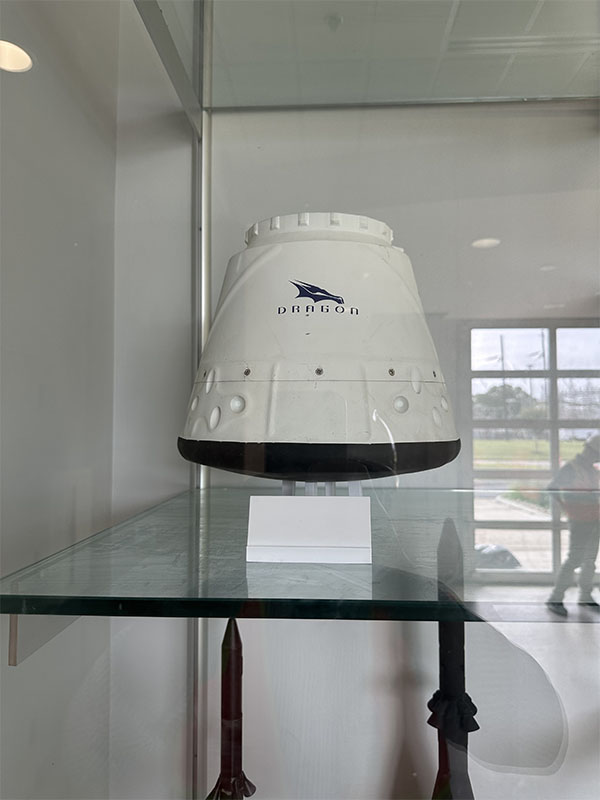
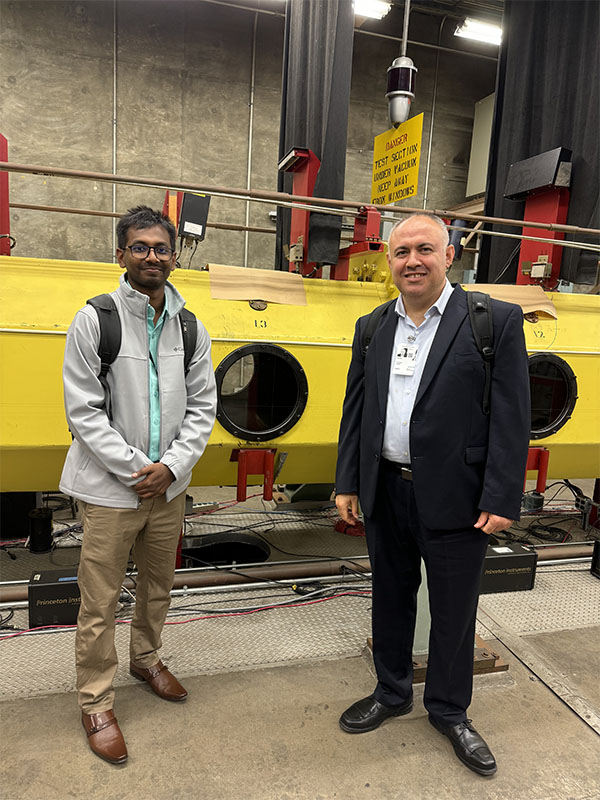
Kara Lab research team The team recently attended NASA technical seminars at the Ames Research Center and Langley Research Center.
Fewer tests, better decisions
Beyond improved accuracy, the approach offers another significant advantage: efficiency.
Traditional aerospace testing campaigns can require large numbers of experiments to build reliable aerodynamic databases. These tests are expensive, time-consuming and logistically demanding.
By extracting more insight from fewer data points, DF-NPI allows engineers to design smaller, more targeted experimental campaigns while still achieving more reliable results. That means faster design cycles, reduced costs and greater flexibility in mission planning.
Kara sees this as one of the framework’s most immediate benefits.
“It helps us identify where the uncertainties are, predict how a vehicle will behave and reduce the dependence on extensive physical testing,” he said. “That combination can accelerate the entire design process.”
Beyond institutional orbits
The work did not happen in isolation. The OSU team collaborated with engineers at NASA Ames Research Center, who contributed expertise in free-flight computational fluid dynamics and trajectory reconstruction.
Their involvement helped guide the selection of realistic test cases and provided critical feedback on how to interpret the results. The collaboration ensured that the framework is not only theoretically robust but also practically applicable within NASA’s workflows.
Additional contributions from co-principal investigator Dr. Omer San of the University of Tennessee and NASA Ames researchers Cole Kazemba, Dirk Ekelschot and Jeffrey Hill helped refine the methodology further.
It is a reminder that breakthroughs in aerospace rarely belong to a single lab or institution. They emerge from shared knowledge, rigorous testing and a collective commitment to solving difficult problems.
Answering the call
The implications of DF-NPI extend beyond any single mission. As space agencies and private companies plan increasingly ambitious journeys, the need for accurate, reliable stability predictions will only grow.
For these researchers, the work carries a deeper resonance. It is not just about improving models or refining equations — it’s about contributing to something larger than themselves.
“Developing a method that captures this level of complexity is challenging,” Romeo said. “But it’s also rewarding, especially knowing it could make future missions safer.”
This research is part of the Kara Lab’s NASA Early Stage Innovations project, Physics-Guided Multifidelity Learning for Characterization of Blunt-Body Dynamic Stability, supported by NASA under Grant No. 80NSSC23K0231.