

OSU aerospace faculty recognized for leadership, professional engagement through AIAA
Wednesday, September 9, 2026
Media Contact: Desa James | Communications Coordinator | 405-744-2669 | desa.james@okstate.edu
For faculty from the School of Mechanical and Aerospace Engineering at Oklahoma State University, helping young engineers find their place in aerospace means giving them opportunities to do more than develop technical skills.
It means giving them opportunities to lead, build professional relationships and take ownership of work that has real consequences.
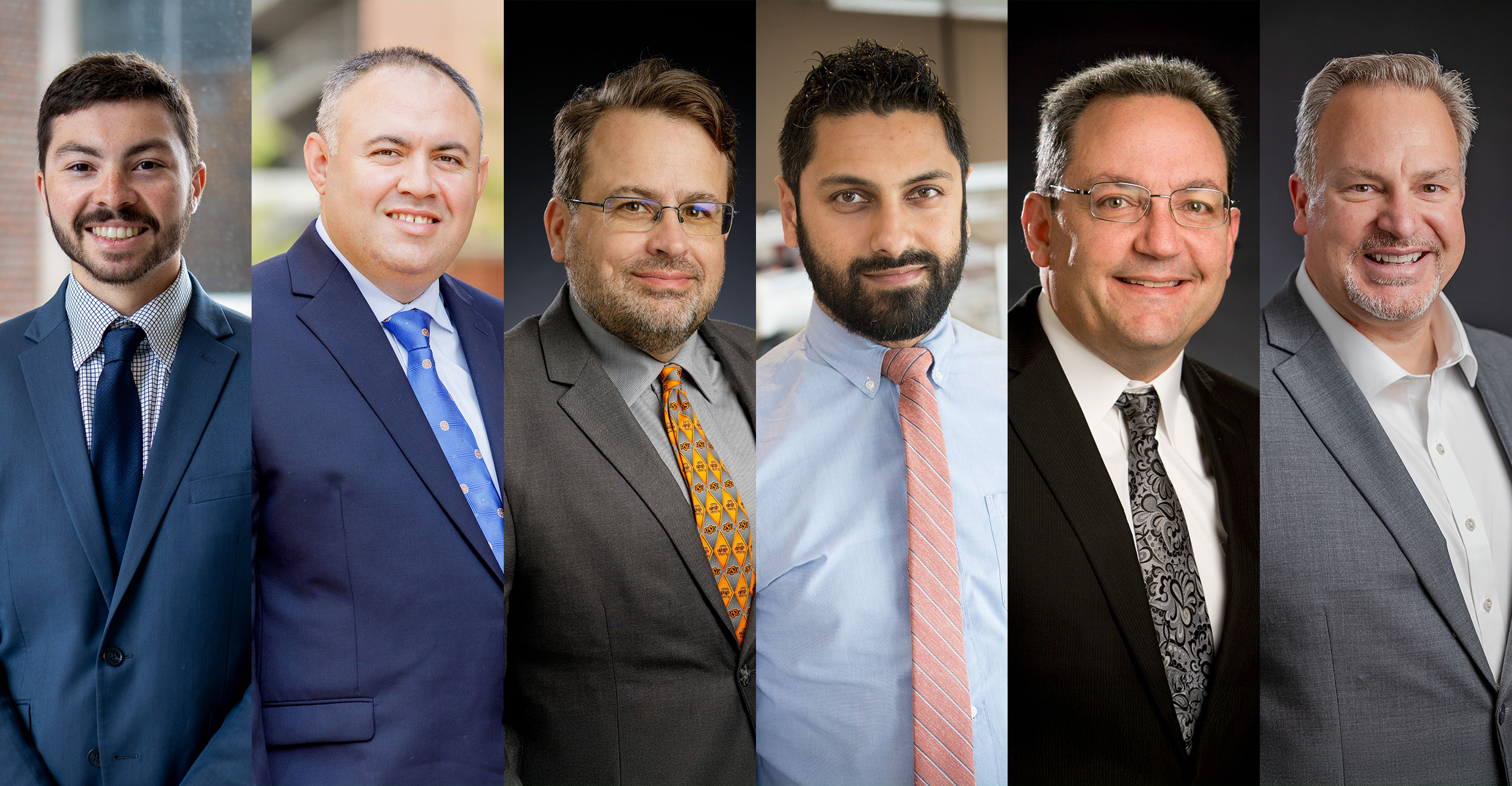
That approach helped Dr. Anthony Comer, MAE assistant professor and director of the Simulation to Flight Applied Research Laboratory, earn the 2026 American Institute of Aeronautics and Astronautics Young Professional Activity Award.
AIAA, the world's largest technical society dedicated to the aerospace profession, recognized the Oklahoma Section with four awards in the small section category. Three of those were awarded to teams including MAE faculty.
For Comer, the recognition reflects a broader effort to help students and early-career engineers develop the skills and confidence needed to contribute to an increasingly multidisciplinary field.
"Aerospace is a field in which professional growth depends on much more than technical knowledge alone," Comer said. "Young engineers need opportunities to build professional networks, communicate their work, take on leadership responsibilities and see how their technical contributions fit into the broader aerospace community."
Comer has incorporated that philosophy into his work in the College of Engineering, Architecture and Technology through professional conferences and events, mentoring and opportunities for students to interact with researchers and industry professionals.
He said one of the biggest challenges facing early-career engineers is making the transition from being technically capable to becoming independent professionals. Engineers entering the workforce must learn to work on open-ended problems, communicate across technical disciplines and make decisions with incomplete information.
"I think another challenge is simply obtaining meaningful responsibility early enough to develop confidence," Comer said. "Young engineers benefit tremendously when they are given ownership of real technical problems rather than being limited to narrowly defined supporting tasks."
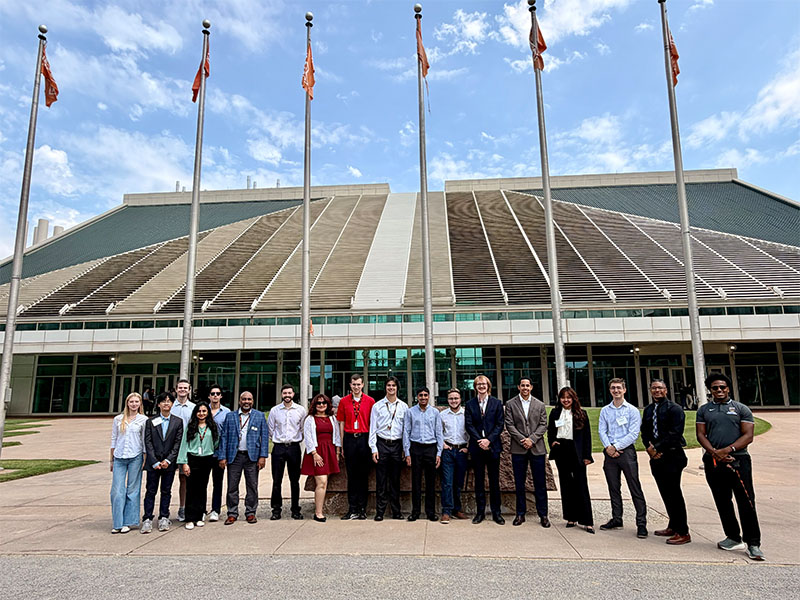
Comer has seen the impact of that approach through programs such as the Summer Program for Academic Research Commercialization, or SPARC at OSU-Tulsa, which brought together 12 students from multiple universities for an eight-week aerospace research experience this summer.
Rather than assigning students to disconnected projects, the program had them work in teams on research projects that progressed from vehicle concepts and simulation through fabrication, hardware integration, testing and demonstration.
By the end of the program, Comer said, students were beginning to understand how individual technical skills come together to execute an aerospace research program.
He has seen similar growth through the Vertical Flight Society Student Chapter, which was established in 2025, as well as through student participation in conferences and other professional society activities.
"Presenting research at a technical conference, speaking with an engineer from industry or NASA, leading a student organization or seeing a vehicle that you helped design successfully fly can change how someone views his or her own capabilities and career trajectory," Comer said.
That connection between professional involvement and student development is also reflected in the work of Dr. Kursat Kara, associate professor in MAE.
Kara, also the technical symposium advisor for the AIAA Oklahoma Section, was recognized alongside Drs. Andy Arena and Kurt Rouser with the Section-Student Branch Partnership Award. The award recognizes effective and innovative collaboration between professional AIAA sections and student branches.
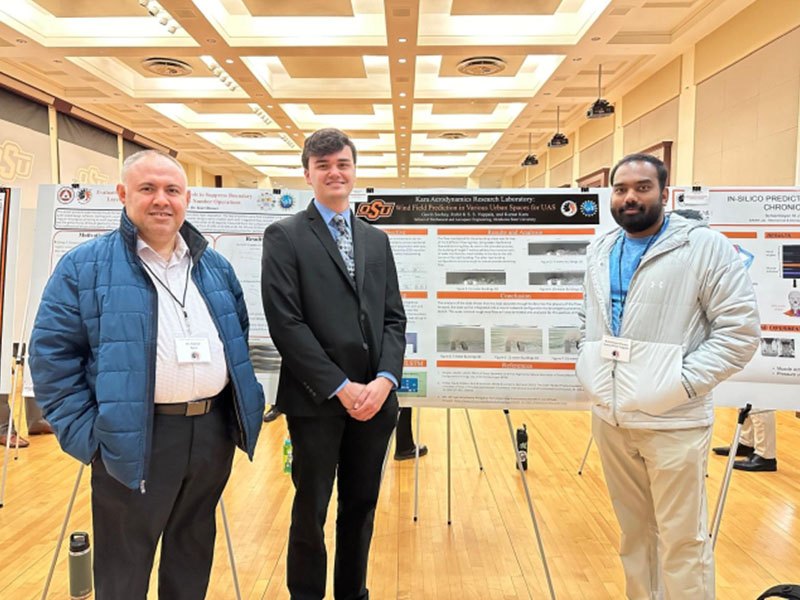
Kara said the Oklahoma AIAA Symposium gives students an accessible setting to present their research, receive technical feedback and learn to communicate their work to audiences beyond their own research groups. The symposium often serves as a first step for students toward larger AIAA conferences and broader professional opportunities.
"Professional involvement helps students develop skills and perspectives that complement what they learn in the classroom and laboratory," Kara said. "Presenting at conferences teaches them how to explain complex technical work clearly, respond to questions, learn from other researchers and build professional relationships."
Kara has seen those opportunities contribute to students' careers.
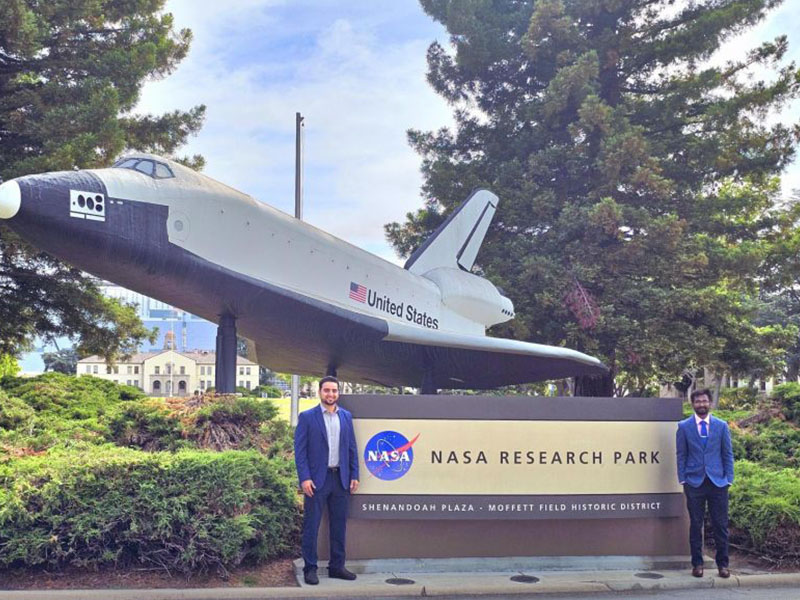
One example is Furkan Oz, a former Ph.D. student in the Kara Lab who presented his research at the Oklahoma symposium before going on to present at AIAA's SciTech and AVIATION conferences. He later completed an internship at NASA Ames Research Center and, after earning his doctorate, joined Oak Ridge National Laboratory as a staff scientist.
Other students from Kara's lab have followed similar paths. Rohit Vuppala presented his research at regional and national conferences before completing an internship at Los Alamos National Laboratory and later holding research positions at the University of Chicago and Fujitsu Research.
At the undergraduate level, Peyton Pierson conducted research in Kara's lab, presented his work and earned first place for Best Undergraduate Poster Presentation at the 2023 MAE Graduate Research Symposium before joining SpaceX after graduation.
For Kara, those experiences illustrate why students benefit from entering the professional community before graduation.
"The goal is not only to help them present their current research, but also to help them develop the confidence, communication skills and professional perspective they will carry into the next stage of their careers," Kara said.
The awards received by Comer and Kara were among four national recognitions for the AIAA Oklahoma Section, which was recognized for its work across the aerospace community.
The section received the following 2026 AIAA Section Awards:
- Outstanding Section Award — Second Place, Small Section: Oklahoma Section
- Public Policy Award — First Place: Imraan Faruque, public policy officer; Jamey Jacob, newsletter editor officer; and James Grimsley, member and volunteer
- Section-Student Branch Partnership Award — Second Place: Kursat Kara, technical symposium advisor; Andrew Arena, section secretary and website editor officer; and Kurt Rouser, faculty advisor
- Young Professional Activity Award — Third Place: Anthony Comer, young professional officer
The recognition marks the first time the Oklahoma Section has received AIAA Section Awards since 2014.
For OSU's aerospace community, the awards recognize work that extends beyond the classroom and laboratory into professional development, student engagement and the continued growth of the field.
As Comer sees it, broader engagement is increasingly important as aerospace challenges require engineers to work across disciplines, institutions and organizations.
The goal, he said, is not simply to prepare students for their first aerospace job, but to help them begin seeing themselves as contributors to the profession.