

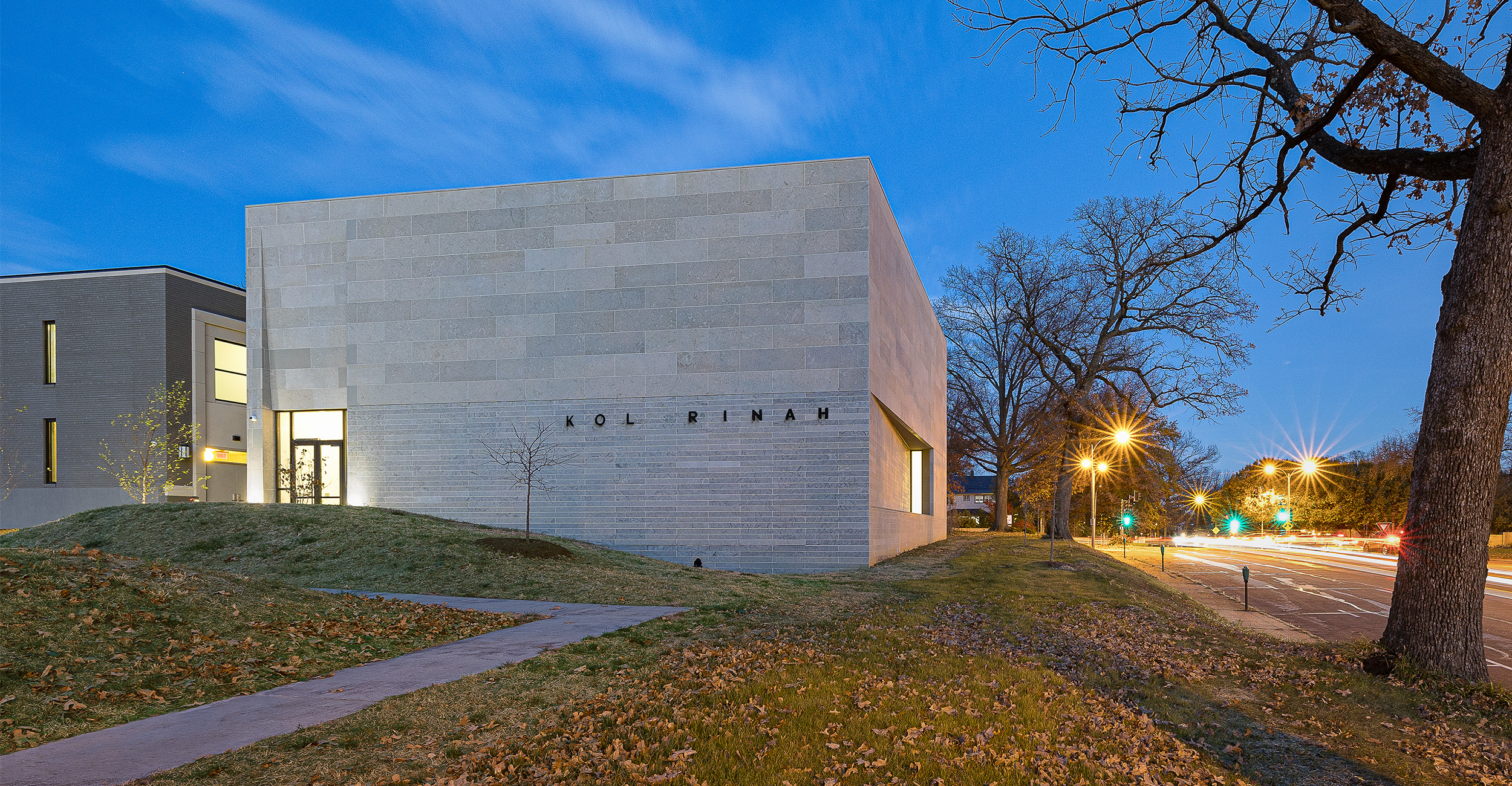
ARCH alumnus’ firm awarded for renovation of Kol Rinah Synagogue
Thursday, May 7, 2026
Media Contact: Tanner Holubar | Communications Specialist | 405-744-2065 | tanner.holubar@okstate.edu
For Eric Hoffman, architecture begins with careful listening — translating shared values, history and aspiration into spaces that strengthen community.
Hoffman, a 1999 graduate of the School of Architecture in the College of Engineering, Architecture and Technology at Oklahoma State University, is a founding partner of the St. Louis-based firm Patterhn Ives, which he co-founded with Anna Ives and Tony Patterson in 2014.
The firm recently received a 2026 Faith & Form International Award for Religious Architecture & Art for its renovation of Kol Rinah Synagogue in Clayton, Missouri. The project was honored by “Partners for Sacred Places” and the “Interfaith Design Knowledge Community” of the American Institute of Architects.
Founded in 1978, the Faith & Form Awards recognize projects that thoughtfully shape spaces for worship, reflection and community life. In 2026, the program selected 12 projects from 75 submissions representing nine countries, honoring work that demonstrated excellence in the creation, renewal and long-term stewardship of religious buildings.
The Kol Rinah project marked the culmination of a decades-long effort to unite two established Jewish congregations on a single campus in St. Louis. Rather than replacing an existing structure, Hoffman and the team from Patterhn Ives transformed a former Baptist church into a synagogue with a distinct identity - one that honored the building’s layered history while meeting the needs of a contemporary congregation.
Many congregants viewed the completed sanctuary as something close to miraculous, having once been told the vision was impossible to realize. Patterhn Ives approached the work not as conventional historic preservation, but as adaptive reuse, focusing on what the congregation already valued while strengthening it through a comprehensive design process.
“Located on the edge of a growing business district, the design honors the rich histories of the congregations while projecting a sense of optimism,” the Patterhn Ives team said. “By carefully integrating a new sanctuary and entry sequence with existing mid-century structures, the architecture and landscape support both social and spiritual engagement central to Jewish faith.”
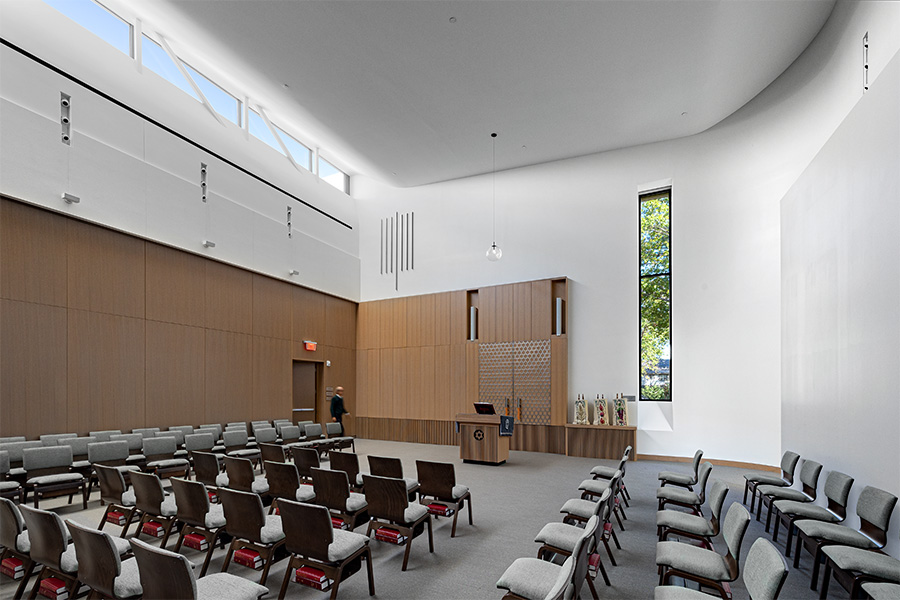
The design serves three primary functions at the heart of synagogue life: gathering, learning and prayer. The renovation improved accessibility, circulation and programmatic flexibility while reinforcing Kol Rinah’s role as both a spiritual center and a place of daily community life.
At the center of the project is a double-height sanctuary designed to feel welcoming, connected and adaptable. The space is acoustically tuned for speech and vocal music and shaped by natural light, which enters through carefully composed openings that balance direct and indirect daylight to create a warm, contemplative space for worship.
“This project was about stewardship,” Hoffman said. “Stewards of the Kol Rinah congregation and of their faith, requiring precise decisions about what to maintain, what to transform and how to create a place that will serve future generations while remaining rooted in its history.”
Hoffman credits his education at OSU with laying the foundation for this approach. As a student, some of his earliest studio work explored sacred spaces, and he was influenced by lectures from former School of Architecture professor Dr. David Hanser on religious architecture and the long-term adaptation of sacred buildings.
He remains close with Hanser, along with former faculty mentors Suzanne & Moh’d Bilbeisi and Nigel Jones - relationships that began in the classroom and evolved into lasting professional friendships.
“OSU provided me with a well-balanced foundation in design, architectural history, building systems and professional practice,” Hoffman said.
With nearly 30 years of experience, Hoffman has led major cultural, academic and civic projects focused on arts, education and community-centered design. He has also taught throughout the Midwest, mentoring future generations of architecture professionals.
“I’ve dedicated my career to arts, education, community and design excellence—the basis of our practice,” Hoffman said. “Kol Rinah is one of the earliest and most meaningful projects in the formative years of Patterhn Ives.”