

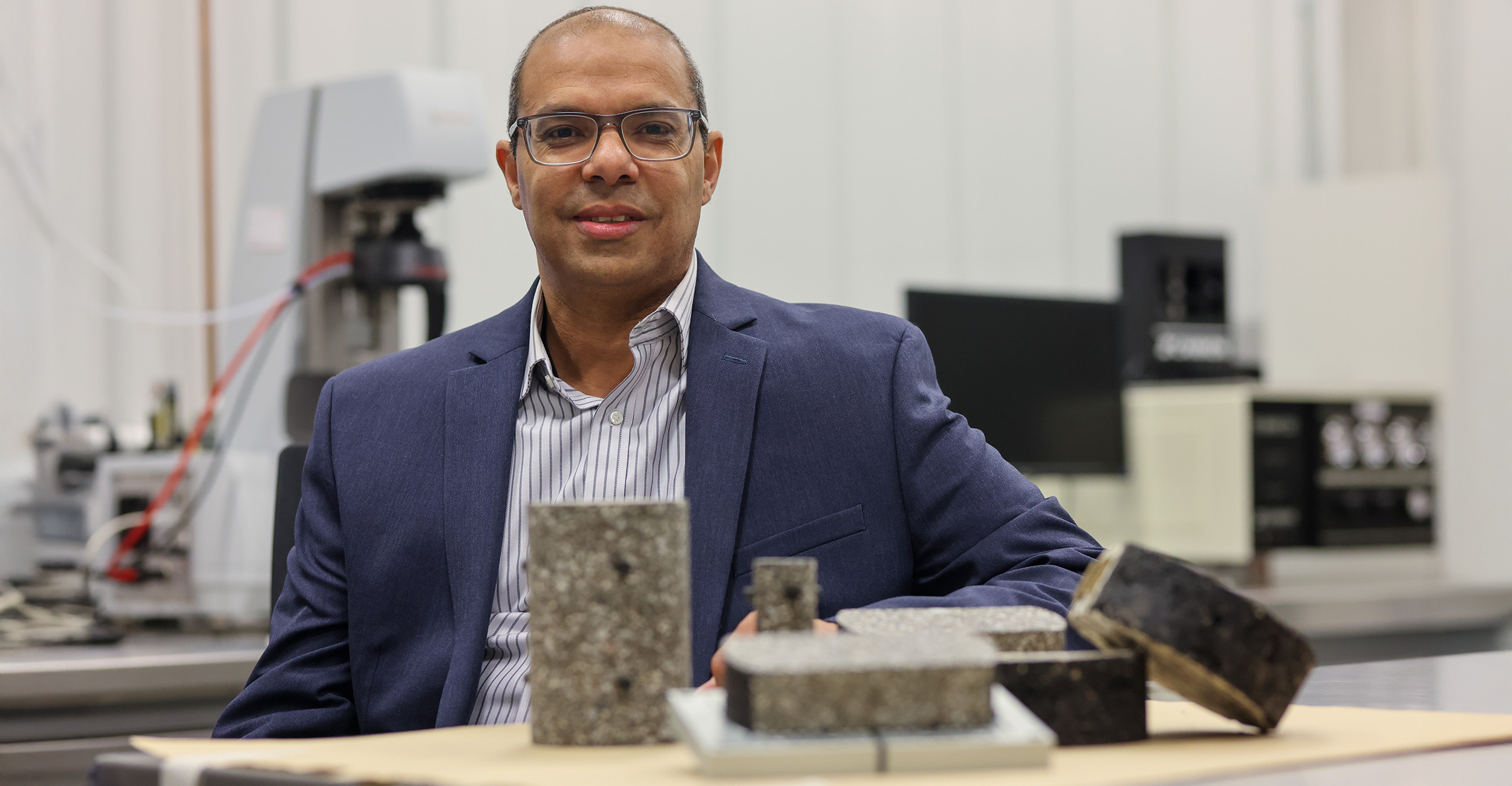
OSU and ODOT partner to better understand the science of asphalt performance
Tuesday, September 8, 2026
Media Contact: Desa James | Communications Coordinator | 405-744-2669 | desa.james@okstate.edu
A new road can look smooth and finished long before engineers know how well it will perform.
Beneath the surface, the materials that make up an asphalt pavement are responding to traffic, weather, moisture and time. Small differences in how those materials are produced can affect how a road performs years after construction.
At the College of Engineering, Architecture and Technology, researchers are working with the Oklahoma Department of Transportation to better understand those differences as the state moves toward a new approach to asphalt mixture design.
Dr. Mohamed Elkashef, an associate professor in the School of Civil and Environmental Engineering, is leading a research project focused on one of the challenges ODOT has identified in implementing Balanced Mix Design, or variability in asphalt production.
The goal is to understand where that variability comes from, how it can be measured and how it affects asphalt mixture quality.
The work comes as ODOT moves toward fully implementing BMD, which shifts asphalt mixture design away from relying solely on traditional measurements and toward evaluating how a mixture is expected to perform in the field.
“Current Superpave specifications are based primarily on volumetric criteria, which do not always correlate with actual pavement performance and can restrict the use of recycled materials and innovative mixture technologies," Elkashef said.
"In contrast, BMD adopts a performance-based approach by incorporating tests that evaluate key distress mechanisms, helping to ensure improved pavement performance and durability.”
That distinction changes what engineers want out of an asphalt mixture.
“BMD incorporates performance testing to evaluate cracking resistance, rutting susceptibility and moisture damage, whereas traditional volumetric mix design relies solely on meeting volumetric requirements, such as air voids, voids in mineral aggregate and voids filled with asphalt, without directly assessing mixture performance,” Elkashef said.
There is still a challenge that must be addressed before those performance-based tests can become part of quality acceptance: asphalt mixtures can vary from one production lot to the next.
An asphalt plant may produce thousands of tons of material for a single project, with acceptance testing typically based on samples collected at approximately 1,000-ton intervals. If the mixture changes significantly during production, test results can vary as well.
“Production variability can lead to mixtures with inconsistent quality and, consequently, variable field performance," Elkashef said.
Elkashef’s research team is examining that variability across multiple projects and asphalt plants throughout Oklahoma. Industry partners are helping researchers collect raw materials and loose-mixture samples from every production lot. The study includes ODOT-approved mixtures representing different mix designs, material sources and recycled material contents, allowing researchers to compare mixture properties throughout the production process.
The team will evaluate a range of tests related to cracking, rutting and the properties of the asphalt binder. Understanding the binder can help identify why a mixture changes from one production lot to another.
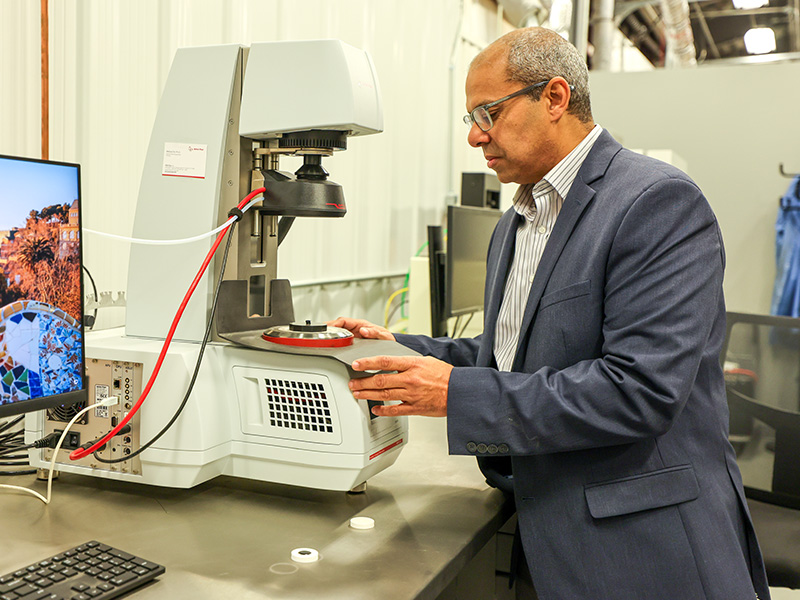
“Rheological testing measures a binder's physical properties, including its stiffness and ability to withstand and recover from traffic loading," Elkashef said. "Chemical testing examines the binder's composition, helping researchers understand how aging and the binder source influence its performance.”
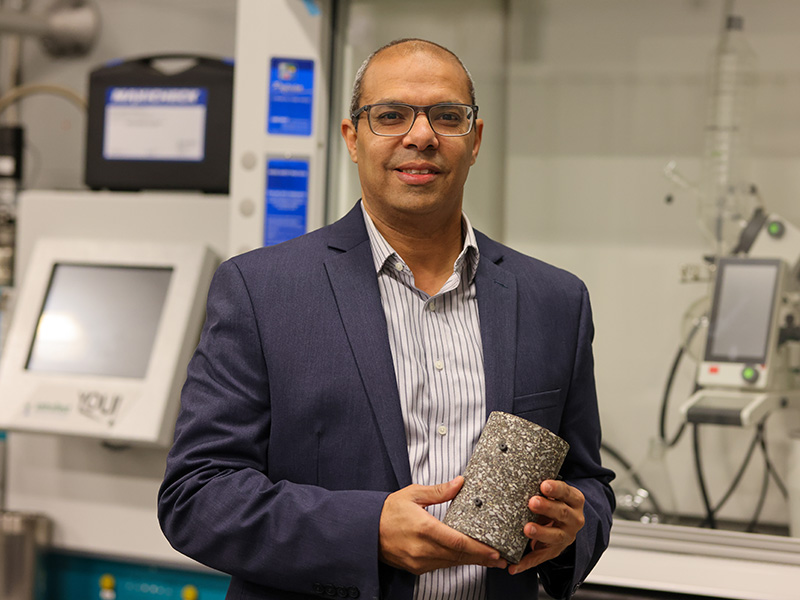
The research will also examine whether binder test results correlate with mixture test results.
“Because binder properties affect mixture performance, it is important to understand how binder aging during production contributes to variability in mixture test results,” Elkashef said.
Ultimately, the project is intended to help ODOT develop a clearer framework for accounting for production variability as BMD becomes part of the state’s quality control and acceptance processes.
But the implications extend beyond the laboratory.
“By reducing production variability, agencies can build longer-lasting pavements with reduced risk of premature distress, lower maintenance cost and improved value for taxpayers,” Elkashef said.
For Oklahoma drivers, that work could eventually translate into something far less technical: roads that perform as intended for longer periods.
As ODOT continues its transition toward performance-based asphalt design, the research at Oklahoma State University is helping fill in an important piece of the puzzle, understanding not only what an asphalt mixture is supposed to be, but how consistently it can be produced.
"By reducing production variability, agencies can build longer-lasting pavements with reduced risk of premature distress, lower maintenance cost and improved value for taxpayers."