


CEAT Hall of Fame member Ed Stokes built a successful engineering career through persistence
Tuesday, May 19, 2026
Media Contact: Tanner Holubar | Communications Specialist | 405-744-2065 | tanner.holubar@okstate.edu
Ed Stokes came from humble beginnings, growing up in a two-bedroom upstairs apartment that had once been part of a pre-statehood county jail.
Raised in a working-class family by parents who grew up during the Great Depression and were unable to finish high school, he learned early the realities of financial hardship. Those experiences shaped his understanding that meaningful change requires ownership — accepting one’s circumstances while committing to hard work, perseverance, and determination.
The youngest of five children, he was the second in his family to pursue higher education, an ambition influenced by his father’s work as a plumber and his mother’s job at a local factory that produced Wrangler jeans.
These humble origins instilled in Ed (Eddy when he grew up) a sense of purpose and determination that carried him through engineering school, earning his degree and making a significant impact throughout his career in the oil and gas industry.
Stokes began his academic journey at Eastern Oklahoma State College in Wilburton in the fall of 1970, then transferred to Oklahoma State University in the fall of 1972, where he enrolled in the civil engineering program. Coming from Okemah, a small Oklahoma town, he lacked many prerequisites and spent a year at Eastern to catch up with his peers.
Stokes was initially told before going to Eastern that he wasn’t prepared for the academic rigor of OSU due to his unimpressive ACT score and only achieving a “B” GPA in high school. In truth, he was not a good candidate for an engineering degree, and his chances of earning it were only 1 in 100, or 1%. Of course, he didn’t know that. So, he forged ahead with determination, knowing that earning his degree would change his destiny.
While at Eastern, he excelled academically, and upon transferring to OSU, he became a Lew Wentz Scholar, working in the School of Civil and Environmental Engineering to help pay for college. The problem wasn’t so much a lack of intelligence as a lack of preparation, access to the prerequisites and confidence. This is still a problem in rural communities throughout Oklahoma.
If you ask Ed, he’ll tell you he was as surprised as anyone when he earned the highest grade in his freshman chemistry class, especially since he had never taken chemistry in high school.
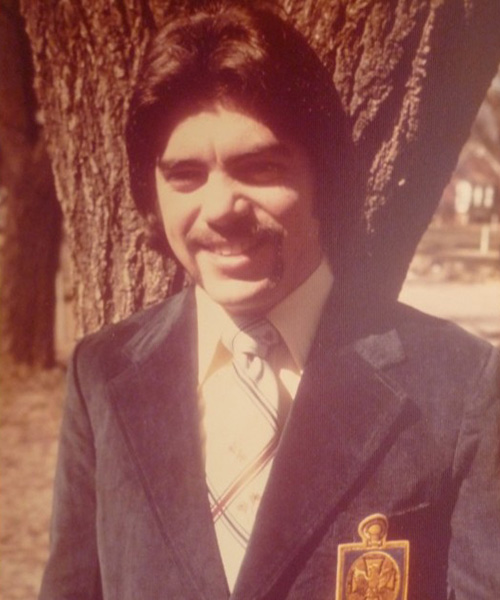
When Stokes started at OSU, he joined Triangle Fraternity, available only to students majoring in engineering, architecture and science. He was then asked to join Chi Epsilon, the civil engineering honorary; Omicron Delta Kappa, the leadership honorary; Sigma Tau, the regional engineering honorary; Blue Key, the men’s leadership honorary; and Tau Beta Pi, the national engineering honor society. He became its president as well as president of Triangle, during his senior year. He was also inducted into The Knights of “St. Patrick,” for his outstanding academics and leadership in the College of Engineering, Architecture and Technology.
To help pay for school during the summers, he worked for the Oklahoma Department of Transportation. During the academic year, he served as rush chairman for Triangle while also working in the CIVE school. Before his final year, he gained additional industry experience with Texaco in New Iberia, Louisiana. He went on to graduate in the spring of 1975.
“The combination of progressing through the civil engineering curriculum, working at the School of Civil Engineering, living with a house full of engineering students as well as participating in several different organizations helped prepare me for the challenges I would face in problem-solving and building trust and relationships needed in my job as well as helped develop key leadership expertise that I would need throughout my future professional career,” Stokes said. “Of course, earning an MBA and obtaining my PE and PMP gave me additional qualifications to continue to climb the ladder of success.”
His three years at CEAT saw him develop lifelong friendships with fraternity brothers and become an avid admirer of his professors. While his professors have now passed, he still keeps in touch with many of his fraternity brothers.
“Furthermore, it was during that time at OSU that I recognized the importance of continued and consistent focus and hard work that I put into earning my degree was also matched to the same degree by the efforts of my professors who continually invested their time and expertise in educating me to become a competent engineering graduate,” Stokes said.
After five interviews and five job offers, Stokes accepted a job with Mobil Oil Corporation in Dallas, alongside several other recent graduates from around the country. They were all hired as drilling engineers for Mobil worldwide. After completing the required 15-month drilling development program, he quit and joined Continental Oil Corporation (Conoco).
“Why? Because I knew I needed to go to the field to gain more direct operational experience than being an office engineer,” Ed said. “It was the smartest decision I made in my entire career.”
He worked for Conoco, which became ConocoPhillips, for nearly 40 years. This career took him around the world three times, twice on business and once to take his family on vacation.
“Now, having lived in seven countries and visited 67 as well as all the continents, including Antarctica, I’m still at work and not yet ready for the rocking chair out on the front porch,” Stokes said. “I know that I can help those who are coming after me, and I’m committed to doing just that!”
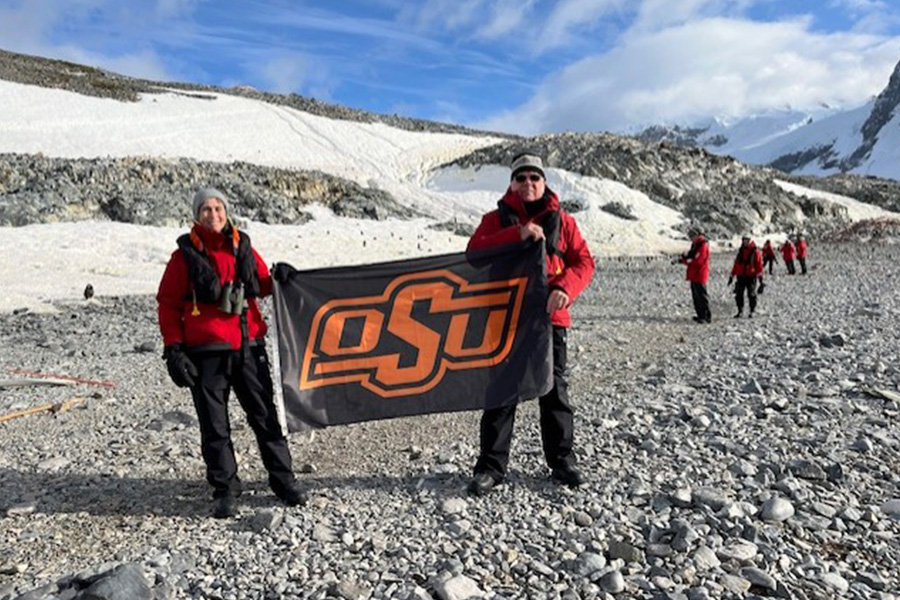
“I’ve had an incredible and exciting career from supervising the installation of a billion dollar floating platform in the North Sea when I was only 32 years old, being the project manager of multi-billion dollar MEGA projects, having dinner with the Crown Prince of Norway, prime ministers, CEOs as well as being the Chairman of the Board of Directors of the largest oil and gas conference organization in the world, having to figure out how to coordinate communications in Sicily with an offshore drillship in the Mediterranean Sea and across the island to our office in Siracusa from a place where one on spoke English, to riding countless times with armed guards in a bullet-proof SUV and being evacuated in the middle of the night because of direct threats from terrorists,” Stokes said.
Stokes was inducted into the CEAT Hall of Fame in 2015 for his contributions to his field and for his continued involvement with CEAT through retirement. He currently serves as chair of the CEAT Strategic Advisory Board and leads the “Oklahoma STEM Pipeline Partnership.”
Recognizing the importance of education in the state, he focuses on strengthening K-12 STEM education, workforce readiness in STEM fields and technology innovation and application across Oklahoma.
"My passion is giving back by helping as many young Oklahomans as possible gain access to the same high-quality STEM education that enabled my success,” Stokes said.
Ed’s journey from a small town in Oklahoma with the odds against him earning an engineering degree to managing MEGA projects around the world shows the powerful reach of a degree from the College of Engineering, Architecture, and Technology extending far beyond Stillwater.
“You can do the same if you’re committed to leveraging all you have learned,” Ed said. “Go Pokes!”