

CEAT remembers emeritus faculty member Dr. Billy Lee Crynes
Wednesday, September 9, 2026
Media Contact: Tanner Holubar | Communications Specialist | 405-744-2065 | tanner.holubar@okstate.edu
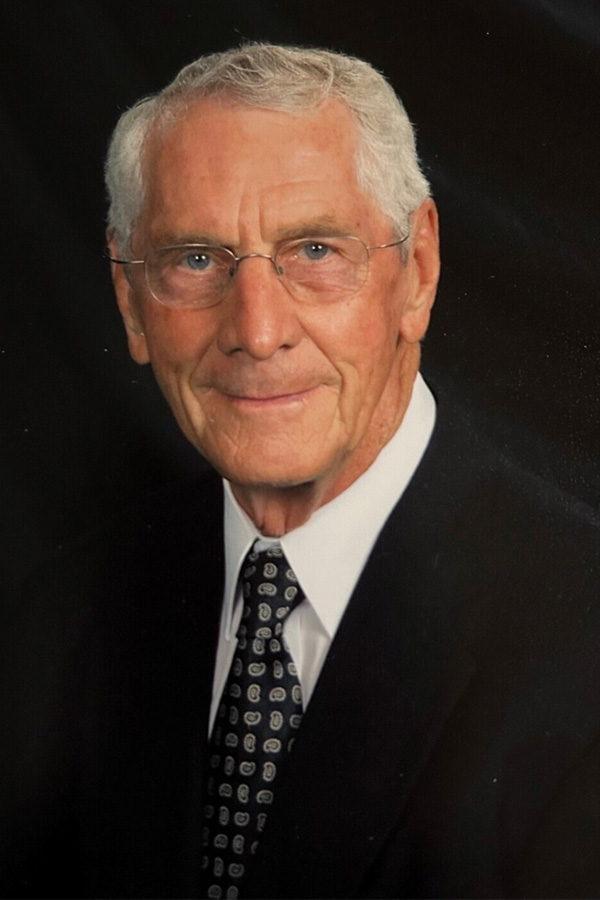
The Oklahoma State University College of Engineering, Architecture and Technology community is mourning the loss of Dr. Billy Lee Crynes, an emeritus faculty member and former head of the School of Chemical Engineering, whose career in higher education spanned more than three decades. Crynes died Aug. 12 at the age of 88.
Crynes joined the OSU faculty after earning his doctorate in chemical engineering from Purdue University in 1967. Over the next 20 years, he distinguished himself as an educator and leader, eventually becoming head of CHE in 1978.
During his time at OSU, Crynes made a lasting impact on generations of engineering students and colleagues. His commitment to education was recognized throughout his career with four outstanding teaching awards from OSU.
Crynes' research was closely associated with coal conversion and processing, which was an especially important area of energy research following the energy crises of the 1970s. By the time he left OSU, he had received approximately 20 grants for coal research and published extensively in the area.
He also brought his industry experience to the program. Crynes worked as a development engineer for E.I. duPont de Nemours Inc. and as a research engineer for Standard Oil and Nalco Chemical Co. In addition, he served as a consultant to Oak Ridge National Laboratories, Kerr-McGee, Dow Chemical, Nalco Chemical and Global Engineering, among others.
In 1987, Crynes was selected to serve as dean of the College of Engineering at OU, where he helped guide a period of significant growth. During his tenure, the number of endowed chairs and professorships increased from four to 25; annual research grants tripled and the value of the college’s endowment increased sixfold.
His leadership also placed a strong emphasis on students and expanding opportunities in engineering education. The college strengthened its recruitment of national scholars, developed international exchange programs with universities in France and Thailand and became an early adopter of technology by requiring engineering students to own laptop computers.
Crynes was also committed to broadening participation in engineering. Under his leadership, OU’s Minority Engineering Program ranked among the nation’s top programs in enrollment, graduation and national scholars.
Throughout his career, Crynes was recognized for his service to the engineering profession. He received membership recruitment honors three times from the Oklahoma Society of Professional Engineers, as well as recognition from the National Society of Professional Engineers.
Crynes retired as a professor in 2002. In recognition of his contributions to engineering education and higher education leadership across Oklahoma, he was inducted into the Oklahoma Higher Education Hall of Fame in 2007.
Long before his academic career, Crynes graduated from Gerstmeyer Technical High School in Terre Haute, Indiana, in 1956. He earned his bachelor’s degree in chemical engineering from Rose-Hulman Institute of Technology in 1962 before completing his doctorate at Purdue.
Retirement offered Crynes the opportunity to pursue another passion: traveling the world and documenting historical outhouses. His unusual hobby took him to dozens of countries and resulted in a collection of thousands of photographs — a pursuit that reflected the curiosity and sense of humor for which he was known.
Those who knew Crynes remember a man who was quick with a smile, a joke, an encouraging word or a kind gesture. His warmth and joyful personality complemented a professional legacy defined by a deep commitment to students, engineering education and the institutions he served.
Crynes was preceded in death by Mary, his wife of 63 years, in 2021. He is survived by their three sons, Lawrence, David and Stephen; seven grandchildren; and seven great-grandchildren.
A celebration of Crynes’ life was held Aug. 17 at McFarlin Memorial United Methodist Church in Norman.
CEAT is deeply grateful for Crynes’ service to OSU and for the lasting impact he made on engineering education throughout Oklahoma. His legacy lives on through the students, faculty and colleagues whose lives and careers he helped shape.