

Chemical engineering researchers investigate a new strategy for recovering lithium from unconventional sources
Friday, September 4, 2026
Media Contact: Tanner Holubar | Communications Specialist | 405-744-2065 | tanner.holubar@okstate.edu
Lithium has never been more prevalent in the world than it is today. With the continued rise of electric vehicles, electronic devices, renewable energy systems and batteries, the recovery of lithium is a big business.
Conventional methods include hard rock mining and brine water evaporation. Mining lithium involves digging up minerals holding lithium, crushing the rock, heating it at extreme temperatures, and then using chemicals to extract the lithium.
Brine evaporation pumps underground saltwater into large ponds and relies on months or years of sunlight to evaporate water and concentrate lithium. This requires large land areas and slowly consumes large volumes of water and land.
Researchers in the School of Chemical Engineering in the College of Engineering, Architecture and Technology at Oklahoma State University recently published a journal article on a method for gathering lithium through adsorption using zeolite-based solid adsorbents.
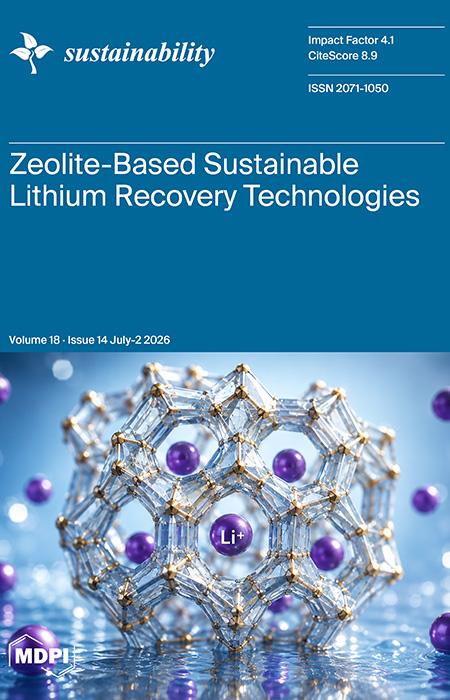
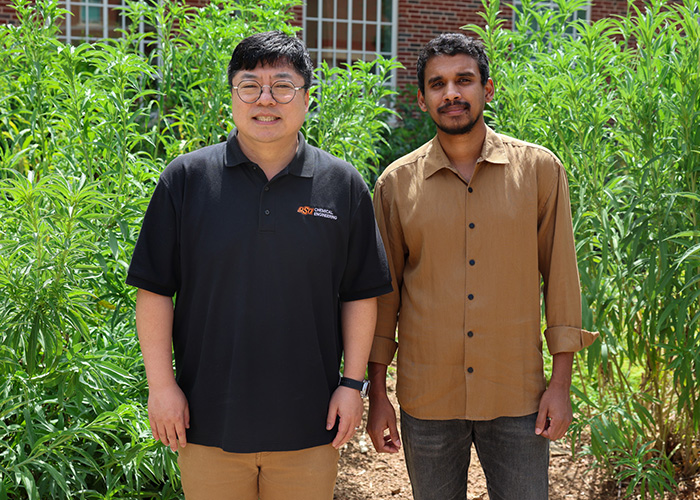
Dr. Hong Je Cho, assistant CHE professor, and Md Razaul Karim, a Ph.D. student on Cho’s team, were co-authors on the journal article titled “Zeolite-Based Adsorbents as Next-Generation Materials for Sustainable Lithium Recovery Technologies,” which was recently published in Sustainability.
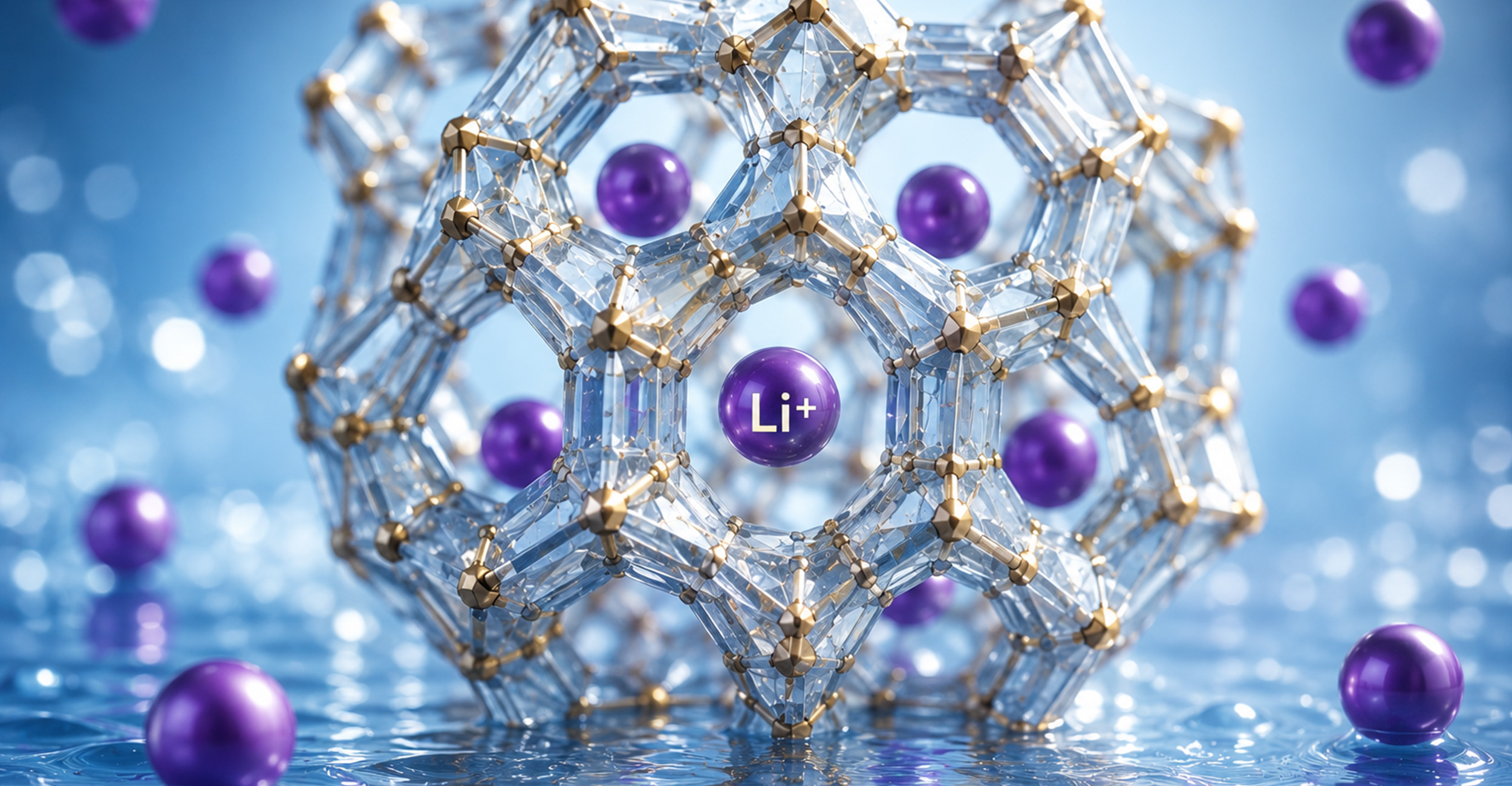
Their paper discusses how lithium can be extracted using zeolite-based materials, crystalline and nanoporous materials with pores around 0.3-1 nanometers in size. Their pore structures and ion-exchange sites can be tailored to selectively adsorb lithium ions from water.
Lithium ions exist in aqueous solutions such as brine, wastewater, industrial streams and battery recycling solutions.
“Through adsorption, lithium ions stick to the surface of another material that is called an adsorbent, while other metal ions remain in the solution,” Cho said. “Once the adsorbent captures lithium ions, the lithium ion-loaded adsorbent is treated to release the captured lithium for further processing.”
By enabling efficient, selective recovery of lithium from non-conventional resources and offering a cost-effective, simple and scalable lithium recovery process, this adsorption approach could reshape how lithium demand is met in the future.
“This strategy broadens the accessible lithium supply and supports rapidly increasing lithium demand,” Cho said.
This paper enabled students such as Karim to deepen their understanding of zeolite-based adsorption and lithium recovery strategies, gaining experience with a burgeoning approach to lithium recovery. Students also gained experience in research design, literature and data analysis, scientific communication, and evidence-based evaluation of emerging technologies.
“Having this paper published in Sustainability is both exciting and motivating,” Cho said. “The publication not only affirms the impact of the work but also encourages further exploration into zeolite-based adsorbents as next-generation materials for sustainable lithium recovery. Furthermore, this paper was selected as a Journal Front Cover, an honor awarded from among 576 published articles. It’s a truly exciting recognition.”
By exploring new ways to recover critical resources such as lithium, researchers and students are helping to build a more sustainable future while gaining the knowledge and experience necessary to tackle tomorrow's challenges.