


Civil engineering research studies if 3D-printed concrete could repair dam infrastructure
Wednesday, August 26, 2026
Media Contact: Tanner Holubar | Communications Specialist | 405-744-2065 | tanner.holubar@okstate.edu
Dams play a crucial role in our country's infrastructure, providing flood control, drinking water, recreational opportunities, irrigation and much more.
Many dams in the U.S. were designed to last approximately 50 years, and the average dam in the country today is more than 60 years old. This means the inspection, maintenance and upkeep of these facilities becomes increasingly important.
Out of the roughly 5,000 dams in Oklahoma, an estimated 10% are considered high-hazard. This means if the dam were to fail, there could be a loss of life or significant property damage. These dams are regularly inspected, but the critical nature of dams and their aging infrastructure has inspired engineers to explore alternatives.
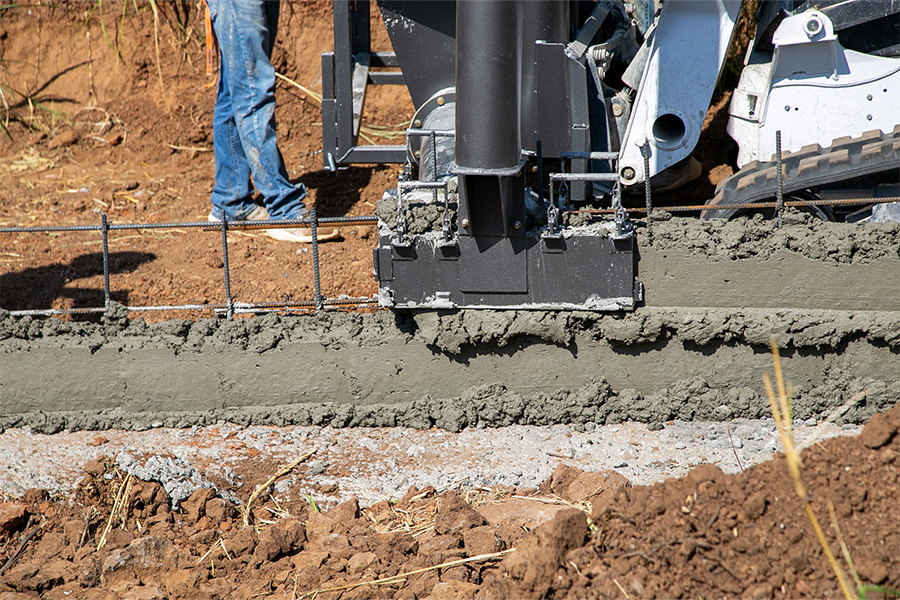
Researchers in the College of Engineering, Architecture, and Technology at Oklahoma State University are undertaking a project to explore the viability of 3D-printed concrete dams.
A one-year project funded by the U.S. Department of Agriculture will explore a concept that could revolutionize how dams are constructed and repaired. Led by principal investigator Dr. Tyler Ley, Regents Professor and co-PI Dr. Jaime Schussler, assistant professor in the School of Civil and Environmental Engineering.
This project unites researchers and students from civil, mechanical, and electrical engineering. The team plans to build parts of dams and test them at the USDA labs in Stillwater.
Ley said this is an intensive project, with these structures being tested under floods and heavy water exposure. In addition to full-scale testing, the team will build multiple 3D printers to fabricate columns and walls.
"This project has a chance to change concrete construction forever," Ley said. "You can't say that about too many projects you get to work on. This one's going to be so much fun."
There are many factors to consider when it comes to dam repair. Understanding how they could fail, such as overtopping, slope instability and internal erosion or piping, is key. Knowing these elements can then allow for targeted repairs, which can include increasing spillway heights, providing energy dissipation or capping vulnerable areas .
"If we’re doing repairs on an aging dam, we need to think about how both upstream and downstream developments have changed — even if the dam is just as safe as it was, we may have communities closer downstream," Schussler said. "We should also think about future conditions — if we continue to have larger storm events and more upstream development, then we may consider increasing reservoir capacity. Ultimately, we need to think about reducing risk and extending the life of this very critical infrastructure."
Schussler said 3D printing could allow for repairs to be made more quickly and efficiently, reducing costs associated with construction and labor. She said there are promising possibilities, such as improving spillway performance through rapidly constructed concrete overlays or structures. It could also allow for capping areas affected by internal erosion, reinforcing vulnerable sections of dams and creating energy dissipation structures that reduce downstream erosion and flooding impacts.
"Looking ahead, one particularly exciting possibility is underwater concrete printing," Schussler said. "If we can successfully print below the water surface, we may be able to avoid cofferdam construction, reduce risks to workers and perform repairs in places that are currently difficult and expensive to access. This project is only a first step, and one year is a relatively short timeline, but I hope it opens the door to many future applications."
Ley's expertise in concrete and Schussler's wisdom in water resource management have combined to make this a truly interdisciplinary research endeavor, fostering a collaborative environment for faculty and students alike.
Ley is proud to work with Schussler, a longtime friend and colleague, on a project that can make a difference not only for the people of Oklahoma but also for the infrastructure that so many people rely on.
For Schussler, it's been great to work on a natural collaboration, as flood protection research relies on concrete materials for hydraulic structures. She enjoys working with Ley on complementing each other's work, showcasing the benefits of high-caliber collaboration to the students involved in the project.
"One of my favorite things is getting to show students what happens when we break down our discipline silos," Schussler said. "By bringing our concrete and water groups together, we hope to create innovative solutions that benefit Oklahomans and beyond."