

Civil and environmental engineering program gives undergraduates opportunity to lead water research
Thursday, August 27, 2026
Media Contact: Desa James | Communications Coordinator | 405-744-2669 | desa.james@okstate.edu
For many undergraduate students, the idea of conducting their own research can seem out of reach.
Some are unsure where to begin. Others hesitate to approach faculty about joining a research team. The Bullen Research Experiences for Undergraduates program is helping to change that by providing students with funding and mentorship to pursue research focused on water conservation and water quality.
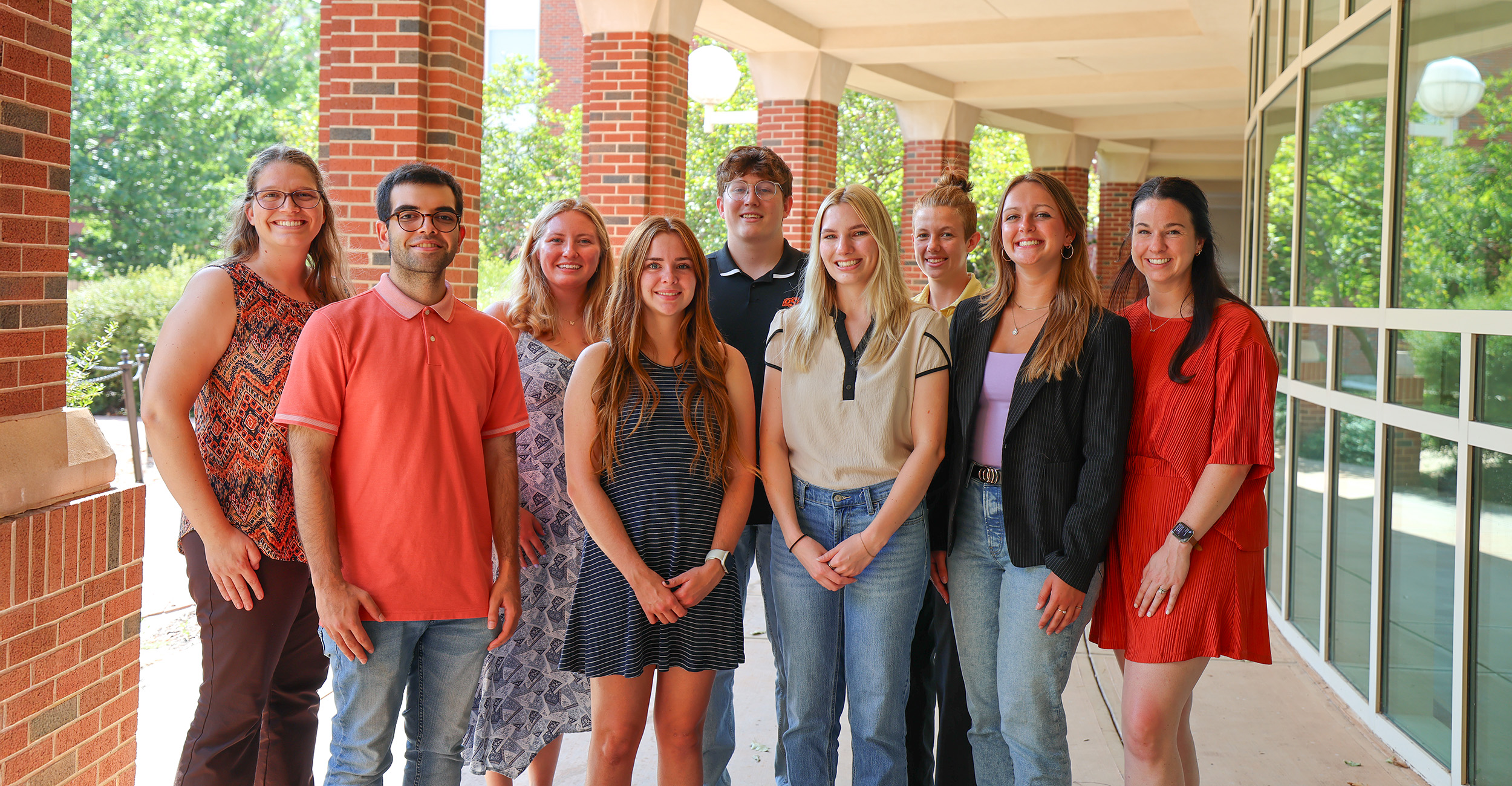
Launched in spring 2026 through the Bullen Memorial Endowed Fund, the program supports undergraduate research projects that align with the fund's mission to encourage water conservation and water quality research within Oklahoma State University's College of Engineering, Architecture and Technology. Since its launch, the program has supported seven students, including three during the spring semester and four during the summer.
The program was created after faculty recognized a common challenge.
"Many programs have departmental or college-level undergraduate research opportunities, but they often rely on faculty having funding available to support students," said Dr. Mary Foltz, associate professor in the School of Civil and Environmental Engineering. "Sometimes, faculty want to work with undergraduates but simply don't have funding. The Bullen Memorial Endowed Fund gave us an opportunity to create a program that allows students to develop their own research projects while supporting work related to water conservation and water quality."
Unlike many undergraduate research experiences, the program gives students ownership of their work. Students develop a proposal with a faculty mentor and receive funding to carry out the project.
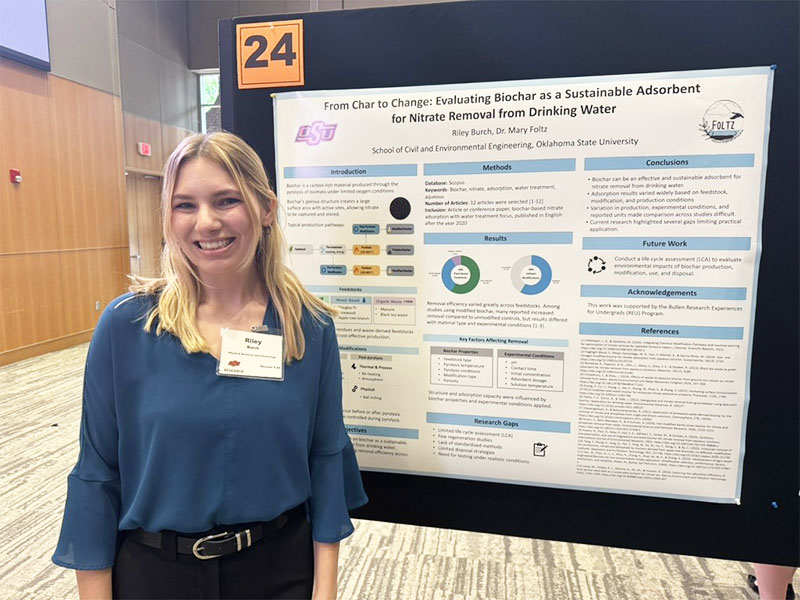
For Riley Burch, a CIVE student with a concentration in environmental engineering, the program provided an opportunity to move from supporting research to leading her own project.
"I was hesitant at first since I had helped graduate students with their research projects, but had never developed an idea on my own," Burch said. "Dr. Foltz worked with me through every step of the process to help develop my idea into a thoughtful research project with clear goals. It was because of her encouragement that I felt confident in submitting an application and carrying out the project."
Current projects explore a range of challenges, including reducing surface water pollution, improving water distribution system efficiency, treating water through passive systems and removing contaminants using advanced treatment methods.
For Connor Bailey, a CIVE sophomore, the opportunity has already shaped his academic experience.
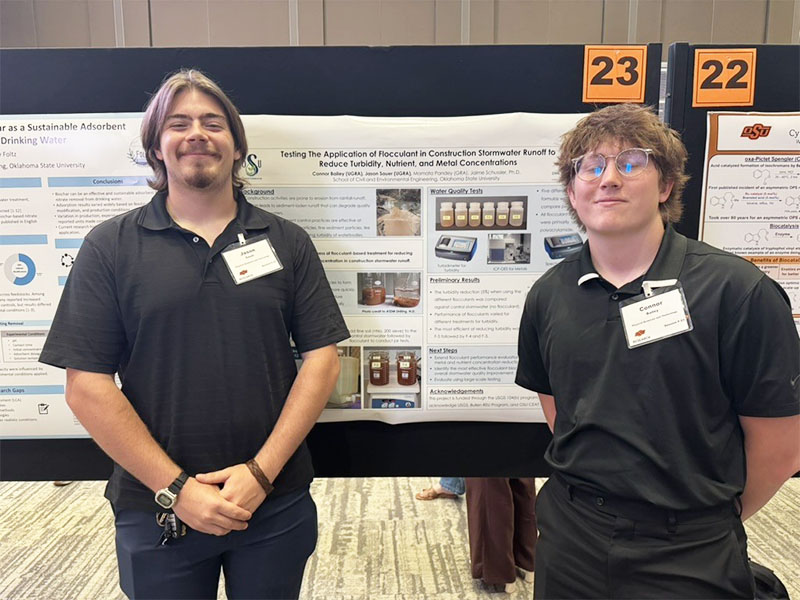
Working in the Schussler Stormwater Laboratory, Bailey contributes to research focused on removing pollutants from construction site stormwater before it reaches lakes and rivers. Through the Bullen REU, he has also gained opportunities to present his work professionally.
"Winning the award has given me the opportunity to attend multiple conferences and present at them," Bailey said.
Bailey encourages other students to take advantage of the opportunity.
"It has granted me many opportunities and experiences that I would not have had if I had not applied," Bailey said.
From the College of Arts and Sciences, environmental geology student Vicktoria Holdaway found the program opened the door to research she never knew existed.
As a first-generation transfer student, she wasn't familiar with undergraduate research groups when she arrived at OSU. After joining Foltz's research group, she found herself helping develop floating wetlands that could one day be replicated in industrial, public and community settings.
Research, she says, isn't reserved for experts.
"There really is a spot for everyone," Holdaway said. "You do not need to be a genius or be the most educated person in the room to work in research. If you join a research group, don't be overconfident, but also don't be nervous to share your ideas because they will be valued."
One of her favorite memories came while building wetland mesocosms with fellow researchers. Students from multiple research groups worked together to pour a concrete foundation for the project despite heavy rain.
"Everyone was proactive in working on something new,” Holdaway said. “While pouring the concrete, we had gotten down poured on, and everyone kept a great mood even in the bad conditions. We all laughed and continued to work."
Foltz said that collaborative effort has become one of her favorite examples of the program's impact.
"Five of our Bullen REU awardees worked together this summer to lay the foundation — literally — for one of the students’ research projects,” Foltz said. “Vicktoria Holdaway needed a level surface to hold her mesocosm wetlands on the north side of campus, so she organized a team, including four other Bullen REU awardees, to assist with the preparations and pouring of a large concrete pad. It was inspiring to see them all come together to tackle this challenge and learn new skills as a group."
Beyond research, students are developing professional skills that will serve them throughout their careers.
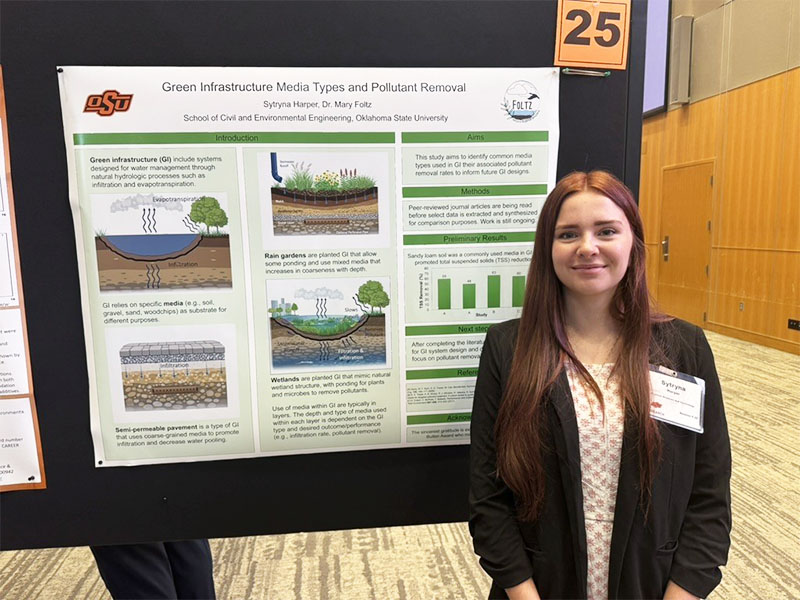
Poster presentations are a required part of the program, providing many students with their first opportunity to communicate their research to a broader audience. Faculty mentors also help students build skills that extend beyond the laboratory, including professional communication, conference presentations and networking.
Foltz hopes to see the program continue growing by attracting more applicants and faculty mentors from across CEAT and beyond.
"Any student interested in learning more about water research is encouraged to apply," Foltz said. "Students don't need to be within CEAT themselves to participate, and any CEAT faculty member can serve as a mentor. We hope to introduce even more students to research in the future."