

Data Center Symposium 2026 explores energy, water and AI challenges
Monday, May 11, 2026
Media Contact: Desa James | Communications Coordinator, CEAT | 405-744-2669 | desa.james@okstate.edu
The Oklahoma Association of Energy Engineers and the Great Plains Center of Excellence at Oklahoma State University - Industrial Training and Assessment Center hosted the Data Center Symposium 2026: Energy and Water on April 22 at the Hamm Institute for American Energy.
The symposium brought together leaders from academia, industry, government and the energy sector to examine how the rapid growth of artificial intelligence is reshaping infrastructure demands. As computing needs expand, data centers are emerging as a critical intersection of energy systems, water resources and economic development.
Throughout the day, speakers emphasized that data centers are no longer just technology facilities. Their scale and resource demands are placing new pressure on power systems, water availability and long-term planning decisions, particularly in regions experiencing rapid growth.
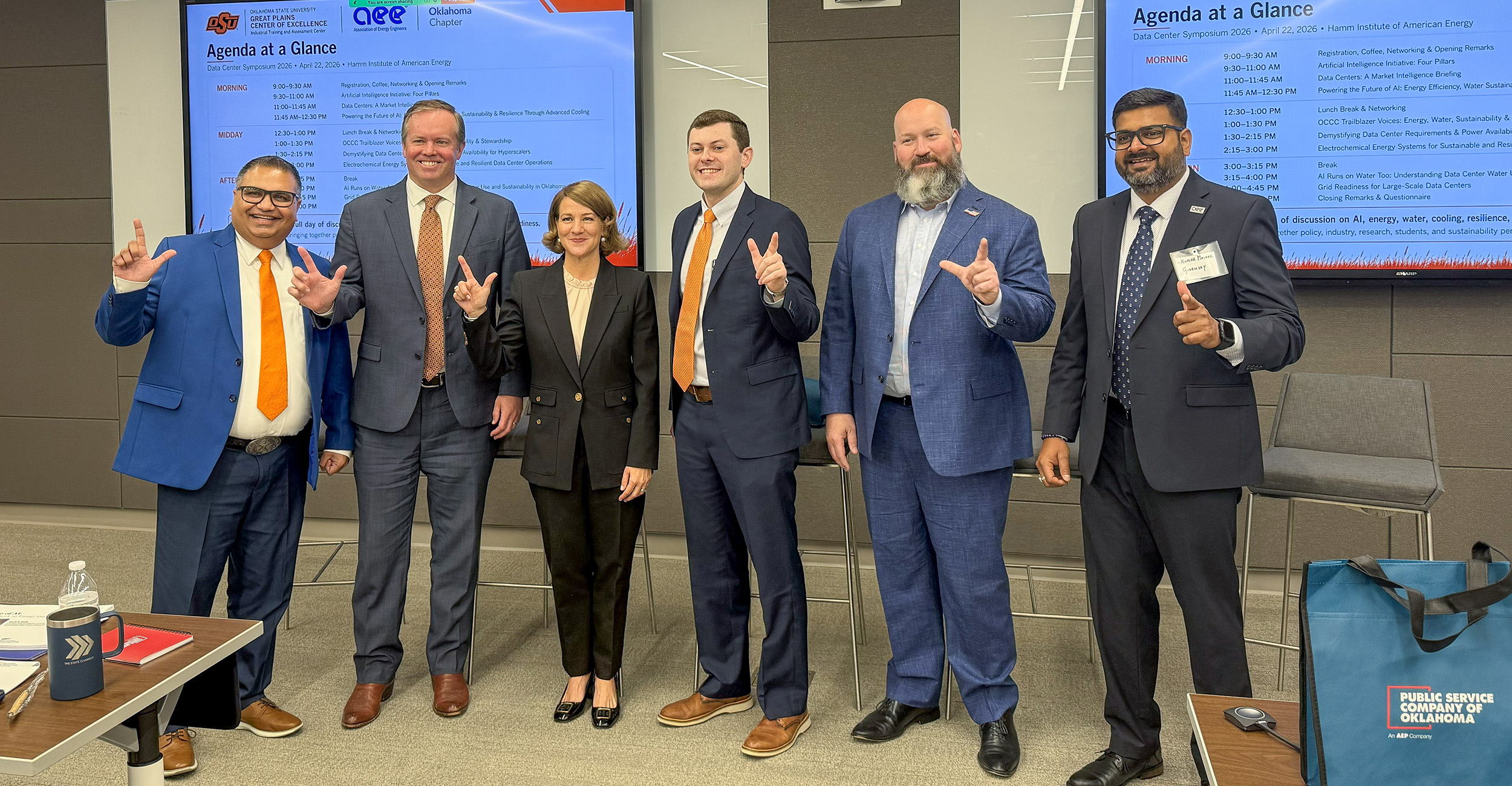
The program opened with a panel discussion focused on Oklahoma’s energy landscape and the policy and infrastructure considerations influencing data center development. Panelists addressed topics including energy demand, permitting and the relationship between large-scale facilities and existing power systems, helping frame the broader challenges facing the industry.
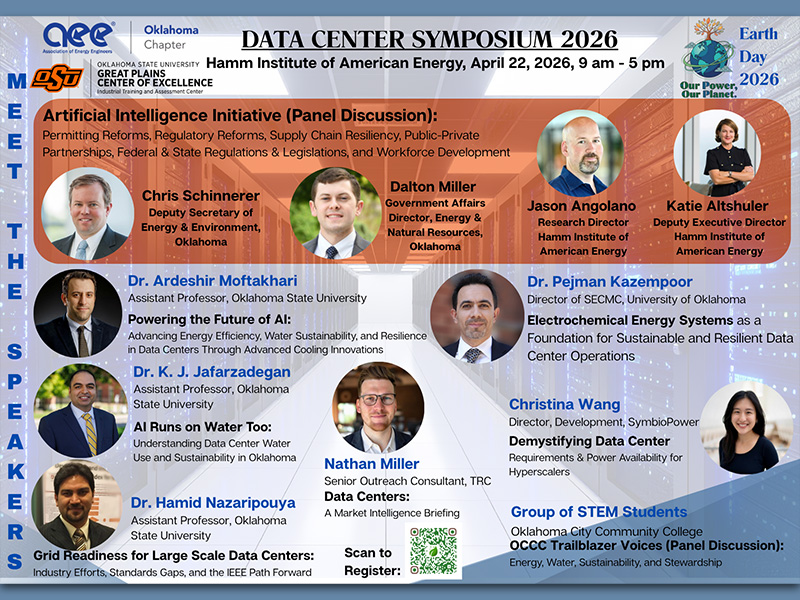
Subsequent presentations expanded on those themes, offering perspectives on national market trends, emerging cooling technologies and the evolving needs of hyperscale operations. Faculty from OSU and regional partners highlighted research aimed at improving efficiency, strengthening system resilience and better understanding resource use in large-scale computing environments.
A consistent theme across discussions was the need to balance opportunity with responsibility. Data center expansion has the potential to support economic growth, workforce development and research collaboration. At the same time, speakers noted that poorly planned growth could strain electric grids, water systems and local communities.
"Data center expansion is fundamentally reshaping energy systems, infrastructure planning, and economic development,” said Katie Altshuler, deputy executive director of the Hamm Institute for American Energy. “Meeting this moment will require reliable power, practical permitting, workforce readiness, and a clear commitment to responsible community stewardship. Conversations like this are critical to helping Oklahoma build responsibly and stay competitive."
Cooling and water use were central to the conversation. As computing density increases, traditional cooling approaches may no longer be sufficient, prompting interest in alternative strategies that reduce both energy consumption and water demand. Presenters also emphasized the importance of understanding the full water footprint of data centers, including indirect impacts tied to energy production.
Speakers also pointed to the need for greater coordination between utilities, developers and policymakers to ensure infrastructure systems can support future demand. As AI-driven facilities grow in size and complexity, long-term planning, updated standards and improved forecasting will play an increasingly important role in maintaining system reliability.
“This symposium reflected the shared mission of GPCoE and AEEOK to convene meaningful conversations and support responsible pathways for infrastructure growth,” said Dr. Hitesh Vora, director of the GPCoE. “Our goal is not only to discuss the rapid growth of AI-driven data centers, but also to help shape solutions that are practical, sustainable and beneficial to our communities.”
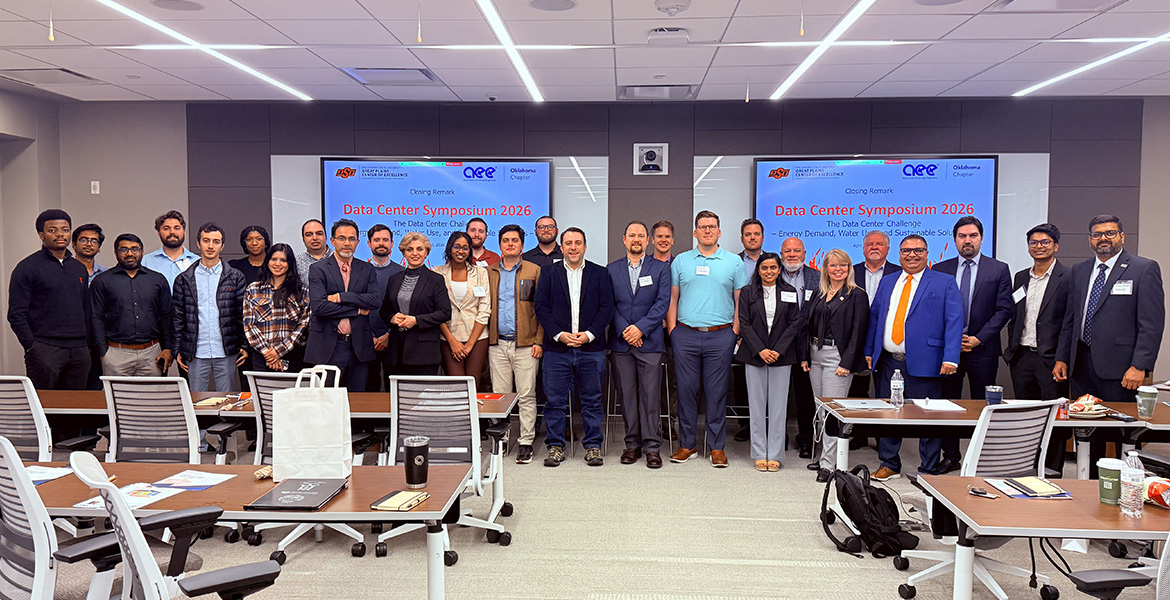
The symposium also highlighted the importance of workforce development. Student participation and industry discussion underscored the need for professionals who can operate at the intersection of energy, infrastructure and advanced computing systems.
“The success of the symposium reflects the power of collaboration across industry, academia and the energy community,” said Kumar Mayank, AEEOK president. “As data center growth continues to reshape energy and water demand, it is important to create spaces for technical dialogue, practical solutions and workforce engagement.”
Organizers noted that the event was designed to support informed, solution-focused discussions around a rapidly evolving issue. Rather than offering simple answers, the symposium created space to examine the technical, environmental and policy dimensions of data center growth in a more deliberate way.
The Data Center Symposium 2026 served as a platform for shared learning and collaboration on one of the region's most pressing infrastructure challenges. As demand for digital infrastructure continues to grow, participants emphasized that long-term success would depend on coordinated planning, technical innovation and responsible resource management.