

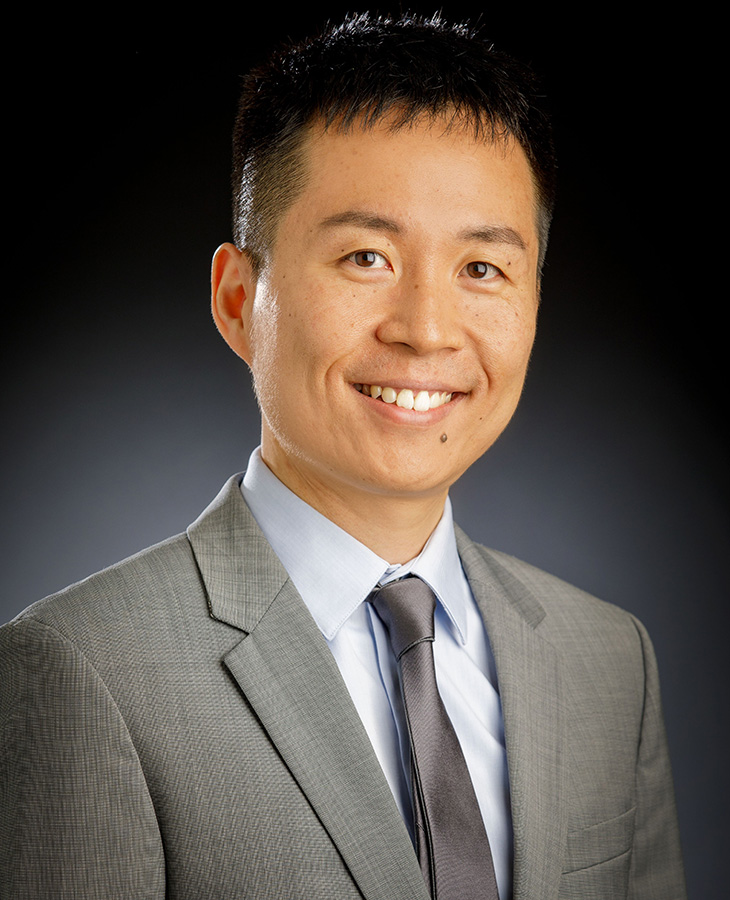
Dr. John Hu earns NSF CAREER Award for advancing AI‑assisted circuit debugging
Tuesday, April 14, 2026
Media Contact: Desa James | Communications Coordinator, CEAT | 405-744-2669 | desa.james@okstate.edu
Dr. John Hu, assistant professor for the School of Electrical and Computer Engineering in the College of Engineering, Architecture and Technology at Oklahoma State University, has received a National Science Foundation’s Faculty Early Career Development (CAREER) Award, NSF’s most prestigious honor for early‑career faculty.
The CAREER Award supports faculty who exemplify the role of teacher‑scholar through outstanding research, education and leadership. According to NSF, the award recognizes individuals with the potential to serve as academic role models and to lead advances in their discipline.
Hu’s CAREER project addresses one of the semiconductor industry’s most costly and time‑consuming challenges: analog circuit debugging during post‑silicon validation, a stage where design errors discovered after fabrication can significantly delay product releases.
“When silicon comes back and something isn’t working, a company can’t ship the chip,” Hu said. “Every day spent debugging delays time‑to‑market and time‑to‑revenue. For the semiconductor industry, that is a very big deal.”
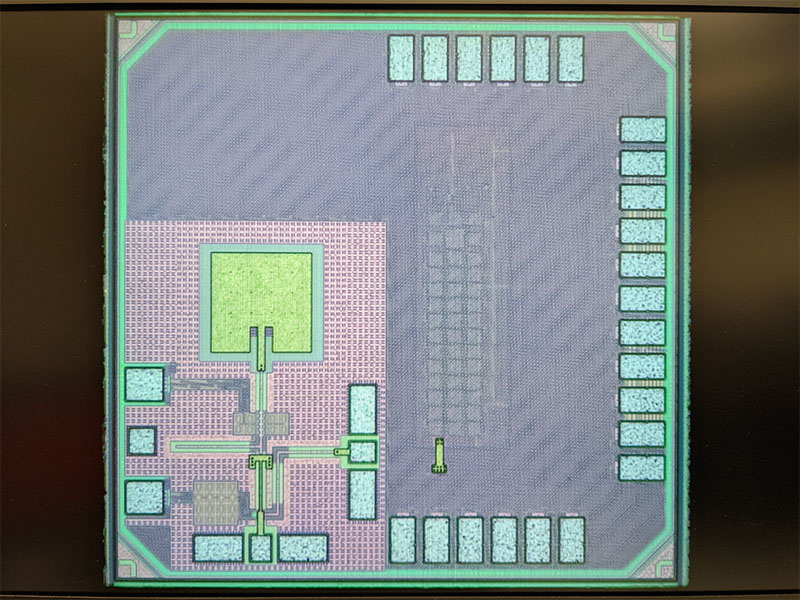
Unlike digital circuits, which typically fail due to logical errors, analog circuits are influenced by complex physical phenomena that are difficult to fully model or predict. Debugging these issues currently relies heavily on the experience of a small number of experts, making the process slow, expensive and vulnerable to workforce turnover.
To address these challenges, Hu’s research aims to develop an artificial intelligence–based virtual expert that collaborates with engineers during debugging, helping them identify the root causes of circuit failures quicker. Rather than replacing human engineers, the system is designed to augment human decision‑making, capturing experiential knowledge that is rarely documented in textbooks.
“Today, expert knowledge lives in engineers’ heads,” Hu said. “If those experts retire or leave before new engineers are fully trained, that experience is lost. Our goal is to preserve and deliver that experience through AI so more people can participate in post‑silicon validation.”
The project focuses on building the architectural and algorithmic foundations for human‑AI collaboration in debugging, including multi‑step reasoning systems that can balance intuition and practicality when initial hypotheses fail. The research also investigates privacy‑preserving AI techniques, ensuring that sensitive debugging information remains protected when using cloud‑based large language models.
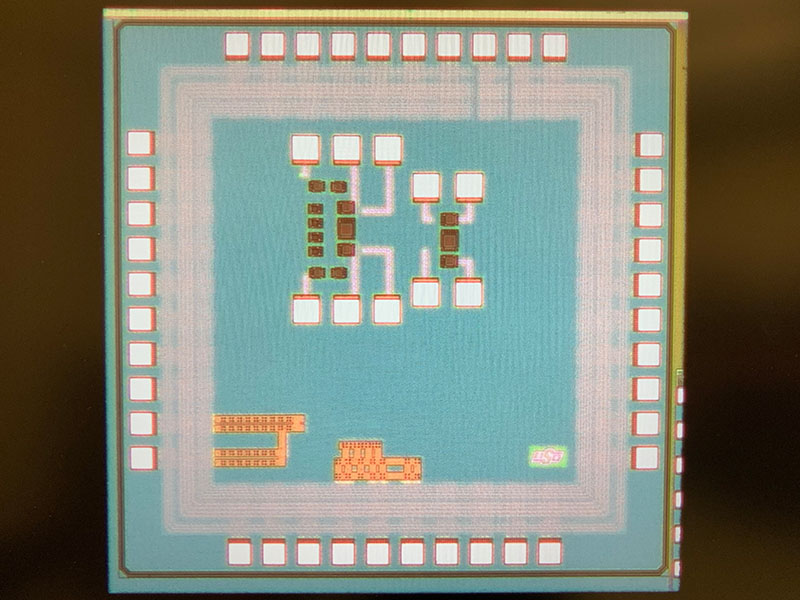
“A semiconductor company’s debugging data is among its most sensitive intellectual property,” Hu said. “This project explores differential privacy methods that allow AI to provide useful guidance without exposing confidential information, which is critical for maintaining U.S. competitiveness.”
By reducing debugging time and lowering the expertise barrier, the research could help expand the semiconductor workforce while accelerating innovation. Faster development cycles also have downstream benefits for consumers, potentially lowering the cost of electronics such as smartphones, sensors and other connected devices.
Beyond research, the CAREER project tightly integrates education and workforce development. Undergraduate and graduate students will play a central role in developing and evaluating the AI tools, gaining hands‑on experience at the intersection of artificial intelligence, hardware systems and human‑centered design.
“Today’s students are tomorrow’s engineers,” Hu said. “By involving them directly in human‑AI collaboration research, we’re preparing them for the realities of an AI‑enabled engineering workforce.”
The project will also extend into K–12 education, including hands‑on troubleshooting workshops for teachers through NSF Research Experiences for Teachers programs. These activities aim to strengthen problem‑solving skills across STEM disciplines while generating real‑world data to inform future research.
Hu said receiving a CAREER Award affirms the long‑term vision behind the project.
“This award validates the idea that AI can meaningfully support complex engineering tasks,” he said. “If we can offload knowledge - and experience - based tasks to AI, human engineers can focus more on creativity and innovation. That’s what excites me most about this work.”