


Huhnke and Lozano awarded inaugural CEAT Dean's Innovation Award for app to keep hunters safe
Monday, November 23, 2026
Media Contact: Tanner Holubar | Communications Specialist | 405-744-2065 | tanner.holubar@okstate.edu
Key takeaways
OSU students Reese Huhnke and Myles Lozano won the inaugural CEAT Dean’s Innovation Award for developing Hunter Radar, a hunting safety app.
Hunter Radar uses GPS, Bluetooth and LoRa radio technology to create a communication network without cellular or satellite service.
The app helps hunters share locations, track group members, send messages and receive proximity and emergency alerts.
Huhnke and Lozano developed Hunter Radar through TriPoint Innovations LLC while continuing their studies at Oklahoma State University.
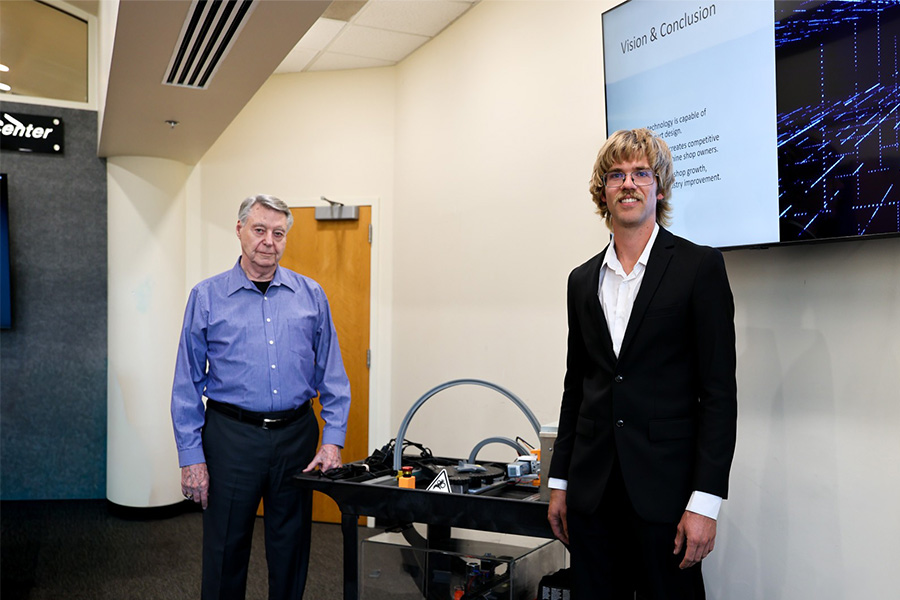
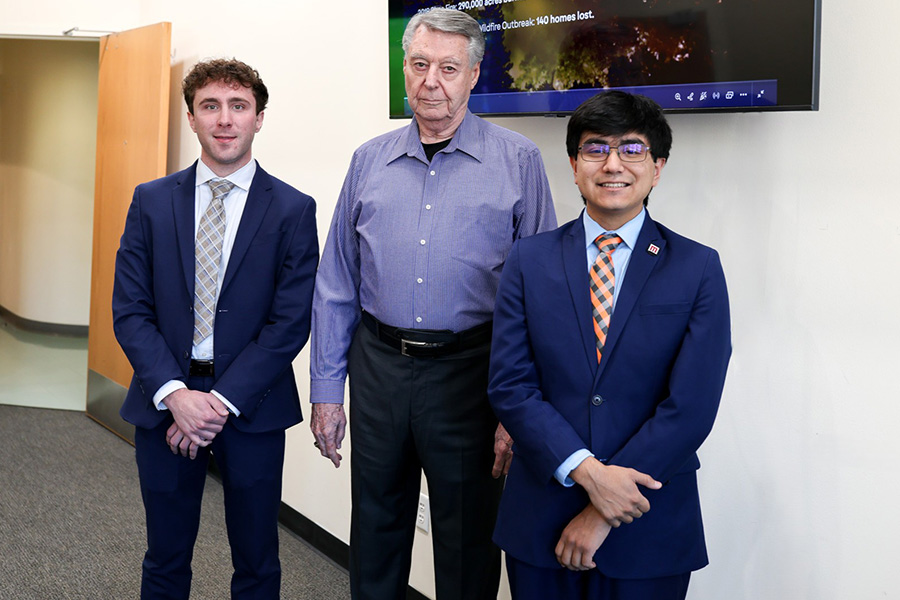
Hunter Radar, a product of TriPoint Innovations LLC, won $20,000 for students Reese Huhnke and Myles Lozano in the inaugural Dean's Innovation Award for Promising Business Startups competition.
This award fosters entrepreneurial spirit among Oklahoma State University students and provides funding to turn their ideas into viable businesses.
For Huhnke and Lozano, chemical engineering and mechanical and aerospace engineering students, respectively, at OSU, their hunting background led them to develop a way to keep hunters safe and in touch in the event of an emergency.
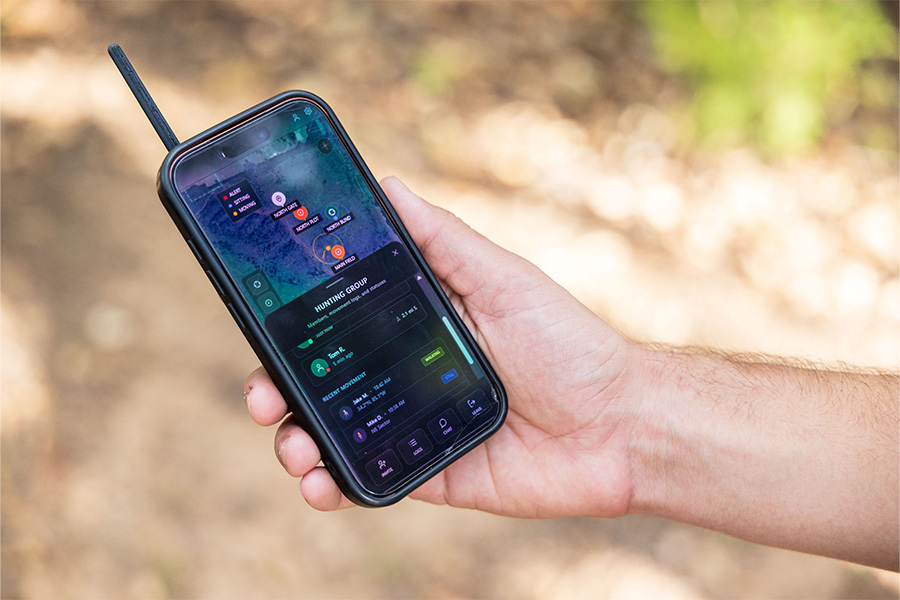
Hunter Radar, patent-pending, is a safety and communication system designed to help hunters locate one another and stay connected without cell or satellite service by combining a portable hardware device that attaches to a phone and a smartphone app.
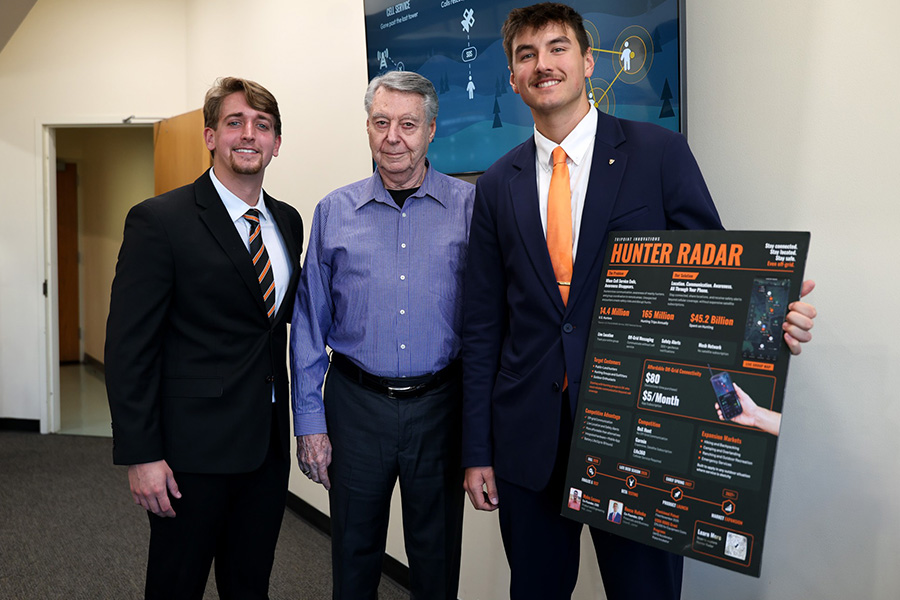
Hunter Radar is designed to offer an affordable alternative to GPS communication devices. The team plans to sell the hardware for $80, with a $5 monthly subscription.
For Huhnke, the idea grew out of his own experiences growing up in a rural community where hunting on large tracts of land is commonplace.
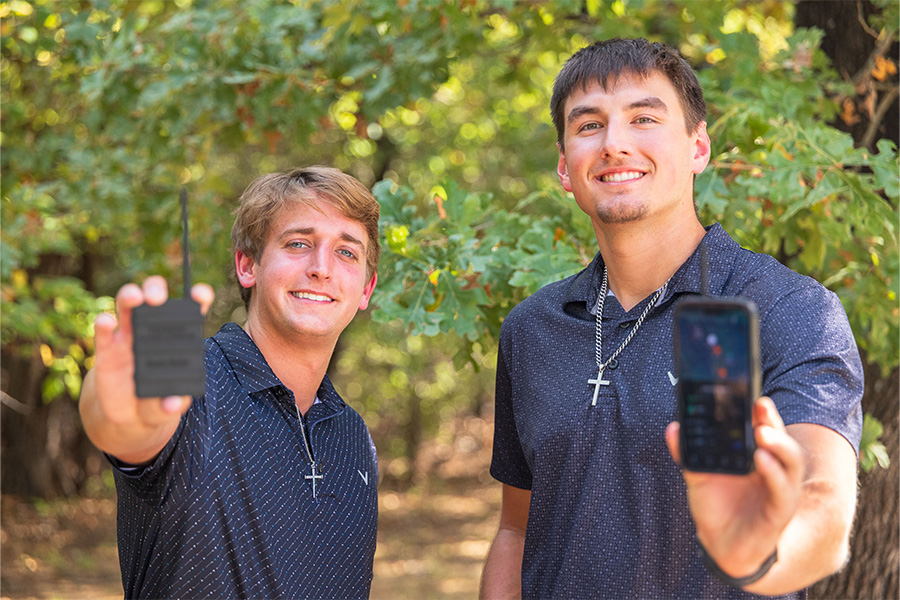
"My friends and I are all big hunters, so it's crucial that we can go out into a large land area and have better awareness," Huhnke said. "Being able to know that we are all safe and connected is important, because these are areas that don't have a lot of cell service."
The system uses Bluetooth to connect its portable device to a smartphone, GPS to determine users’ locations and long-range radio communication, known as LoRa, to share the information with other Hunter Radar devices. Through the app, users can see other members of the group on a live map, send messages, create hunting groups and receive emergency alerts.
It creates a mesh network with a range of 9 miles, with each additional device extending the network. The system does not require cell service or a satellite subscription.
“Our goal is to make it easier for people to be more aware in the outdoors,” Lozano said. “It’s to keep people safe in the event of an emergency when people are in a remote area and need to be relocated.”
The team has conducted more than 40 customer discovery interviews to better understand potential users and has used this feedback in the development of their product. Its primary audiences include hunting groups, professional guides and outfitters, individual hunters and families.
Engineering a business
The Dean’s Innovation Award is designed to help students take promising engineering concepts beyond the classroom and turn them into viable businesses by providing capital to finance their growth. The winning team was announced during the conclusion of the fall 2026 Senior Design Expo.
The Zink Center for Competitive Innovation partnered with the Spears School of Business’ Riata Center for Innovation and Entrepreneurship and Cowboy Technologies to create a steering committee to help students turn ideas into successful businesses. The committee brings together university resources and expertise to support every stage of the process, from developing an idea to bringing a product to market and growing a business. The program also helps students build the business skills needed to grow their ventures. With support from the Zink Center and the Riata Center, participants learn about customer discovery, marketing, sales, intellectual property, supply chain management and investment strategies.
The award will help Hunter Radar advance toward prototyping, manufacturing, and eventually bringing its product to market. In August, the team also received a $75,000 grant from the U.S. Department of Agriculture Rural Business Development to fund prototyping, equipment purchases and the transition to commercial manufacturing. Their next goal is to establish a business location by May 2027.
Both students are set to graduate in spring 2028, and Hunter Radar will become a full-time job on top of being full-time students.
Huhnke and Lozano often go straight from class to the shop to work on beta test groups and product development and will eventually do the same with production runs.
“Balancing all of these things can be challenging, but it has taught us how to manage our time effectively and make the most of every opportunity,” Lozano said. “One thing we’ve heard from many of our mentors is that, for your business to be successful, you have to be willing to bet on yourself a little. That’s what we’re doing. We believe in what we’re building and are willing to put in the time and effort to make it successful.”
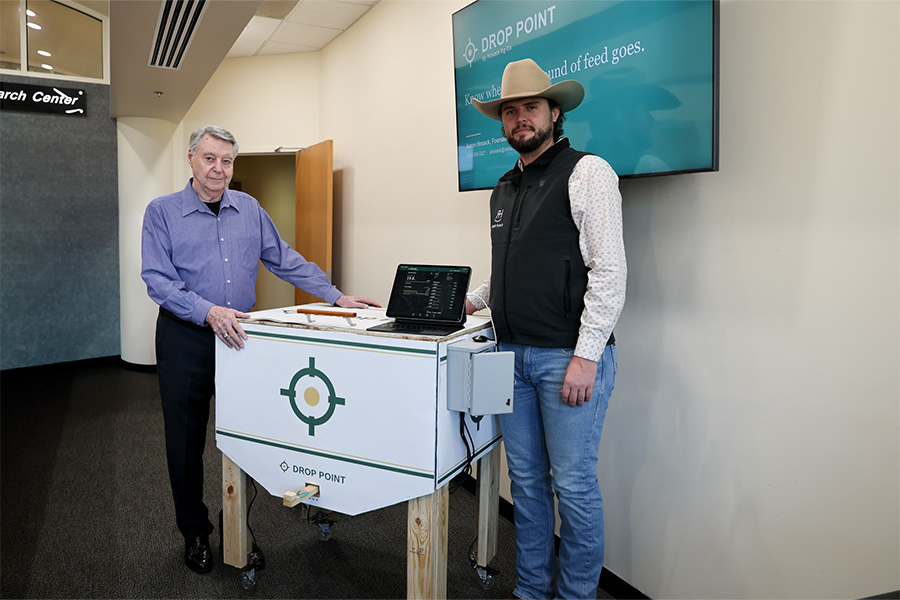
Michael Carolina, director of the Zink Center, said the inaugural competition showcased the range of engineering talent and entrepreneurial thinking among CEAT students.
“There were four finalist projects competing for the inaugural Dean’s Innovation Award for Promising Business Startups, and all four showed great potential for business launch and sources,” Carolina said.
CEAT leaders see the award as an opportunity to help students develop skills that complement engineering design and prepare them to bring new ideas to the marketplace.
“By all measures, the inaugural CEAT Dean’s Innovation Award was a successful milestone for highlighting engineering excellence and the connection of technology, engineering and business,” said Dr. John Veenstra, associate dean of faculty affairs for CEAT. “We are excited about the next phases of the award.”
For Lozano and Huhnke, OSU and Oklahoma's entrepreneurial landscape have made it possible to build a business while still in college.
“We are just thankful to OSU and the many opportunities that we’ve been presented here,” Lozano said. “We’re blessed to be students at this university and thankful to God for blessing us.”
The inaugural Dean's Innovation Award competition represented the innovation and determination displayed by CEAT students, while creating new opportunities for students to take their ideas from concept to reality.
Dean's Innovation Award for Promising Business Startups
Frequently Asked Questions
-
What is Hunter Radar?
Hunter Radar is a hunting safety app developed by Oklahoma State University students Reese Huhnke and Myles Lozano. The app helps hunters share locations, communicate and stay connected in remote areas.
-
Does Hunter Radar work without cell service or satellite service?
Yes. Hunter Radar uses LoRa radio technology to create its own communication network, allowing users to exchange information without cellular or satellite service.
-
How does Hunter Radar track hunters in remote areas?
Hunter Radar uses GPS to track users' locations and LoRa radio technology to share that information with other members of a hunting group. The system can cover approximately 9 miles, with additional range possible through network expansion.
-
What safety features does the Hunter Radar app offer?
Hunter Radar includes group location tracking, proximity alerts, messaging and SOS alerts. These features help hunters monitor group members and communicate when emergencies occur.
-
What award did Hunter Radar win at Oklahoma State University?
Hunter Radar won the inaugural CEAT Dean's Innovation Award for Promising Business Startups at Oklahoma State University. The award recognized Huhnke and Lozano's student-led business venture.