

OSU initiative reduces financial barriers for construction engineering technology students
Wednesday, September 16, 2026
Media Contact: Desa James | Communications Coordinator | 405-744-2669 | desa.james@okstate.edu
For some students, the path to a career in construction is not limited by academic ability. It is limited by whether they can afford to stay in college long enough to earn their degree.
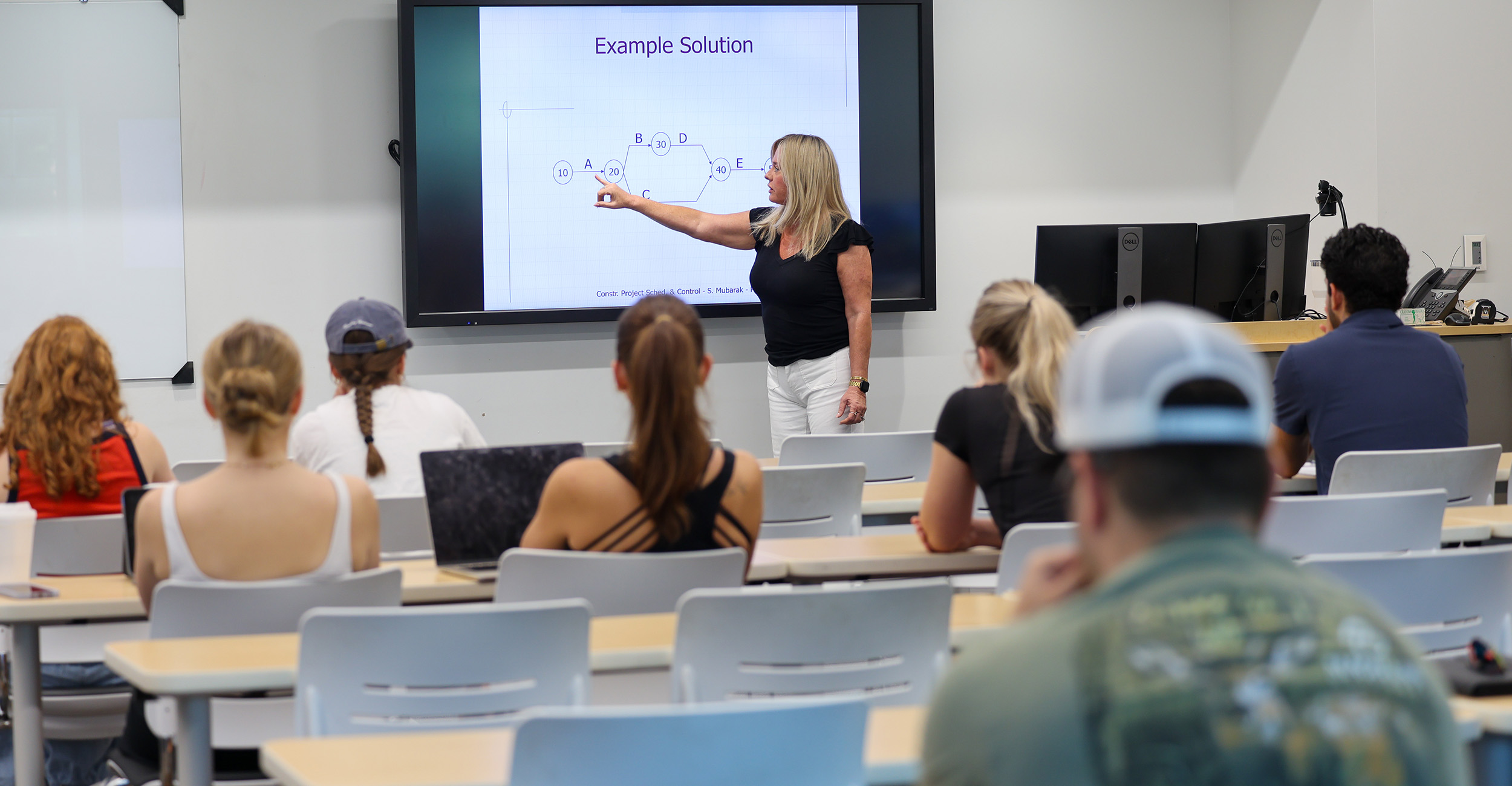
A new research project led by Dr. Amy Lewis, assistant professor in the School of Fire, Construction and Emergency Management, will address that barrier by providing scholarships and academic support to students pursuing degrees in construction engineering technology.
Funded through the National Science Foundation’s Scholarships in Science, Technology, Engineering and Mathematics program, the six-year, $1,996,909 project, “Strengthening the Nation's Infrastructure Workforce Through STEM Education and Scholarship Support,” will support up to 20 academically talented students with demonstrated financial need.
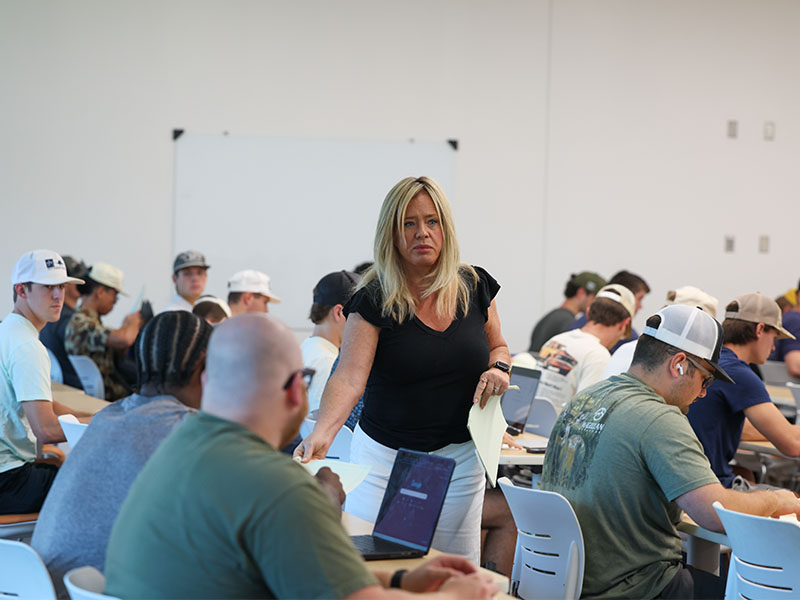
Lewis serves as principal investigator, with co-principal investigators Rachel Mosier, associate professor; Soojin Yoon, assistant professor; and Heather Yates, school head, all from FCEM in the College of Engineering, Architecture and Technology.
“When we developed the proposal, the average unmet financial need among potentially eligible students was approximately $19,200 per year,” Lewis said. “That is a substantial gap. These students had already demonstrated that they could succeed academically. They needed the financial resources and support to remain enrolled, complete the degree and enter the construction workforce.”
The project will provide students with scholarships averaging $15,000 per year, along with faculty mentoring, study skills workshops and time-management training. Scholars will also participate in industry panels, networking activities and site visits designed to connect their academic experience with the construction profession.
The support is intended to address more than the immediate cost of college. Research on student persistence has shown the importance of academic support, regular faculty contact and a sense of belonging, Lewis notes. Those factors can be particularly important for students balancing demanding coursework with employment and other financial responsibilities.
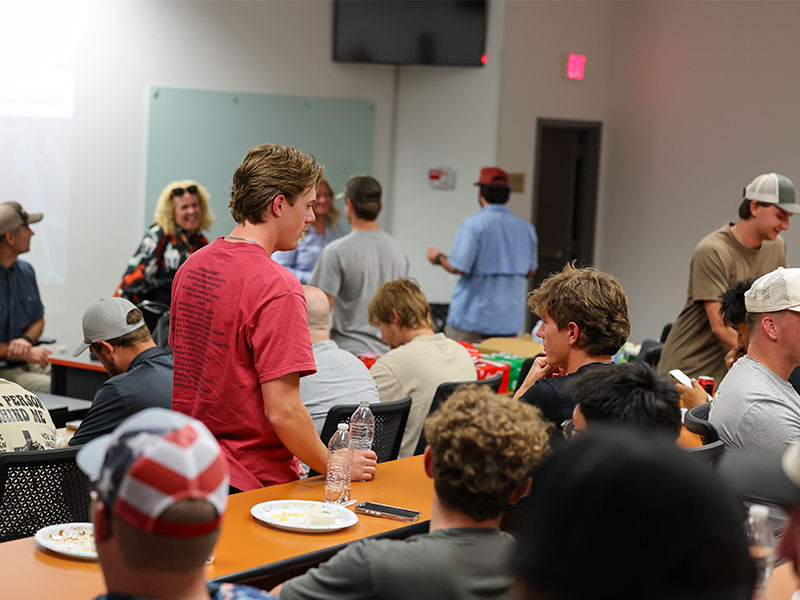
“Financial support can reduce the number of hours a student must work, but money alone does not ensure that a student will graduate,” Lewis said. “Mentoring and workshops give us opportunities to identify problems early and help students develop habits they can use throughout college and in their careers.”
The project will build a progressive cohort model, beginning with six scholars and adding seven scholars during each of the following two years, for up to 20 scholars total. As the cohorts grow, students will have opportunities to learn from peers who have recently completed the same courses, navigated internships or encountered similar challenges.
Students will also have opportunities to build connections with professionals in the construction industry. Those experiences are intended to help scholars better understand the range of careers available to them after graduation, including roles as project engineers, estimators, schedulers, assistant superintendents, safety professionals, project controls specialists, and virtual design and construction coordinators. With this experience, graduates can advance into higher positions.
Lewis said the project reflects a broader need in efforts to strengthen the STEM workforce.
“The conversation often focuses on recruiting more students into STEM, but enrolling students is only the first step,” Lewis said. “We also have to make sure capable students have the resources and support to remain enrolled and graduate.”
That need extends to the construction and infrastructure workforce, where graduates can contribute to projects involving highways, bridges, water systems, energy facilities, data centers and commercial construction.
Oklahoma State University’s Construction Engineering Technology program provides a strong setting for the project because students gain technical knowledge alongside practical experience. Students work in laboratories, complete applied projects and participate in a required 400-hour industry practicum before graduation.
Lewis hopes the project will ultimately demonstrate that a combination of financial assistance and sustained support can help more students realize their academic potential by earning degrees and building careers.
“I would look at whether the scholars remained in the program, completed meaningful industry experiences, graduated and entered construction or infrastructure careers,” Lewis said. “If the project produces a support model that we can continue using with future construction engineering technology students after the NSF funding ends, I would consider that a success.”
Further recruitment will include eligible CET students and new transfer students.
Students interested in future cohorts can contact Lewis at amyking.lewis@okstate.edu for more information.
“The conversation often focuses on recruiting more students into STEM, but enrolling students is only the first step. We also have to make sure capable students have the resources and support to remain enrolled and graduate.”