NFFF, OSU establish Institute for Firefighter Survivability
Monday, September 21, 2026
Media Contact: Tanner Holubar | Communications Specialist | 405-744-2065 | tanner.holubar@okstate.edu
On Monday, Oklahoma State University and the National Fallen Firefighters Foundation announced the launch of the Institute for Firefighter Survivability, a major initiative stemming from a three-year memorandum of understanding signed in May 2026.
This collaboration builds on the College of Engineering, Architecture and Technology’s history of fire protection safety research and NFFF's efforts to support firefighters, honor those who have died in the line of duty, and leverage research to prevent future deaths and injuries.
The Institute for Firefighter Survivability is the latest outcome of this collaboration and reflects a shared goal of turning research and evidence-based knowledge into practical tools for the fire service.
The NFFF offers a strong complement to OSU, with its network of nearly 350 advocates, the Fellows program, Until Everyone Goes Home program, and relationships with departments and fire service organizations across the country.
OSU and the NFFF are also partnering with Texas A&M Engineering Extension Service, the Illinois Fire Institute at the University of Illinois at Urbana-Champaign and the First Responder Center for Excellence.
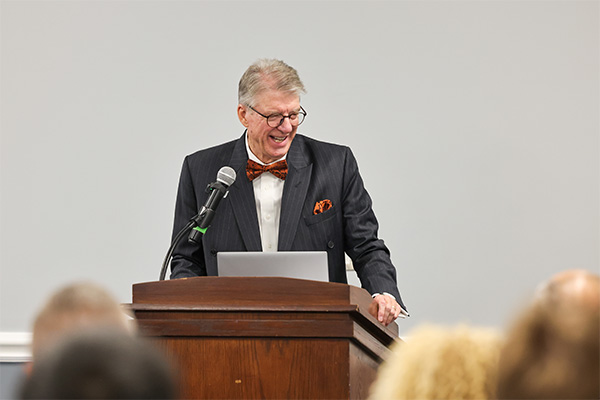
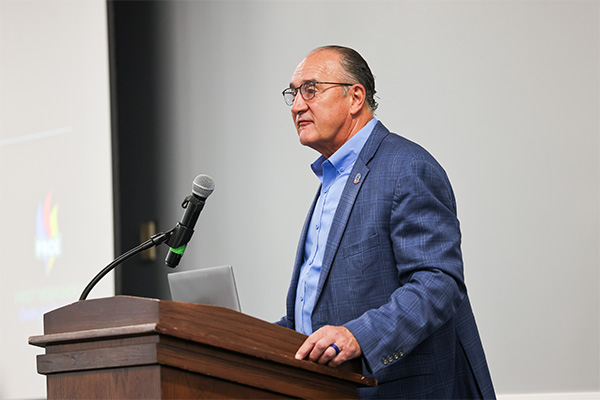
"What being a land-grant university really means is that we solve practical problems every day," said Dr. Jim Hess, OSU president. "We work with folks just like you in this profession and say, 'What are the solutions that we can figure out to make people's lives easier?' In this case, it's to make people's lives safer.
"I'm so proud that we have the chance to partner with you, because this will be a game-changer. And when institutions and foundations can come together for a common purpose and a common good, there is absolutely no limit to what can be accomplished."
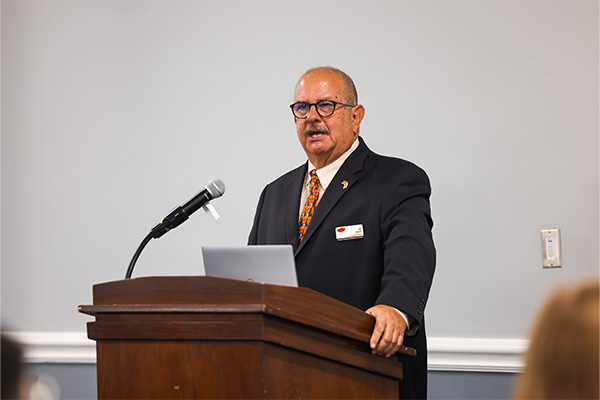
Victor Stagnaro, CEO of NFFF, touted OSU's deep roots in the fire service, especially Fire Protection Publications, the International Fire Service Training Association, and the Fire Protection and Safety Engineering Technology program, all of which have developed leaders who make their mark in the profession.
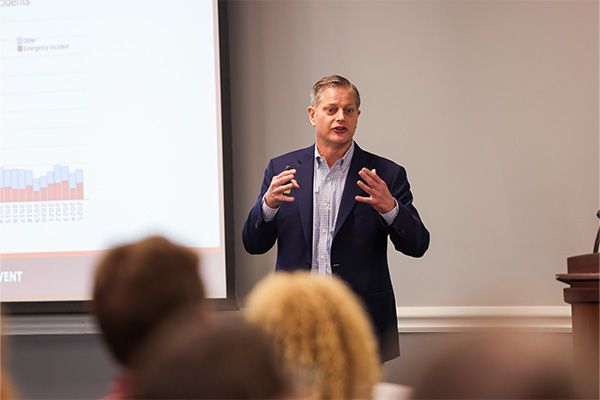
"As we began developing the Institute for Firefighter Survivability, we knew we needed a partner that understood both research and the realities of the fire service,” Stagnaro said. “OSU brings those worlds together. They have the research capabilities, the experience in training and curriculum development, and a leadership team that shares our belief that far too many line-of-duty deaths can be prevented."
One of the fire service’s greatest challenges is closing the gap between what is known about firefighter safety and how that knowledge is put into practice.
There are decades' worth of information about why firefighters are killed and injured in the line of duty. Fatality investigations, near-miss reports, research and health studies also exist, but before changes can be implemented, people must trust the reasoning behind them.
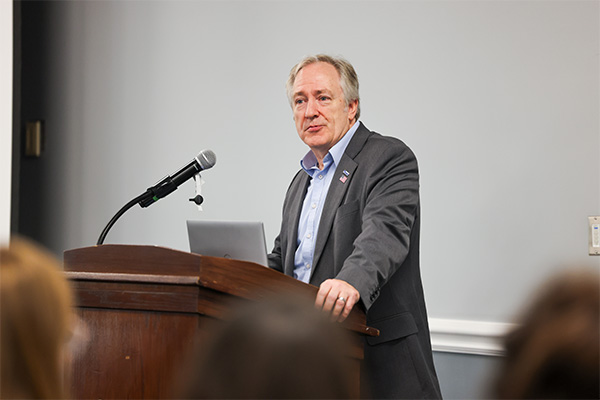
Keith Bryant, Oklahoma state fire marshal since 2021, said the fire service's understanding of survivability has evolved significantly during his nearly 50 years in the profession. He was a firefighter in the U.S. Army, later working for the Edmond Fire Department and serving 12 years as Oklahoma City fire chief before serving as U.S. Fire Administrator.
“This makes me think about what we’re doing today and what’s happened over those 49 years,” Bryant said. “And I can tell you that we didn’t think of survivability back then the way we do now. Back then, it was more about surviving the incident or surviving the shift. You didn’t really think long-term or as broadly as surviving a career and then into retirement. There may have been some academic skepticism, but this is a good example of how the fire service has begun to embrace academia more. We’re doing this to prevent those line-of-duty injuries and deaths, so to me, this is a big step forward.”
Dr. Haley Murphy, associate professor in the School of Fire, Construction and Emergency Management, said the Institute for Firefighter Survivability will help identify important problems and build research around them.
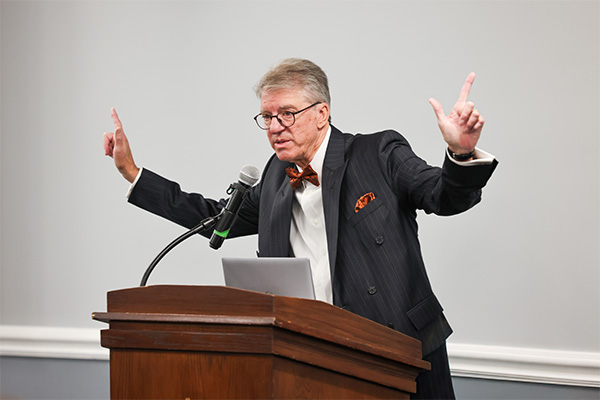
OSU students will work alongside faculty and experienced fire service professionals to find solutions to real-world problems, contributing to research with a clear purpose and a chance to make a real difference in saving lives.
"The NFFF helps us stay connected to what the fire service actually needs, while OSU can provide the research support needed to study those problems and develop useful solutions," Murphy said.
Murphy said the institute will fill a gap that has persisted for many years. By bringing the research and fire service communities together, the collaboration will produce research with tangible benefits toward saving firefighters' lives.
"Ultimately, we want the institute’s work to help more firefighters go home safely at the end of every shift," Murphy said. "That means producing research and resources that departments can use to make better decisions, strengthen their organizations, and prevent injuries and deaths.
Tim Romine, Firefighter I and II challenge exam program manager for the IFSI, said a new safety practice or recommendation is more likely to be adopted by fire service personnel when there is a clear connection to the benefits of that change.
"This connection comes through education on the evidence-based and practical reasons for change," Romine said. "Fire service personnel are more likely to accept and adopt a new practice when the standards have been tested and applied in realistic situations and environments found during emergency situations.”
Another challenge is getting buy-in from departments to adopt new technology or procedures. Limited budgets for fire departments are also a potential barrier, so even when research shows a new technology or practice can improve safety, the cost of adoption may be too high.
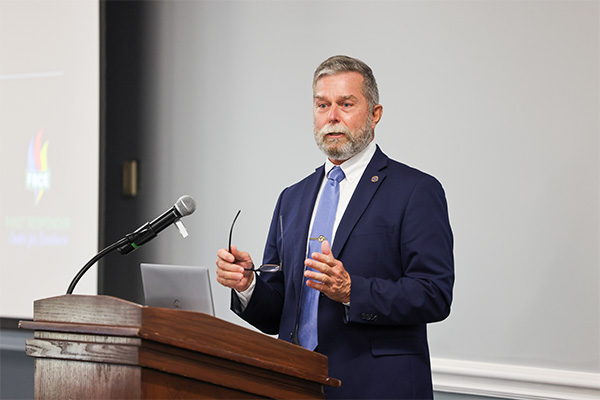
"Involving firefighters early in the process can help address both challenges," said Gordon Lohmeyer, TEEX strategic initiatives and chief research officer. "Including firefighters in the research and testing or giving them opportunities to see and evaluate new technologies through demonstrations and showcases can create early adopters within the fire service. Those early adopters can help their peers understand the value of a new tool, product or practice and build consensus in adopting."
The success of the Institute for Firefighter Survivability will be measured in lives saved. Stagnaro said that over the next three years, the goal is to establish a focused research agenda that addresses the causes of firefighter deaths and injuries while also ensuring research findings make their way into training, education and the daily practices of fire departments.
"Ultimately, I would like to be able to point to specific changes that came from this partnership and know they are making firefighters safer," Stagnaro said. "If that means we are honoring fewer firefighters at the National Fallen Firefighters Memorial and fewer families are experiencing the loss of their firefighter, that is how I would define success."
OSU, NFFF announce Institute for Firefighter Survivability