

OSU, Riverside Research to develop radar sensor with DARPA contract
Tuesday, October 26, 2027
Media Contact: Tanner Holubar | Communications Specialist | 405-744-2065 | tanner.holubar@okstate.edu
KEY TAKEAWAYS
Riverside Research and Oklahoma State University received DARPA funding to develop a terahertz radar sensor that detects and tracks objects smaller than 1 inch at long distances.
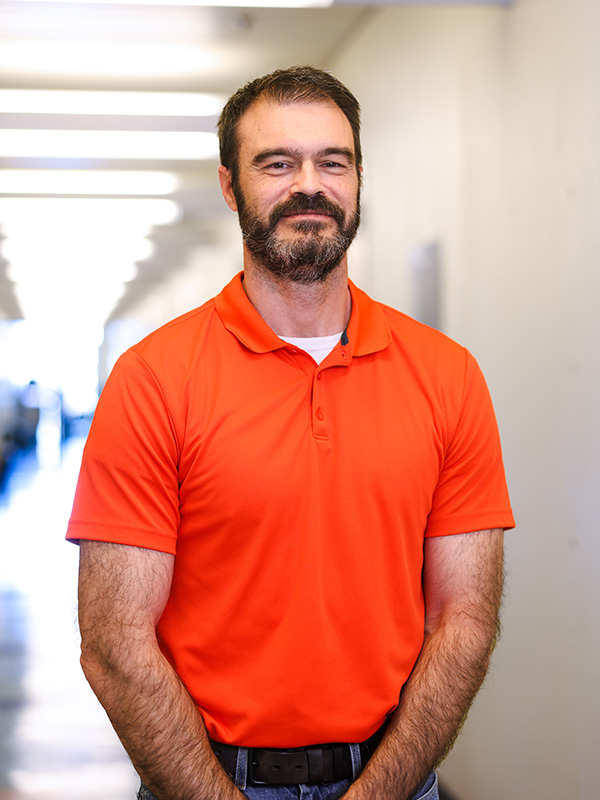
OSU associate professor John O’Hara and Riverside Research scientist Rajind Mendis lead the project using radar frequencies 10 to 100 times higher than typical systems.
The DARPA-funded project uses terahertz radar to overcome the resolution limits of conventional microwave radar and improve national security sensing capabilities.
The research team aims to develop a compact, lightweight, low-power terahertz radar for field deployment while providing hands-on experience for OSU students and early-career researchers.
Riverside Research, a national security nonprofit, and Oklahoma State University have been awarded funding from the Defense Advanced Research Projects Agency to develop a next-generation radar sensor capable of detecting extremely small objects.
The project is led by principal investigator Dr. Rajind Mendis, senior research scientist at Riverside Research, and co-principal investigator Dr. John O'Hara, associate professor and PSO/Albrecht Naeter Professor of electrical engineering at OSU.
Their team will create a sensor that uses radar operating at terahertz frequencies, which are 10 to 100 times higher than typical radar systems. Higher frequencies enable finer resolution, allowing operators to detect and track objects smaller than 1 inch, which current technologies cannot achieve.
THz radar is well-suited to this challenge because it operates with wavelengths of roughly 3 millimeters or smaller, enabling systems to distinguish tiny objects at long distances.
"Typical approaches involve microwave radar, which usually employs frequencies too low to resolve small objects at long distances," O'Hara said. "It is a fundamental physics problem. By using higher frequencies, we eliminate the resolution problem."
This work builds on years of collaboration between Riverside Research and OSU to design prototype THz systems with real-world applications. The team’s video proposal was selected through the DARPA Expedited Research Implementation Series Marketplace, which identifies innovative solutions with strong potential impact for national security missions.
"We are excited to be working with DARPA to push the performance envelope on our next-generation THz radar," said Dr. Josh Wetherington, director of spectrum warfare innovation at Riverside Research and the program manager. "Like the lane assist or pedestrian detection technology in cars, the project deliverables could one day become critical components of control systems for situational awareness."
For OSU, the project underscores the university’s leadership in long-distance THz communications and sensing. It also provides hands-on experience for students and early-career researchers.
"DARPA-funded projects allow researchers to test their skills on some of the most advanced problems facing our nation today," O'Hara said. "OSU is fortunate to have such an opportunity, and the students and researchers involved have a rare chance to make an impactful technological advance for our nation’s success."
The collaboration between O'Hara and Mendis, both OSU alumni, continues the university’s history of groundbreaking THz research.
"The ultimate goal is to develop a THz radar with low size, weight and power requirements for easy field deployment, the first of its kind," Mendis said.
Any opinions, findings, conclusions, or recommendations expressed in this material are those of the author(s) and do not necessarily reflect the views of the Defense Advanced Research Projects Agency (DARPA).
Frequently Asked Questions
-
How are OSU and Riverside Research using DARPA funding to develop a new radar sensor?
Oklahoma State University and Riverside Research are developing a terahertz radar sensor with DARPA funding to detect and track objects smaller than 1 inch at long distances. The project uses higher-frequency radar to improve resolution beyond conventional systems.
-
Who is leading the OSU and Riverside Research DARPA radar project?
Rajind Mendis, Ph.D., senior research scientist at Riverside Research, is the principal investigator, and John O’Hara, Ph.D., associate professor and PSO/Albrecht Naeter Professor of electrical engineering at OSU, is the co-principal investigator.
-
How does OSU’s terahertz radar technology detect objects smaller than 1 inch?
OSU’s terahertz radar uses frequencies 10 to 100 times higher than typical radar systems and wavelengths of roughly 3 millimeters or smaller. These higher frequencies provide finer resolution, allowing the sensor to distinguish small objects at long distances.
-
Why did DARPA select OSU and Riverside Research for the radar project?
DARPA selected the team’s video proposal through its Expedited Research Implementation Series Marketplace, which identifies innovative solutions with strong potential to support national security missions. The project builds on years of collaboration between OSU and Riverside Research on terahertz systems.
-
How will the DARPA radar project benefit OSU students and researchers?
The DARPA-funded radar project will give OSU students and early-career researchers hands-on experience tackling advanced national security challenges. The collaboration also builds on OSU’s research in terahertz communications and sensing.