


OSU, Texas A&M propose research center to better understand underground energy storage
Tuesday, October 20, 2026
Media Contact: Desa James | Communications Coordinator | 405-744-2669 | desa.james@okstate.edu
Key Takeaways
- Oklahoma State University and Texas A&M University are proposing the Center for Energy-Related Geologic Storage, an NSF Industry-University Cooperative Research Center.
- Texas A&M would lead ERGS, while OSU would study drilling technology, well integrity, orphaned wells, materials and strategic communications.
- ERGS research would address underground storage of hydrogen, compressed air and other energy-related fluids and gases, along with methane extraction.
- Industry partners can help set research priorities, contribute data and samples, support internships and participate in the ERGS Planning Meeting Nov. 5-6.
As the United States looks to expand and diversify its energy resources, researchers at Oklahoma State University and Texas A&M University are proposing a new research center focused on the earth beneath us.
The proposed center for Energy-Related Geologic Storage would bring university researchers, industry partners and government agencies together to better understand how energy-related fluids and gases can be safely stored underground and what it will take to expand that storage in the future.
Texas A&M would lead the National Science Foundation Industry-University Cooperative Research Center, with OSU serving as a partner site. The center would use a collaborative research model designed to address shared, pre-competitive industry needs while providing students with opportunities to develop skills for the energy workforce.
The work also comes as the National Petroleum Council calls for a more coordinated approach to understanding the nation’s subsurface resources. In the American Resources for a Secure Future: A National Cooperative Subsurface Assessment Program report, the NPC identified fragmented subsurface information as a major challenge. Data collected by federal and state agencies, universities and industry are often stored separately, while gaps in baseline information and the loss of older data can make it difficult to build a complete picture of what lies underground.
The council recommended a national approach that brings together resource assessment, data management, technology development and workforce training.
Texas A&M researchers would lead work in:
- resource assessment
- rock and fluid flow properties
- storage capacity
- risk quantification
- induced seismicity
- societal impacts
OSU researchers would focus on:
- drilling technology
- wellbore and caprock integrity
- orphaned well risks
- materials characterization
- strategic communications

Together, the universities would examine geologic storage at scales ranging from entire basins to individual wells and materials.
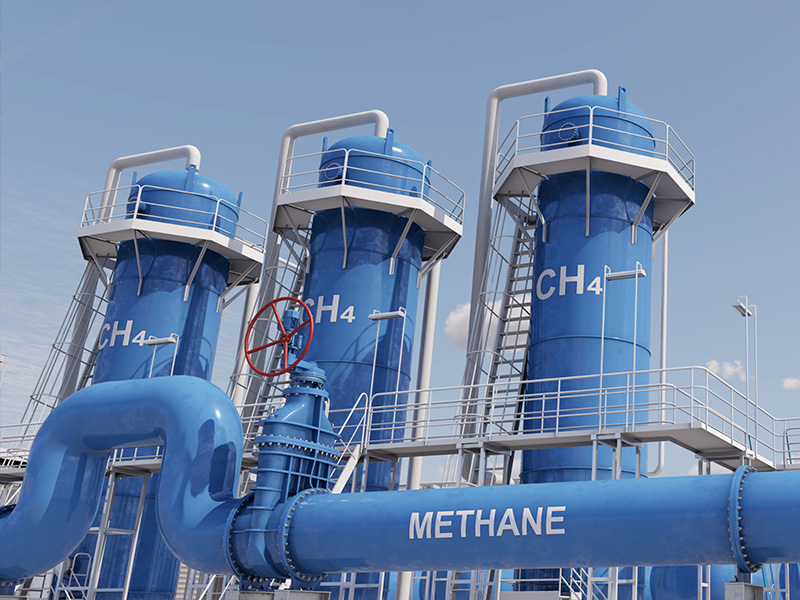
The research would support the storage of fluids and gases associated with energy production and greenhouse gas mitigation, including hydrogen and compressed air. It would also examine geologic storage and extraction of methane for energy production.
One area of the work would focus on identifying how much storage space is actually available. Researchers would build on methods used in oil and gas exploration while accounting for factors that could reduce a region's usable storage capacity, including leakage potential, induced seismicity and community impacts.
This approach aligns with the NPC’s recommendation to move toward holistic assessments of the nation’s subsurface resources rather than evaluating individual resources in isolation. The council specifically identified subsurface storage, hydrogen and other emerging resources as areas that require greater understanding.
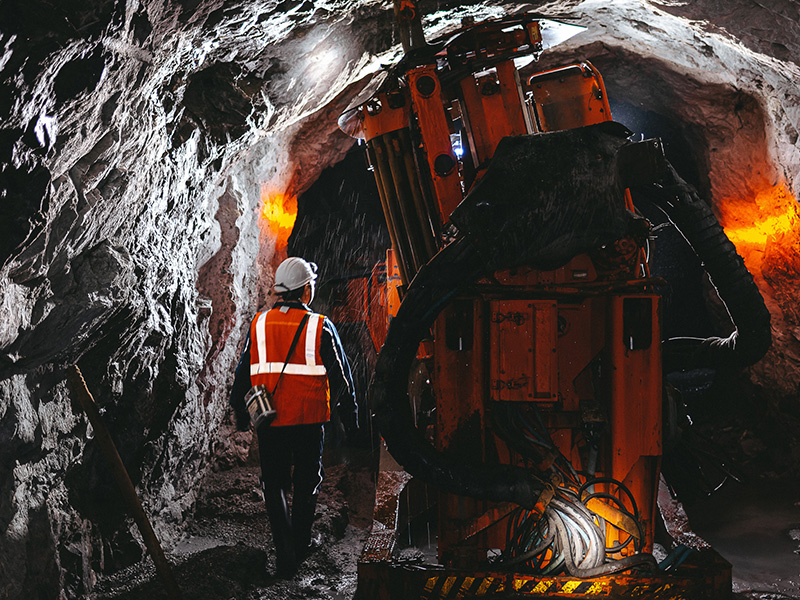
ERGS would also explore technologies that can provide a clearer picture of what lies beneath the surface. The team would investigate ways to locate abandoned or “invisible” wells and strengthen wellbore integrity, in addition to identifying underground faults that could increase seismic risk.
That work reflects the NPC’s recommendation that the U.S. Department of Energy increase investment in technologies that improve subsurface mapping, modeling, sensing and resource assessment.
The proposed center would also examine the human side of subsurface development.
Researchers would study how communities and other stakeholders understand energy-related risks, how they respond to information about those risks and how communication can support more meaningful engagement. The goal is to better understand social, economic and environmental factors alongside the technical characteristics of a storage project.
The NPC has also called for stronger partnerships among universities, government, industry and other organizations involved in subsurface assessment, as well as expanded pathways for developing the next generation of subsurface professionals.
ERGS would incorporate workforce development into its industry-university research model, giving students opportunities to build skills and interact with industry while working on research tied to real-world needs.
For OSU, the proposed center builds on existing research and industry relationships in Oklahoma, including work related to subsurface resource characterization, energy-related fluids and wellbore materials.
ERGS would give researchers and industry partners a shared space to identify common research needs and exchange knowledge. Together, they could develop technologies with real-world potential.
Its broader goal is to help turn a fragmented understanding of the subsurface into a more complete picture. A picture that can inform decisions about energy production, storage, risk and the workforce needed to support those activities.
Industry partners invited to help shape proposed center
Industry partners are invited to help shape the proposed ERGS center. Companies can contribute data and physical samples to support research, provide internship opportunities for students and participate in efforts to prepare the next generation of subsurface professionals.
The center would give industry partners an opportunity to help guide priorities and support the development of practical solutions for energy-related geologic storage. Its collaborative model is intended to connect industry needs with university research while advancing technologies and approaches that support safe, cost-efficient storage.
Prospective industry partners are encouraged to attend the ERGS Planning Meeting Nov. 5-6 at Texas A&M University in College Station. Participants will have opportunities to review proposed research, provide input on project ideas and meet students whose work aligns with the center’s mission. The meeting will also establish the center’s structure and form an Industry Advisory Board.
Companies interested in helping shape the center’s research, education and workforce development priorities can register for the ERGS Planning Meeting.
-
What is the proposed OSU and Texas A&M Center for Energy-Related Geologic Storage?
The Center for Energy-Related Geologic Storage, or ERGS, is a proposed National Science Foundation Industry-University Cooperative Research Center led by Texas A&M University with Oklahoma State University as a partner site. The center would bring university researchers, industry and government together to study safe, cost-efficient underground energy storage.
-
What would OSU researchers study through the proposed ERGS center?
OSU researchers would focus on drilling technology, wellbore and caprock integrity, orphaned well risks, materials characterization and strategic communications. The research would complement Texas A&M work ranging from storage capacity and resource assessment to induced seismicity and societal impacts.
-
What types of underground energy storage would the ERGS center study?
ERGS would study geologic storage of fluids and gases associated with energy production and greenhouse gas mitigation, including hydrogen and compressed air. Researchers would also examine geologic storage and extraction of methane for energy production.
-
How can companies participate in the proposed ERGS center?
Companies can help shape research priorities, contribute data and physical samples, provide student internships and support workforce development. Industry participants would also help connect university research with practical energy-storage needs.
-
When and where is the ERGS Planning Meeting?
The ERGS Planning Meeting is scheduled for Nov. 5-6 at Texas A&M University in College Station. Participants can review proposed research, provide input on projects, meet students and help establish the center's Industry Advisory Board.