OSU engineering alum launches platform for real world communities
Friday, April 17, 2026
Media Contact: Desa James | Communications Coordinator, CEAT | 405-744-2669 | desa.james@okstate.edu
For Kahlil B. Martin, the instinct to solve problems started early in Lawton, Oklahoma.
Math came naturally, and teachers, counselors and family members often told him he was destined to become an engineer. What they recognized was not just his academic ability, but the way he approached challenges methodically, patiently and with curiosity.
Years later, that same mindset would guide him from engineering into entrepreneurship.
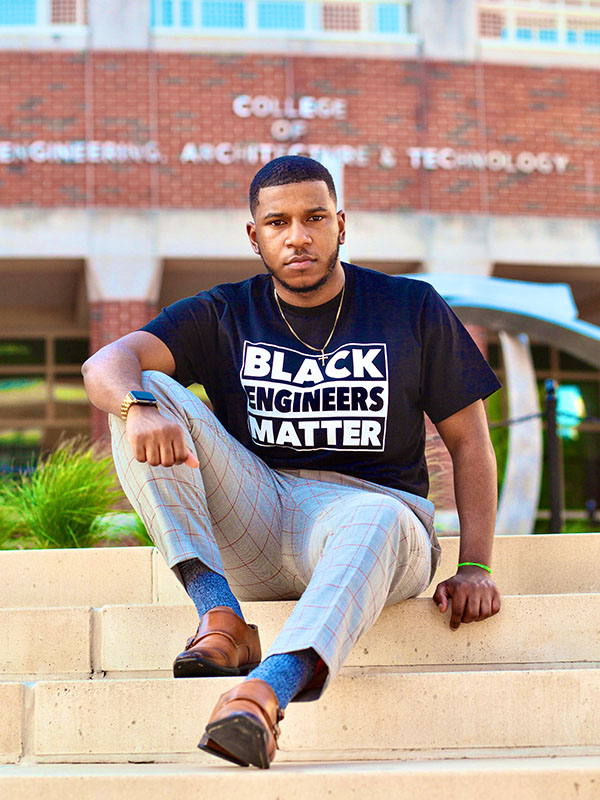
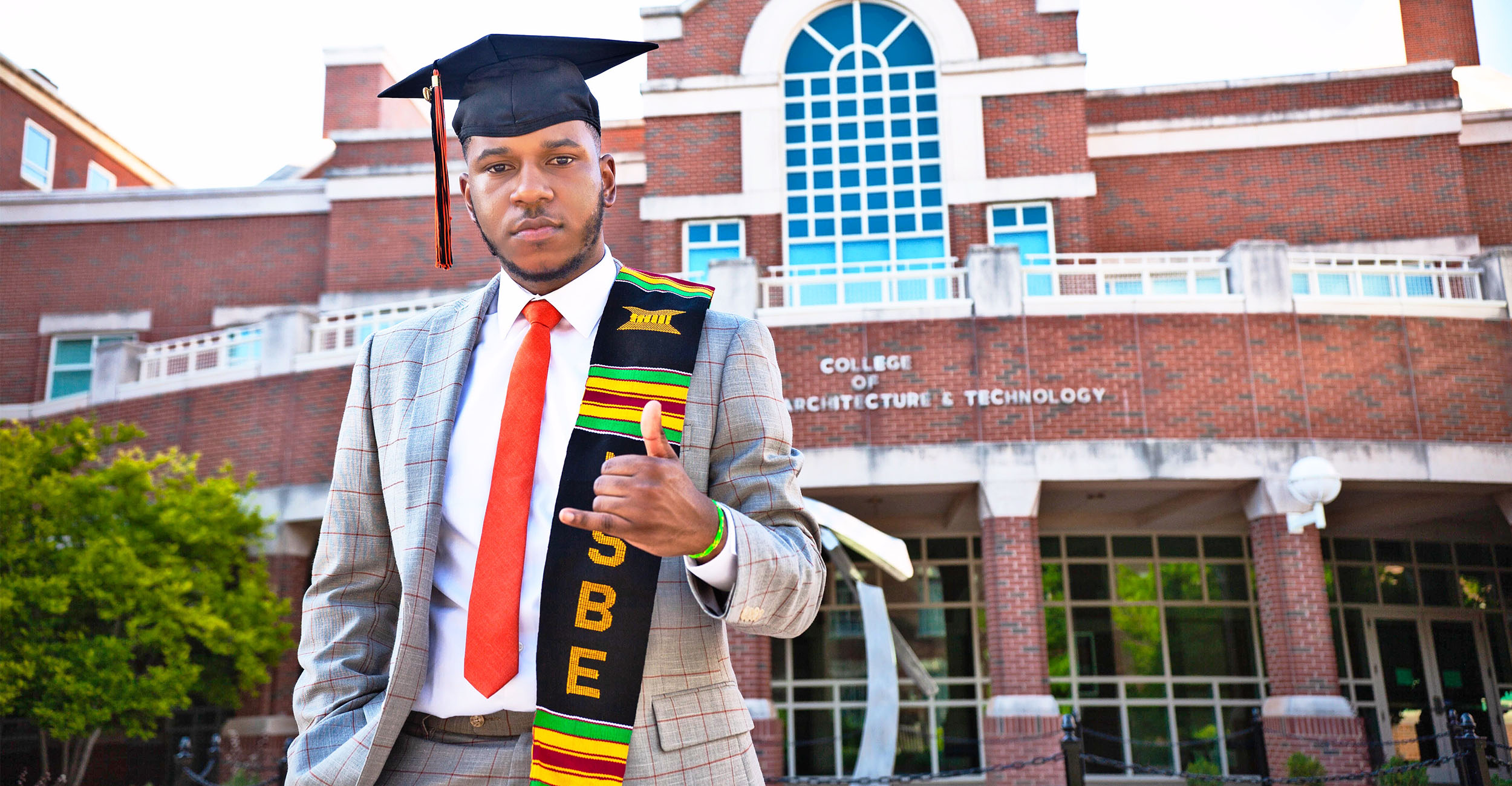
Martin graduated from the College of Engineering, Architecture and Technology in 2020 with a Bachelor of Science in Mechanical Engineering Technology. He then earned his Master of Business Administration in Project Management and Marketing from Southeastern Oklahoma State University.
Martin remembers visiting Oklahoma State University for a senior day event and immediately feeling at home.
“The campus, the energy and being there with three of my closest friends at the time — it just felt right,” he said.
While at OSU, Martin balanced coursework with several jobs across campus, including positions at the Colvin Recreation Center, Edmon Low Library and the Student Success Center. At the same time, he began experimenting with small business ideas to help cover expenses.
He designed graphics, created T-shirts for campus events and sold them to fellow students. What began as a side hustle soon revealed something bigger.
“One month during Homecoming week, I had $600 worth of rent due, and I was trying to figure out how I was going to make that money,” Martin said. “I decided to come up with a T-shirt idea and release it during homecoming week. On Monday, I put it on my Snapchat, and by that Friday, I ended up making $3,000.
“That’s when I knew I had a natural knack for entrepreneurship.”
Even as his entrepreneurial instincts developed, Martin credits key mentors and communities within CEAT for shaping his mindset. One moment in particular with Dr. Hitesh Vora left a lasting impression.
After missing a lab, Martin was given a rare opportunity to make it up.
“Vora looked me in the eye and said, ‘I’m not supposed to do this, but I’m giving you the opportunity because I know you need it,’” Martin said. “Then he told me, ‘Always fulfill your responsibilities because you may not get a second chance.’
“That moment shaped how I approach discipline, ownership and accountability to this day.”
Martin also notes that the National Society of Black Engineers left a lasting impact on him as he was able to connect with peers who looked like him and shared similar experiences.
“Being able to be a part of that organization, being in leadership and attending conferences allowed me to connect with people across the country who were going through the same struggles of engineering,” he said. “I really left that organization with lifelong friends.”
Upon completing his education, Martin began his professional career with Kiewit, where he served as both a lead project estimator and a field engineer on major oil and gas infrastructure projects. His work included estimating system costs that often reached into the millions of dollars and supporting field operations in Ingleside, Texas.
Later, he applied those skills as a program manager at Meta, managing complex systems and coordinating across teams.
Through those experiences, Martin recognized a pattern that would eventually shape his entrepreneurial path.
“The biggest lesson I learned while working in the engineering field is that everything operates through systems," he said. “Whether it was at Kiewit or Meta, success came down to clarity and communication.”
That systems mindset eventually led Martin to launch his own company, Kahlab.
“Solve real problems. Build real systems. Help real people.”
The idea grew from a problem he encountered while running a physical creative space and hosting community events. People would meet and connect in person, but there was no unified way to maintain those relationships afterward.
“Kahlab is an operating system for real-world communities,” Martin said. “We help people who run coworking spaces, event series, social clubs and professional organizations start, scale and monetize their communities in one place.”
For Martin, the platform sits at the intersection of technology and human connection.
“AI is making it easier than ever to build and create,” he said. “At the same time, there’s a growing desire for real, in-person experiences. I believe the future belongs to platforms that bring people together, not just keep them online.”
As he continues building his company, Martin sees a direct connection between his engineering education and his work as a founder.
“Engineering taught me how to break down complex problems, think in systems and build solutions step by step,” he said. “As a founder, those same principles apply.”
When asked for advice to current CEAT students interested in entrepreneurship, his message is simple.
“Focus on real problems,” Martin said. “The best businesses come from solving problems that people actually experience.”
Everything he has built, from engineering to entrepreneurship, returns to the same principle.
“Solve real problems. Build real systems. Help real people,” he said.
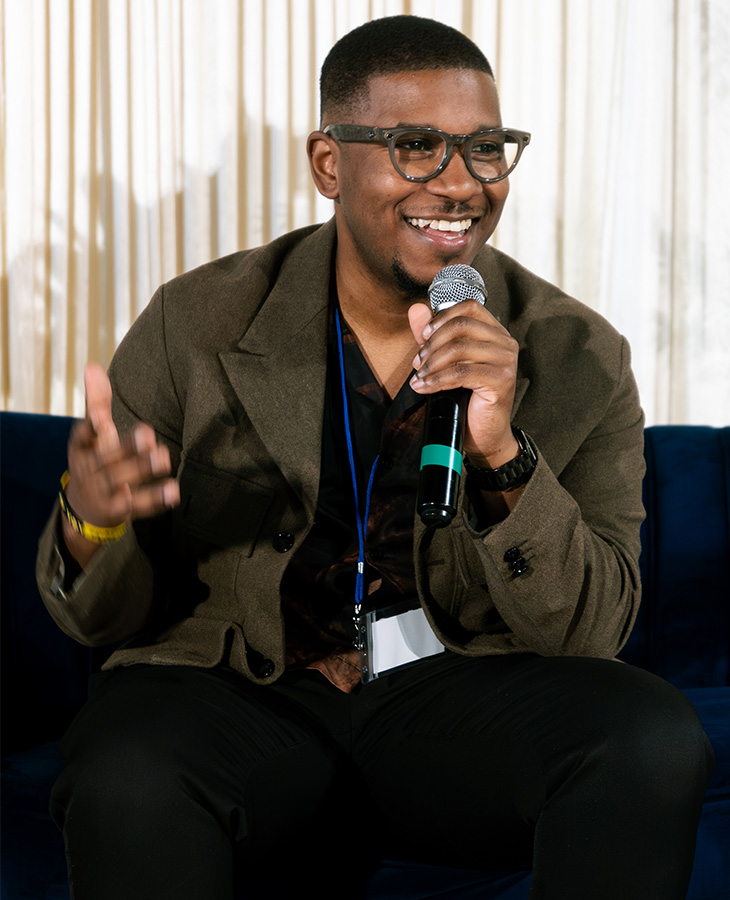
Kahlil B. Martin CEAT alumnus becomes entrepreneur