

OSU researcher advances new materials to reduce friction, improve energy efficiency
Friday, June 26, 2026
Media Contact: Desa James | Communications Coordinator | 405-744-2669 | desa.james@okstate.edu
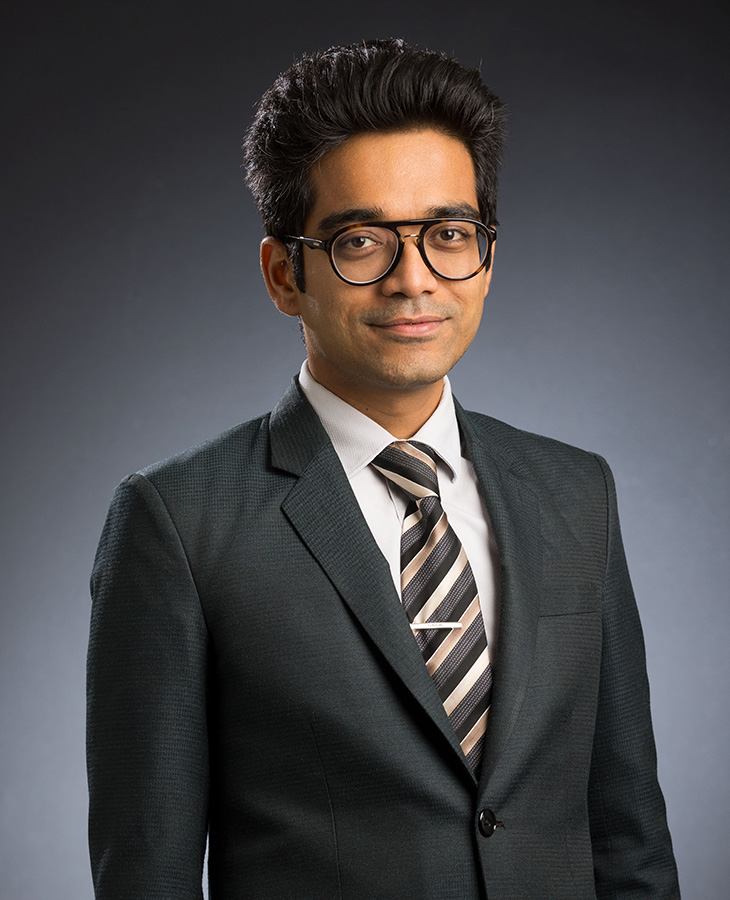
Dr. Pranjal Nautiyal, an assistant professor in the College of Engineering, Architecture and Technology’s School of Mechanical and Aerospace Engineering at Oklahoma State University, is conducting new research to address a widespread challenge in modern engineering — friction and wear in mechanical systems.
Supported by the National Science Foundation's EPSCoR Research Fellows program, Nautiyal’s project explores a class of advanced materials known as MXenes to develop stimuli-responsive coatings for extreme conditions.
Friction and wear affect nearly every system with moving parts, from aircraft engines to automotive components and industrial equipment. These effects not only cause mechanical degradation but also result in significant energy losses.
“Friction causes undesirable energy loss, while unchecked wear can lead to mechanical failure,” Nautiyal said. “It’s estimated that more than 30% of energy consumed in transportation is spent overcoming friction. Addressing this challenge has enormous implications for energy efficiency and system reliability.”
Self-Healing materials for harsh environments
Nautiyal’s research focuses on mechanocatalysis, a process that uses mechanical stimuli, such as pressure and friction, to drive chemical reactions. His team is investigating how MXenes, a family of ultra-thin, two-dimensional ceramic materials, can act as catalysts to form protective films known as tribofilms.
These tribofilms develop at sliding interfaces and serve as protective layers that reduce friction and prevent wear. Remarkably, they can also regenerate if damaged.
“We aim to understand the mechanisms by which MXenes catalyze the formation of these tribofilms,” Nautiyal said. “This scientific understanding will allow us to design MXenes with superior catalytic properties, which can be applied as coatings for mechanical components.”
Unlocking the science behind MXenses
MXenes are uniquely suited for this work due to their atomic-scale thickness and highly customizable chemistry. However, the mechanisms behind their catalytic behavior in friction-driven environments remain poorly understood.
The project addresses two key questions: how surface chemistry influences MXenes’ catalytic activity and how mechanical stresses trigger chemical reactions at nanoscale interfaces.
To answer these questions, the research team is combining advanced techniques such as high-speed atomic force microscopy and in-situ Raman spectroscopy to observe reactions as they happen.
Collaboration expands capabilities
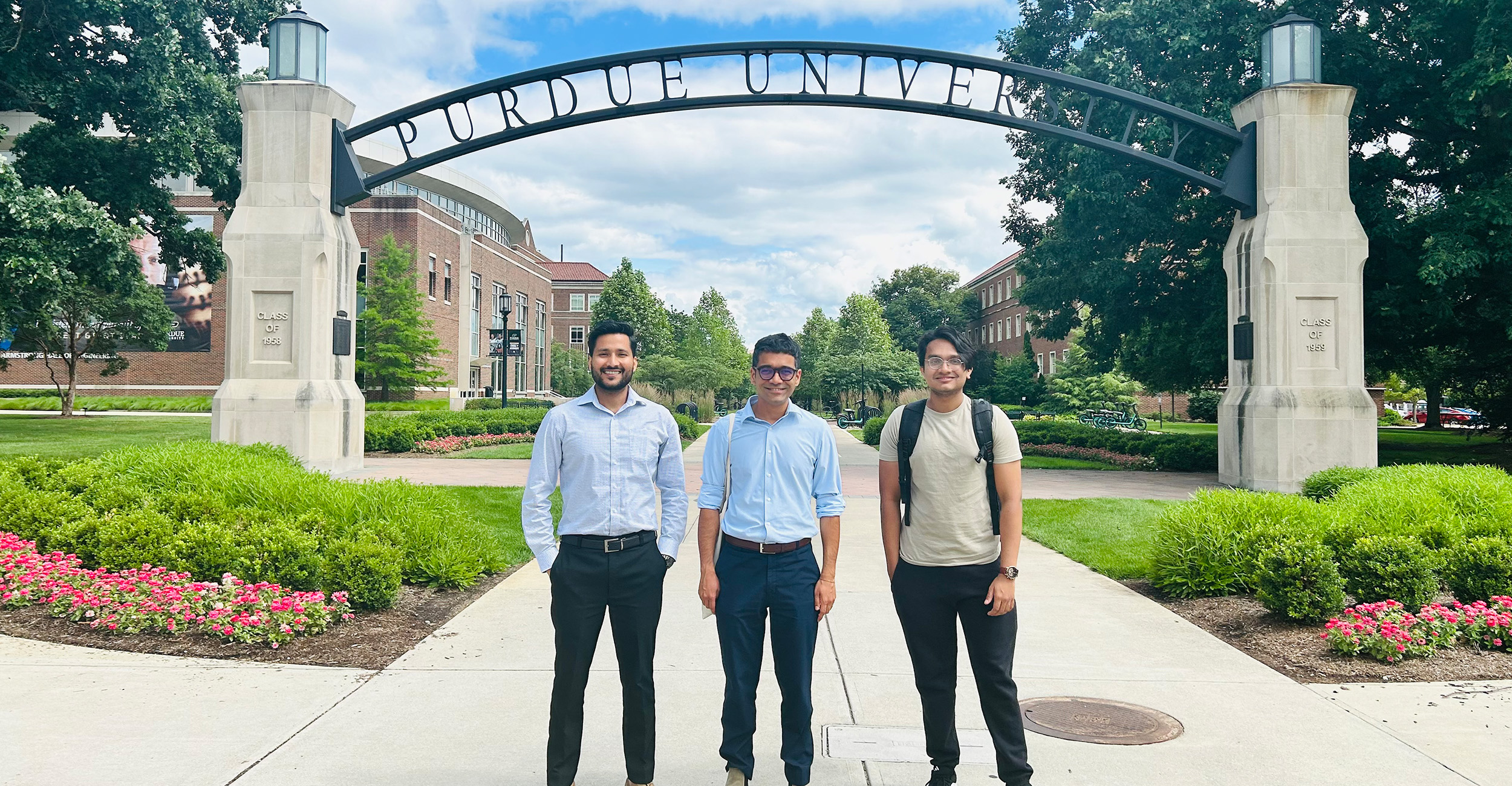
The project involves a partnership with Professor Babak Anasori’s research group at Purdue University, a globally recognized leader in MXene synthesis. Through this collaboration, Nautiyal and his graduate students will spend two summers at Purdue, working closely with Anasori’s team to build specialized expertise and utilize advanced research instrumentation.
“This collaboration allows us to accelerate our understanding of MXenes and bring new capabilities back to OSU,” Nautiyal said.
Training the next generation
In addition to advancing fundamental science, the grant supports graduate student training in cutting-edge techniques such as nanomaterial synthesis, microscopy and chemical characterization.
“Advanced materials are the building blocks of future technologies,” Nautiyal said. “Providing students with hands-on experience in these areas is essential for workforce development.”
The research has broad implications for industries including aerospace, automotive and energy, where improved resistance to friction and wear could significantly enhance performance and reliability.
By establishing MXene synthesis capabilities at OSU, the project is expected to drive new research collaborations, expand educational opportunities and strengthen Oklahoma’s role in advanced materials innovation.
“Fundamental research like this lays the groundwork for future technologies,” Nautiyal said. “It opens the door to new materials and solutions that can transform how we design mechanical systems.”