


OSU researcher studies how electrical contracting firms transition through growth
Friday, May 8, 2026
Media Contact: Desa James | Communications Coordinator, CEAT | 405-744-2669 | desa.james@okstate.edu
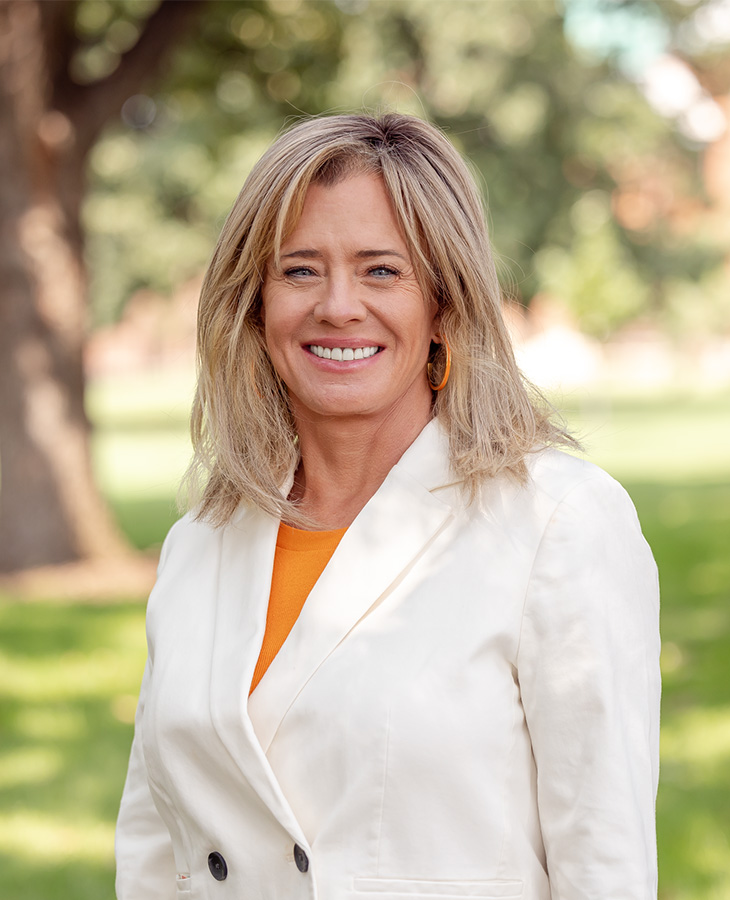
Dr. Amy Lewis, assistant professor for the School of Fire, Construction and Emergency Management in the College of Engineering, Architecture and Technology at Oklahoma State University, is studying how electrical contracting companies transition from founder-driven businesses to more scalable organizations as they grow.
The research focuses on a common challenge within the construction industry. Many electrical contracting firms achieve early success through the relationships, instincts and day-to-day involvement of their founders. While that approach can sustain a company for years, growth often becomes more difficult when too many responsibilities continue to run through a single individual.
The study aims to better understand when that dynamic begins to limit expansion and what organizational changes help companies grow successfully beyond that stage.
“A lot of these companies were built on the owner’s relationships and ability to make things happen,” Lewis said. “That can work really well for a long time. But it can also mean the company keeps relying on that one person for too much.”
Rather than focusing strictly on financial performance, the research examines the organizational side of growth. The project looks at how electrical contractors begin shifting responsibilities, adding new leadership roles and introducing more formal systems as their companies expand.
Lewis and her team are particularly interested in the points where firms begin introducing roles such as operations management, human resources and business development, positions that often signal a shift from a founder-dependent structure toward a more sustainable business model.
“At some point, the owner can become the bottleneck for too many decisions, too many relationships or too many parts of the operation,” Lewis said. “Bringing in roles like operations, HR or business development may be a sign that the company is starting to move from owner-dependent to system-dependent.”
The project also explores how companies recognize when their existing structure is no longer supporting growth. Early indicators may include slower decision-making, communication challenges or increased strain on leadership even while the business appears successful externally.
To understand how these transitions unfold in practice, the team is gathering information directly from electrical contractors and industry partners who have experienced these stages of growth firsthand.
“We want to hear from people who have lived through these changes,” Lewis said. “I’m much more interested in those real-world perspectives than making assumptions from the outside.”
The goal is to identify patterns that contractors can recognize as their companies expand. Lewis hopes the findings will provide practical guidance for firms facing decisions about leadership, staffing and organizational structure.
“If the research can help companies step back and think more intentionally about growth, that would be valuable,” Lewis said. “It’s not just about getting bigger. It’s about understanding what has to change inside the company for growth to actually work.”
The project comes at a time of rapid expansion in parts of the electrical contracting industry, particularly as demand grows for large-scale infrastructure and technology facilities such as AI-driven data centers. While these opportunities can accelerate company growth, they also place new pressure on business operations.
“With all the AI-driven data center work coming online, some electrical contractors are growing very quickly,” Lewis said. “They may be great at delivering work, but the question is what has to change inside the organization to support that growth well.”
CEAT students involved in the project are gaining exposure to the business side of construction and contracting as they assist with research and industry engagement.
“Students get to see that research is not just theoretical,” Lewis said. “They learn how companies grow, how leadership evolves and how real business challenges can be studied in a structured way.”
Ultimately, the research aims to produce findings that companies can apply directly to their own organizations.
“Contractors don’t need another academic report that sits on a shelf,” Lewis said. “They need something practical they can recognize and use as they make decisions about growth.”