

OSU researchers explore nanobubble technology to help curb spread of antibiotic resistance from agricultural wastewater
Monday, August 10, 2026
Media Contact: Desa James | Communications Coordinator | 405-744-2669 | desa.james@okstate.edu
Every time antibiotics are used to keep livestock healthy, traces of those medications, along with the genetic material that allows bacteria to resist them, can remain in farm wastewater.
If left untreated, those contaminants can move beyond the farm, contributing to antimicrobial resistance, one of the world's fastest-growing public health challenges.
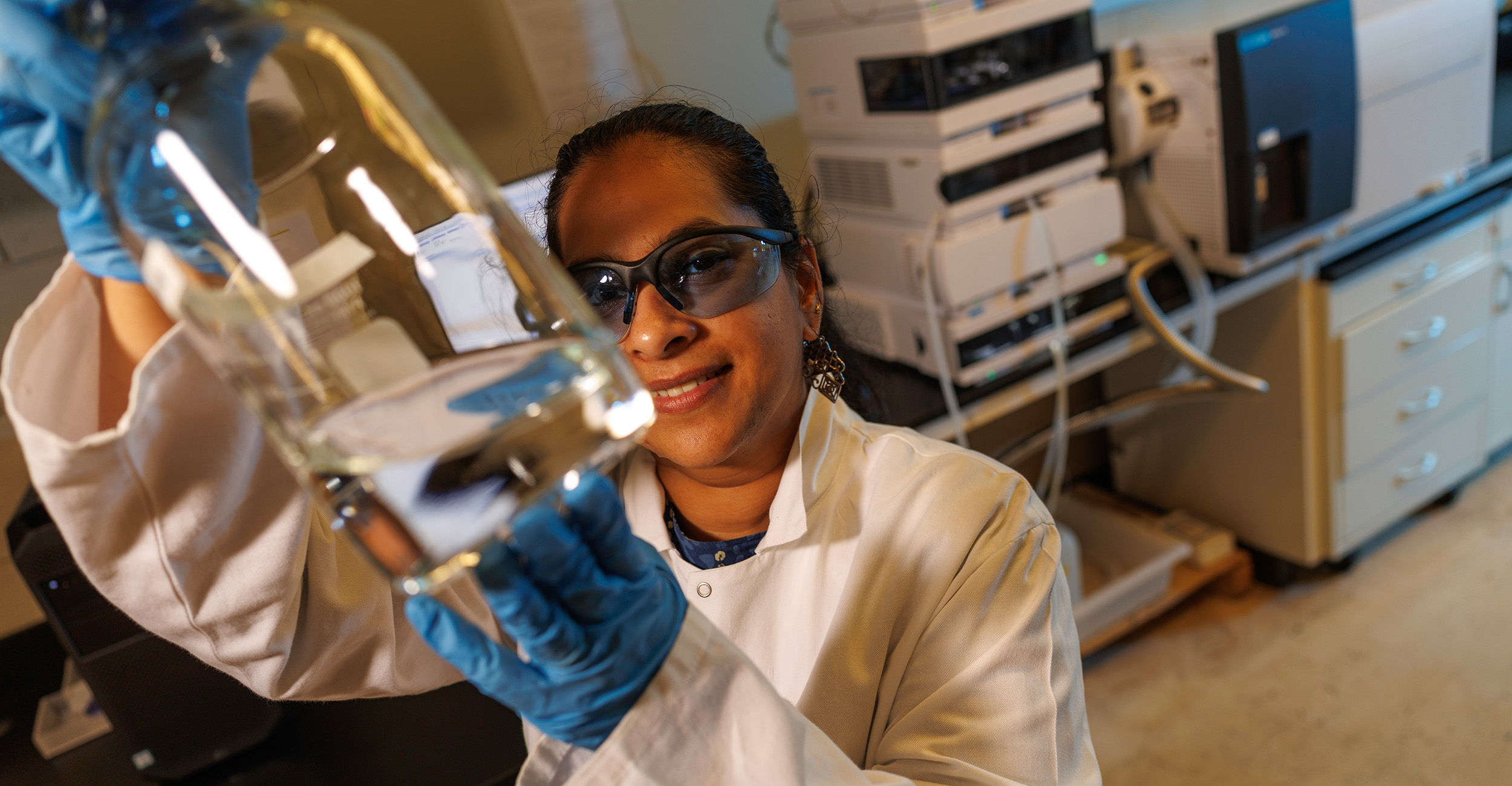
In Oklahoma State University’s Department of Biosystems and Agricultural Engineering, Dr. Kiranmayi Mangalgiri and her team are evaluating the effectiveness of ozone nanobubble technology and creating scientifically backed guidelines for use. The project could help reduce the spread of antibiotic-resistant bacteria while improving wastewater treatment practices for livestock producers.
"Antibiotic resistance is something everyone should be concerned about," Mangalgiri said.
Traditional municipal wastewater treatment plants are designed to remove nutrients such as nitrogen and phosphorus, but they are not intended to eliminate many pharmaceutical compounds. Agricultural wastewater presents an even greater challenge because the concentrations are significantly higher than those found in household wastewater.
Rather than using conventional ozonation, the research team is evaluating ozone delivered via nanobubbles — bubbles three orders of magnitude smaller than those in typical diffused aeration. Because the bubbles remain suspended in water much longer than conventional bubbles do, they allow more ozone to dissolve into the wastewater rather than escape into the atmosphere.
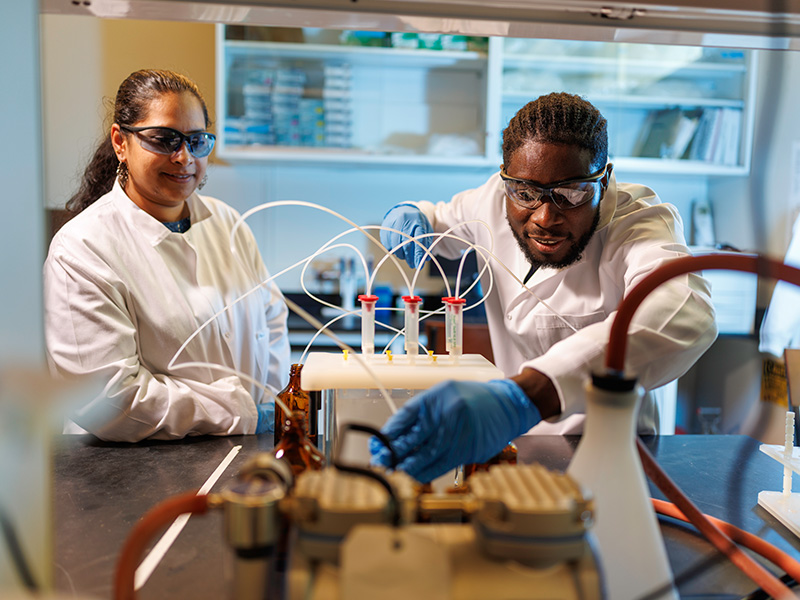
The interdisciplinary team includes School Head Dr. Mark Krzmarzick from the School of Civil and Environmental Engineering. Together, the team will first evaluate the technology in controlled laboratory conditions before testing it with wastewater collected from swine farms. They will measure how effectively the process removes antibiotic compounds while also breaking down antibiotic resistance genes that can be transferred between bacteria.
Those genes are a key focus of the project.
Even after bacteria die, fragments of their genetic material can remain suspended in wastewater. Other bacteria may gain antibiotic resistance from genetic material, allowing resistance to spread without direct reproduction. By breaking down that genetic material, researchers hope to reduce one pathway through which antibiotic resistance spreads in the environment.
Krzmarzick’s laboratory can analyze genetic material associated with antibiotic resistance. With this, the researchers hope to determine whether ozone nanobubbles can break apart those genes before they can be transferred to other bacteria.
The project also seeks to answer practical questions that producers and future treatment facilities may face, including how wastewater characteristics such as salt, nitrogen and organic matter affect nanobubble performance.
"We're generating the scientific knowledge that tells us how this technology behaves under different wastewater conditions," Mangalgiri said. "Instead of relying on trial and error every time, we'll be able to predict how the treatment should perform."
Beyond advancing wastewater treatment, the project could benefit rural communities by helping producers reduce environmental contamination while lowering treatment costs through more efficient ozone use.
If successful, this work could provide the foundation for larger-scale treatment systems that improve water quality, support sustainable agriculture and help slow the environmental spread of antibiotic resistance.
"Everyone benefits from cleaner water," Mangalgiri said. "If we can remove these contaminants before they leave the farm, we're helping protect agriculture, communities and public health."