

OSU researchers work to improve spacecraft spatial awareness and safety
Friday, August 21, 2026
Media Contact: Tanner Holubar | Communications Specialist | 405-744-2065 | tanner.holubar@okstate.edu
The environment is similar, whether it is a car on the highway or a satellite in low Earth orbit.
In both cases, spatial awareness is key, but the challenge is far greater for spacecraft.
Objects ranging from 1 millimeter to 10 centimeters can travel at speeds close to Mach 40, creating a hazardous microscopic projectile for satellites that first must be detected before being avoided.
Space is also a challenging environment for sensing these objects. Computations must be performed with the onboard space-rated computing hardware, whose specifications are decades behind those that many Earth-based software developers are used to working with.
Improving how spacecraft see and understand these objects is the subject of research in the College of Engineering, Architecture and Technology at Oklahoma State University.
OSU is partnered with Utah State University as part of a Department of Defense initiative called "Relative Optical Perception in Low Earth Orbit," or ROPEO.
This mission was developed through a collaboration with OSU, the University of Tulsa, the Air Force Research Laboratory, Space Force, industry and NASA affiliates. AFRL is key in the mission's feasibility, design and testing, and USU's Space Dynamics Lab is a University Affiliated Applied Research Center that maintains a critical U.S. capability through the University Nanosatellite Program.
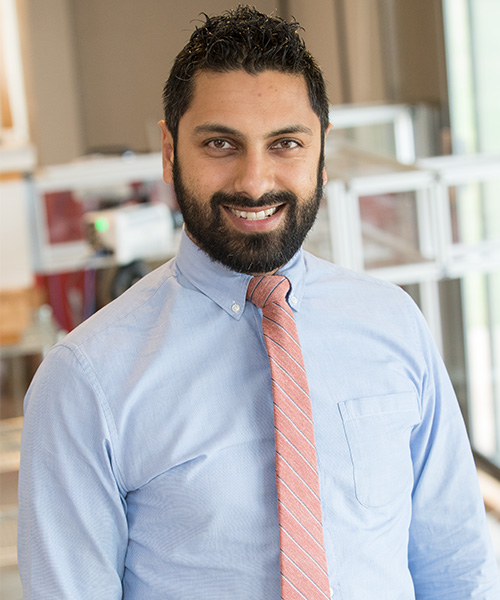
The principal investigator for the OSU cohort is Dr. Imraan Faruque of the School of Mechanical and Aerospace Engineering, and the co-PI is Dr. John O'Hara of the School of Electrical and Computer Engineering. For the past four years, they have run projects focused on sustainable orbits, primarily orbital cleanup through teams of satellites.
One current capability gap is spacecraft's ability to detect small, hazardous objects that have proliferated due to human activities in space.
"ROPEO is focused on improving how spacecraft 'see' and understand nearby objects in low Earth orbit, especially orbital debris," Faruque said. "It combines optical sensing, CubeSat/smallsat demonstrations and debris-impact analysis to improve relative perception in space. The goal is to strengthen the situational awareness for spacecraft operating in a crowded and hazardous orbital environment."
ROPEO addresses several approaches to improve relative optical perception in low orbits. Researchers will use continuous strike imaging to estimate the number of small debris moving through orbit and examine debris-induced changes in altitude as an indirect way to identify impacts. The team will also investigate longer-range optical sensing to detect objects from greater distances.
The importance of improving detection capabilities will only grow as more satellites are launched.
“Low-Earth orbit is increasingly congested, with the majority of orbital mass having been launched within the last decade,” Faruque said. "Centimeter-sized debris that is too small to track from the ground regularly damages satellites, and ‘near-miss’ events occur multiple times a week. Better perception helps spacecraft detect hazards earlier, support collision avoidance, and improve mission safety and longevity.”
Much of the satellite work at OSU has been sponsor- and faculty-led, involving graduate students.
Two years ago, Faruque worked to connect post-graduate researchers with the Space Cowboys, a student rocketry competition team. ROPEO is an example of a project that results in undergrads collaborating with graduate students.
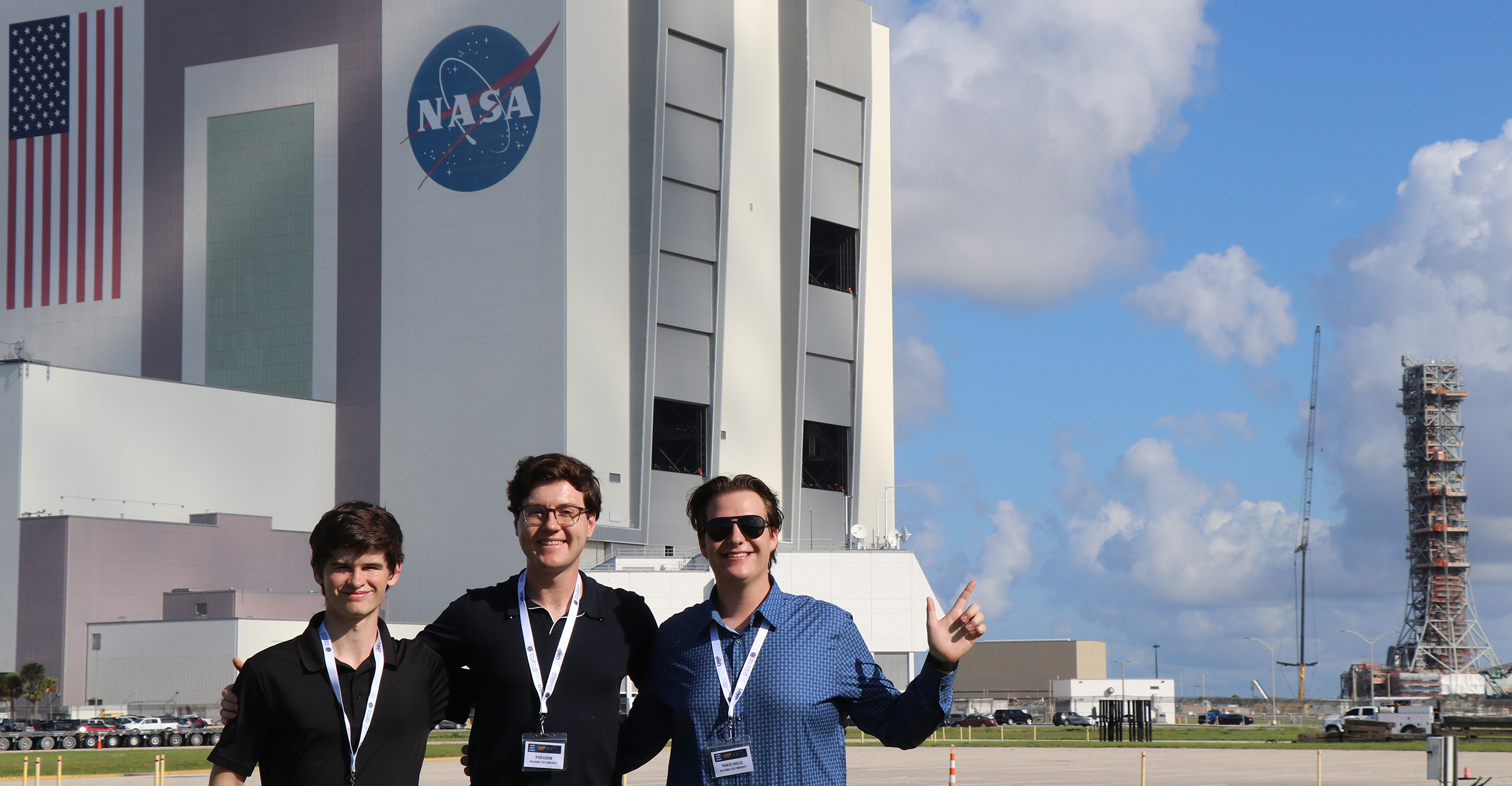
"ROPEO scales up our work to involve students in developing the CubeSat mission, ensuring their feedback, interest and capabilities are represented more than we have before," Faruque said. "ROPEO includes support for embedding three Oklahoma students to spend time embedded within AFRL’s Space Vehicles Directorate on Kirtland Air Force Base in Albuquerque, New Mexico, and at Kennedy Space Center in Florida, which allows them to see first-hand the application spaces and career opportunities this technology area provides."
This research could have a major impact beyond satellites in orbit, benefiting both commercial spaceflight and NASA missions by improving situational awareness and enhancing operational safety. Faruque said that the fact that it benefits any spacefaring nation allowed international partnerships to take root, with all collaborators working together to make space safer.
ROPEO reflects a commitment to using engineering not only to advance what is possible, but also to responsibly protect the people, missions and communities that depend on it.