

Saving heat for a frosty day: OSU-AAON research rethinks heat-pump defrost
Monday, August 31, 2026
Media Contact: Tanner Holubar | Communications Specialist | 405-744-2065 | tanner.holubar@okstate.edu
On a cold, damp winter day, a heat pump can face a surprising paradox: to keep a building warm, it may first have to cool it.
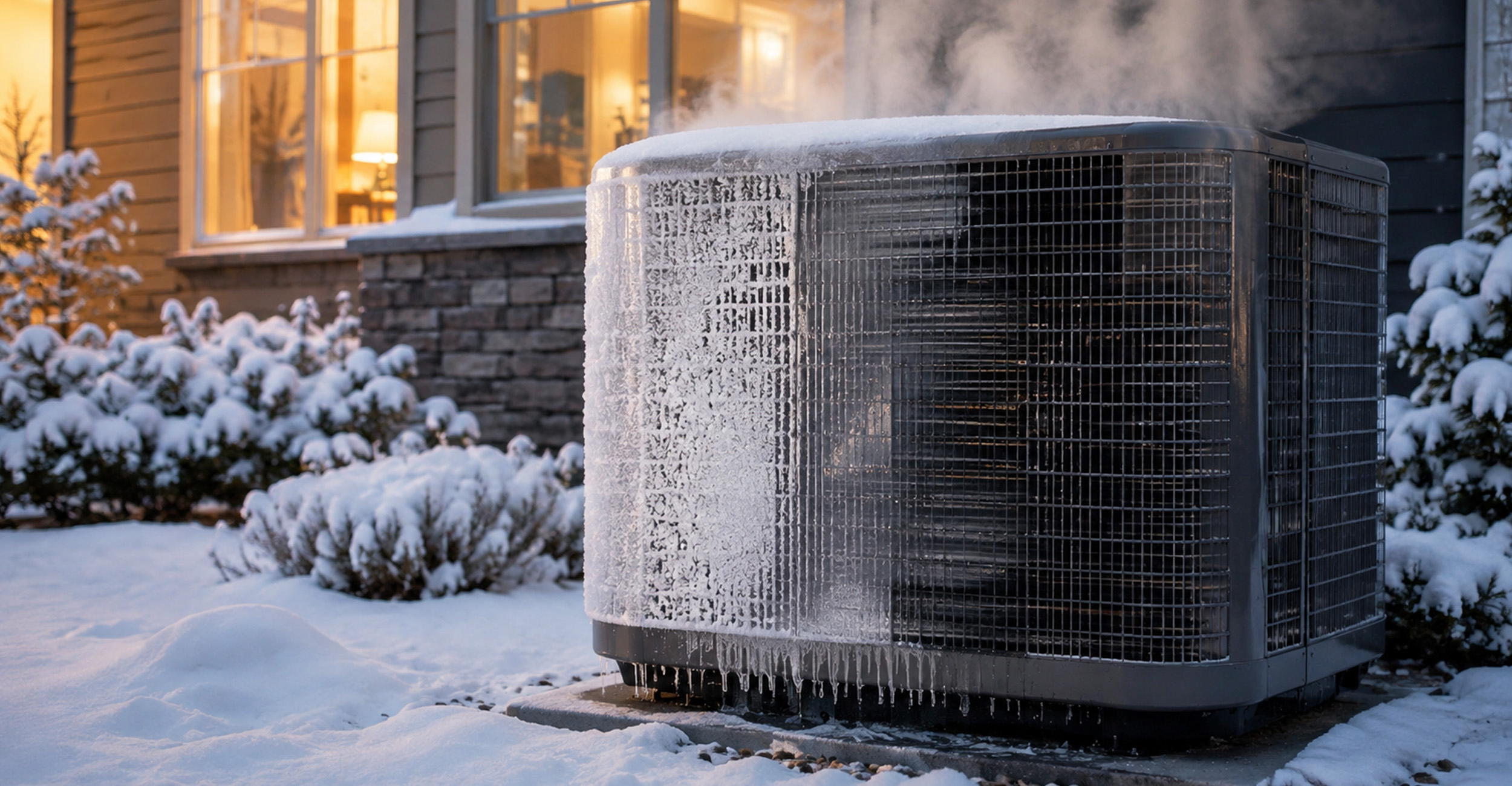
The reason is frost. As a heat pump pulls heat from cold outdoor air, moisture can freeze on the outdoor coil. That frost acts like an insulating blanket, blocking airflow and forcing the heat pump system to work harder while its heating performance drops. Eventually, the ice has to be removed by defrosting.
The most common solution is reverse-cycle defrost. For a few minutes, the heat pump redirects heat to the outdoor coil to melt the frost. It works, but there is a trade-off: normal heating must be interrupted, energy is spent clearing the coil, and people indoors may feel an uncomfortable burst of cool air - the familiar "cold-blow effect" during winters.
Researchers in Oklahoma State University's College of Engineering, Architecture and Technology are working with AAON Inc., an Oklahoma-based HVAC&R manufacturer, to rethink that trade-off. Led by Dr. Ardeshir Moftakhari, assistant professor in the School of Mechanical and Aerospace Engineering, the team is asking a simple question: What if a heat pump could save some heat while it is operating normally in the heating cycle, then use that stored energy in the defrost cycle to remove the frost from the outdoor unit without indoor coil cooling?
“We are essentially exploring a small thermal battery inside the heat-pump cycle - save heat when it is available, then use it when the system needs to defrost,” Moftakhari said.

The team is exploring phase change material (PCM) thermal energy storage (TES) as a thermal battery. During normal heating, the PCM TES stores available thermal energy. When defrost is needed, it releases that energy to support the defrost process. In simple terms: save heat now, use it when it matters most.
If the concept performs as intended, it could reduce the cold-blow effect, shorten defrost cycles, lower energy consumption and defrost costs, and help the heat pump maintain steadier heating during cold-weather operation.
“Defrost lasts only minutes at a time, but those minutes repeat throughout cold-weather operation,” Moftakhari said. “Reducing that recurring penalty could add up to meaningful gains in energy use, operating cost, reliability and occupant comfort.”
Putting the idea to the test
This is more than a computer-modeling exercise. At OSU's Advanced Technology Research Center, the team has a controlled experimental facility built around a variable-speed AAON air-source heat pump, allowing researchers to recreate heating, frosting and defrosting conditions and measure how the equipment responds.
The team has also designed and built a compact PCM TES prototype for integration with the AAON heat pump. The challenge is speed: a defrost cycle may last only a few minutes, so the storage must deliver useful heat on the same timescale.
That is where laboratory testing becomes critical. A concept that works on paper still has to work as real HVAC equipment. The system must be compact, store heat between frost events, release it quickly when needed and operate reliably through repeated winter cycles.
It also has to earn its place in the equipment. Any added hardware must provide enough energy, comfort and operational benefit to justify its size, complexity and cost.
The team is now testing the prototype, with future work focused on improving performance while reducing size and cost. AAON's involvement helps keep the research tied to practical equipment requirements and a central question: can the idea move from the lab into commercial heat pumps?
The bigger goal is to treat defrost as an energy-management opportunity, not just an unavoidable interruption.
"The long-term goal is not simply to melt ice faster," Moftakhari said. "It is to make defrost an intelligently managed energy process so the heat pump can protect itself without unnecessarily sacrificing efficiency or comfort."