


State, federal and education leaders convene to zone in on future of STEM in Oklahoma
Tuesday, March 31, 2026
Media Contact: Tanner Holubar | Communications Specialist | 405-744-2065 | tanner.holubar@okstate.edu
Oklahoma is well-positioned for the future, with one of the fastest-growing populations in the country and burgeoning industries that position the state as a frontline for innovation and advancement.
The state’s ability to take full advantage of the future lies in preparing the next generation of Oklahoma’s workforce, especially in science, technology, engineering and math-related fields.
That future was the subject of discussion during the inaugural Oklahoma STEM Pipeline Partnership Panel held alongside the 68th annual Oklahoma State Science and Engineering Fair, the state’s premier STEM research competition.
Co-hosted by the College of Engineering, Architecture and Technology at Oklahoma State University and OSSEF, the panel featured federal policymakers, university leaders and industry experts discussing challenges and opportunities shaping the STEM pipeline in Oklahoma. Devon Energy sponsored the panel.
Panelists included Lt. Gov. Matt Pinnell; Oklahoma Secretary of Education Dr. Dan Hamlin; Rep. Nicole Miller; Oklahoma Workforce Commission Executive Director Kyla Guyette; Hamm Institute for American Energy Deputy Executive Director Katie Altshuler; Oklahoma Defense Industry Association Executive Director Allyson Carson; and Wes Watkins Center of International Trade Director Andrew Ranson, who served as moderator.
The panel and guests were welcomed by OSU President Jim Hess and Vice President of Research Kenneth Sewell to start the discussion.
“Oklahoma has a moment right now that we need to capture,” Lt. Gov. Matt Pinnell said. “We’ve got the environment and the talent pipeline we’re building, but we have to take advantage of it.”
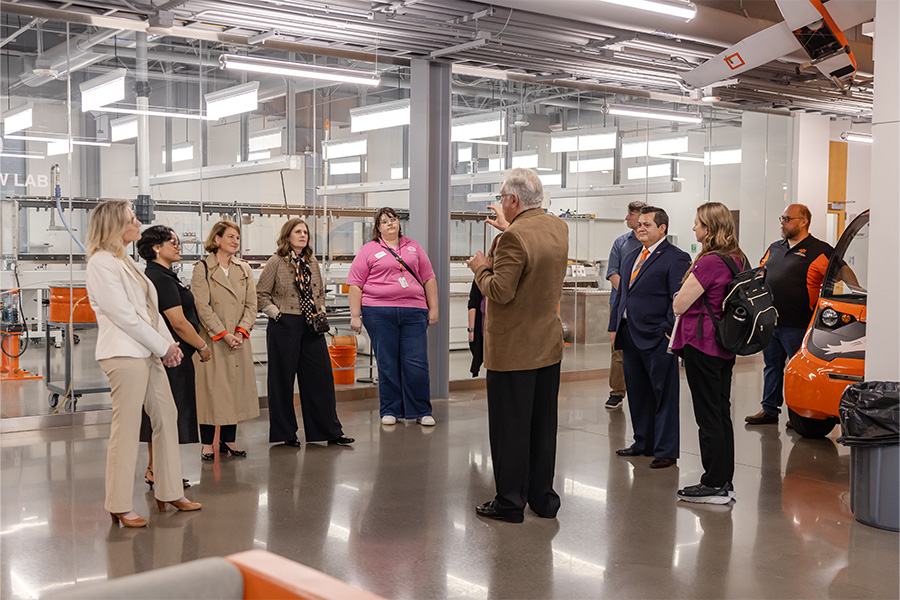
Addressing the workforce shortage
Oklahoma faces a growing workforce gap, even as the need for engineers and technical professionals rises nationwide.
Universities in Oklahoma produce around 1,200 engineering graduates annually, with nearly half leaving the state after earning their degrees.
It is estimated that Oklahoma will need roughly 3,000 new engineers per year through 2034, adding to the current deficit of more than 5,000 unfilled STEM-related positions in the state. This shortage contributes to approximately $1 billion in unrealized potential.
“Demand for STEM talent is rising, and technology is evolving quickly,” Ranson said. “What makes Oklahoma’s situation distinct is how it directly impacts our ability to compete and grow.”
Strengthening educational pathways
Hamlin noted that education policy and teacher recruitment are key to strengthening the STEM pipeline. He said Oklahoma students receive an average of 159 school instructional days per year, far below the national average of 180 days.
Creating more incentives and performance-based pay, as well as stronger support systems for teachers, are examples of ways Oklahoma can become more competitive in teacher retention.
“When you think about STEM, it’s even more difficult to recruit and retain teachers who can teach advanced math and science courses,” Hamlin said.
Sewell said that research shows it is key for students to be exposed to STEM at a young age. The encouragement, exposure and opportunities presented to students lay the foundation for their future involvement in these kinds of careers.
Hess said OSU needs to be at the forefront of these collaborative efforts, helping bring the university closer aligned with industry, government and K-12 school systems.
“As a land-grant institution, we are committed to preparing the next generation of engineers, scientists, educators and leaders that will solve complex challenges to fuel economic growth and improve lives across our state,” Hess said.
CEAT Dean Hanchen Huang spoke about OSU’s role as a tier-1 research university in providing access to Oklahoma residents and students to learn.
“In terms of STEM education, you can look at it in multiple dimensions,” Huang said. “One way to look at it is to focus on the need for a direct pipeline from K-12 to college graduation. Partnership is key, and we partner with K-12 on the vertical line for student career paths through education. Of course, that education path does not stand alone. It’s accomplished through a community of support.”
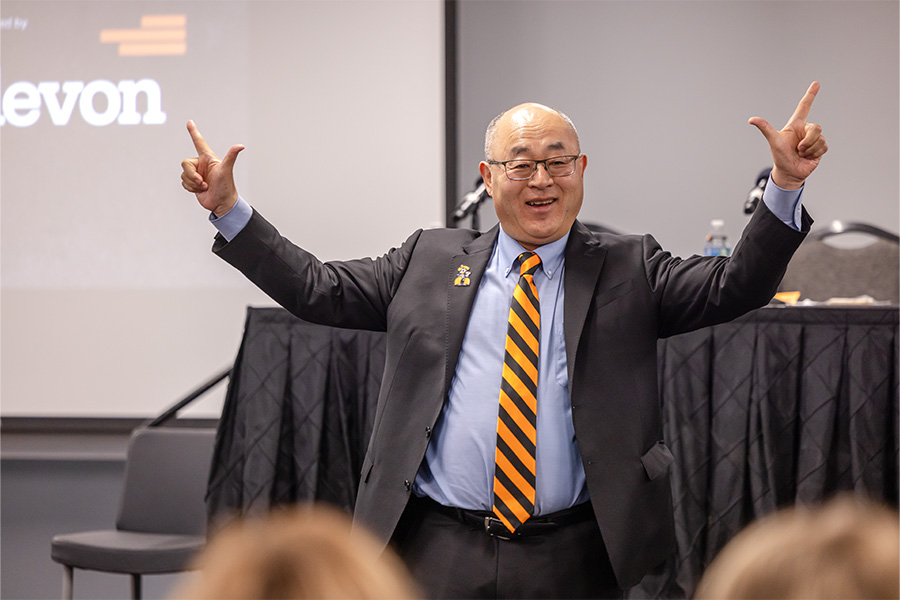
Connecting industry and education
Altshuler said the Hamm Institute, a part of OSU, works closely with industry leaders to determine what the workforce’s most pressing needs are.
She said the gap between academia and the private/public industry needs to expose students to the possible careers in Oklahoma.
“We need to make sure kids know that there are great opportunities out there. The future of the energy sector is growing every day,” Altshuler said. “To get kids to stay here, we have to diversify our economy in Oklahoma. We are making great strides in that direction, but it is still not enough. If we want someone to stay here or move here from another state, they need more than one opportunity.”
Guyette said the Oklahoma Workforce Commission is working to ensure education pipelines are set up to meet current and future workforce demands simultaneously.
These efforts include work-based learning programs that connect students with employers through internships and career exploration opportunities.
“We have to focus on filling the jobs we have today while also preparing students for the jobs that will exist five and 10 years from now,” Guyette said.
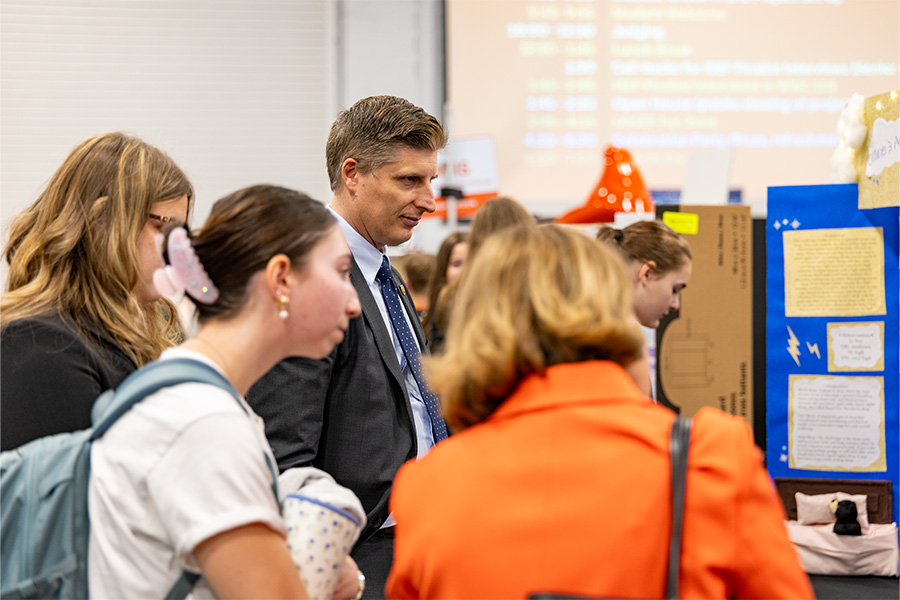
The future of STEM in Oklahoma
This panel represented the first effort to unite K-12 education, higher education, government and industry efforts to improve the future of Oklahoma.
Ed Stokes, chairman of the Strategic Advisory Board for CEAT, spent more than 40 years in the oil and gas industry. He was involved with the Offshore Technology Conference in Houston for 20 years, culminating in his serving as the board chairman.
The board regularly used panels to discuss shortfalls and how best to address them. With a passion for STEM education, Stokes believes this panel was a great way to bring leadership from all angles together to focus on what each sector could do to improve the future of Oklahoma’s workforce.
“Everybody sees the importance of this, and I think people want to help,” Stokes said. “People have come because they consider it to be important. And we brought together people who can use their respective areas of influence to really push this forward. The common denominator is STEM, and everyone is motivated to help our state thrive.”
Another OSPP panel is planned for fall 2026 with a focus on retaining students once they graduate from Oklahoma’s universities. In all, this panel was the first effort in a yearslong mission to improve the workforce in Oklahoma, one STEM student at a time.
“Our mission in CEAT K-12 STEM is to reach kids in all 77 counties and let them know there is a future for them in STEM and that engineering is fun,” Dr. Jovette Dew, director of outreach programs for CEAT, said. “In addition, we want to support the teachers who are doing great work and attend their STEM nights and STEM fairs to encourage kids about future engineering careers. Some nonprofits are taking up the mantle of exposing students to the engineering design process, too. It takes all of us working together to get the STEM pipeline started and to stop the leaks along the way to a rewarding career.”