Alumni highlight: The CEAT experience that shaped Welch’s career
Wednesday, July 1, 2026
Media Contact: Desa James | Communications Coordinator | 405-744-2669 | desa.james@okstate.edu
When Andy Welch looks back on his time at Oklahoma State University’s College of Engineering, Architecture and Technology, one learning experience sticks out among the rest. An experience that reshaped how he approaches problem-solving to this day.
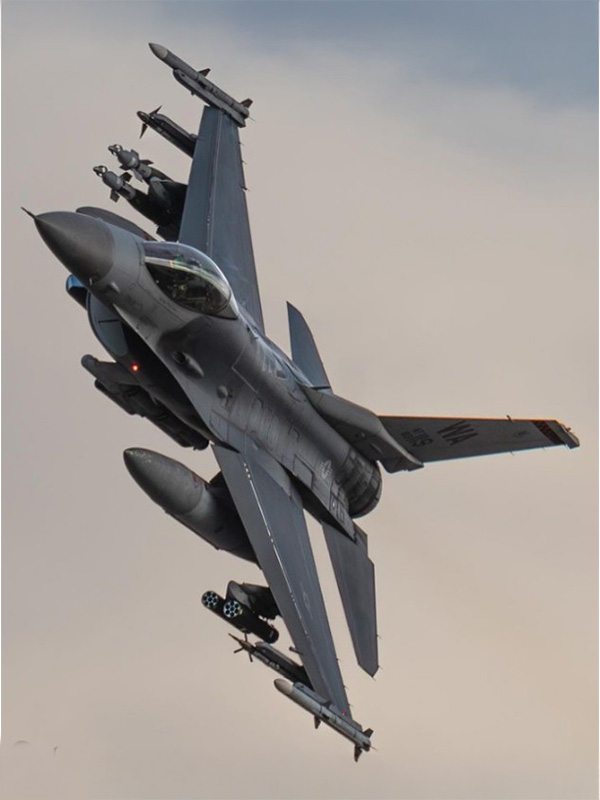
A mechanical engineering graduate of 1985, Welch built a career spanning more than 40 years in military and commercial aerospace. Today, he serves as a principal subcontract program manager on Lockheed Martin’s F-35 Lightning II program. The decades of high-stakes engineering challenges that he has faced with a problem-solving mindset can be traced back to a single course in CEAT.
The course was called Mechanisms, taught by Dr. Atmaram Soni in the early 1980s — a time Welch describes as “the dark ages” of technology. Personal computers were rare; programming required punch cards, and even advanced calculators were considered a luxury.
In this environment, students were tasked with the hefty assignment of designing a four-bar mechanism that would follow a precise path, both in position and speed. The project carried significant weight in the course. And at the time, the standard approach was to dig through library resources and rely heavily on trial-and-error calculations.
Welch and his classmate, Paul Dowdican, saw things differently.
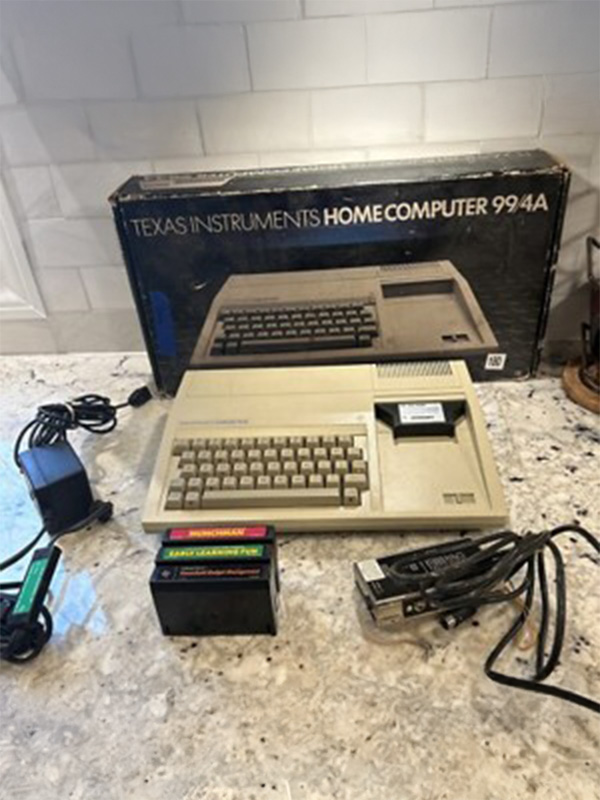
They decided to experiment with applying the emerging technology to the mechanisms assignment. Welch owned a TI-99/4A home computer, which was considered cutting-edge at the time, and saw an opportunity to use it in ways others were not.
Although the equations for the problem were known, the sheer number of variables made solving them by hand daunting. So, they wrote a program using a language called BASICA to run iterative calculations, gradually refining their solution.
The process was anything but easy. Programs for the calculations had to be created in a self-taught language. There was no hard drive, so programs had to be saved on cassette tapes, recorded through audio tones. Each run took days of processing time, and refining the solution required weeks of patience and persistence. As the program was refined and iterations improved, the solution became crystal clear. Eventually, after assessing thousands of candidates for refinement, the proposed technical solution matched the assignment requirements exactly.
To demonstrate their success, the two-man team built a working model out of plexiglass, along with a detailed report on the programming tools developed as part of the solution. The result earned them a perfect score from Soni, but more importantly, it left a lasting impression.
Instead of following conventional methods, he began approaching problems differently, using available innovative tools in creative ways that went beyond what was expected.
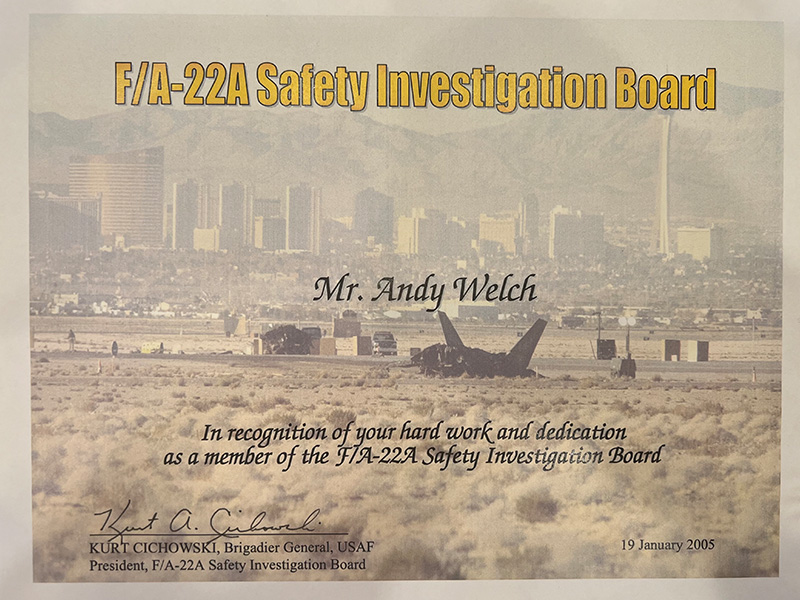
That lesson became the cornerstone of his professional career, particularly in aerospace failure investigations, where answers are not always clear. Welch approaches solutions by understanding the problem deeply, identifying the best available tools, and not being afraid to break with tradition.
Welch credits his time at OSU for shaping not only his technical skills but also his approach to challenges. His Mechanisms course stands out as one of the most memorable and impactful experiences of his academic career. And as for his TI 99/4a, he still has it, and yes, it still runs.