University School students explore materials science at the Helmerich Research Center
Thursday, April 16, 2026
Media Contact: Kristi Wheeler | Manager, CEAT Marketing and Communications | 405-744-5831 | kristi.wheeler@okstate.edu
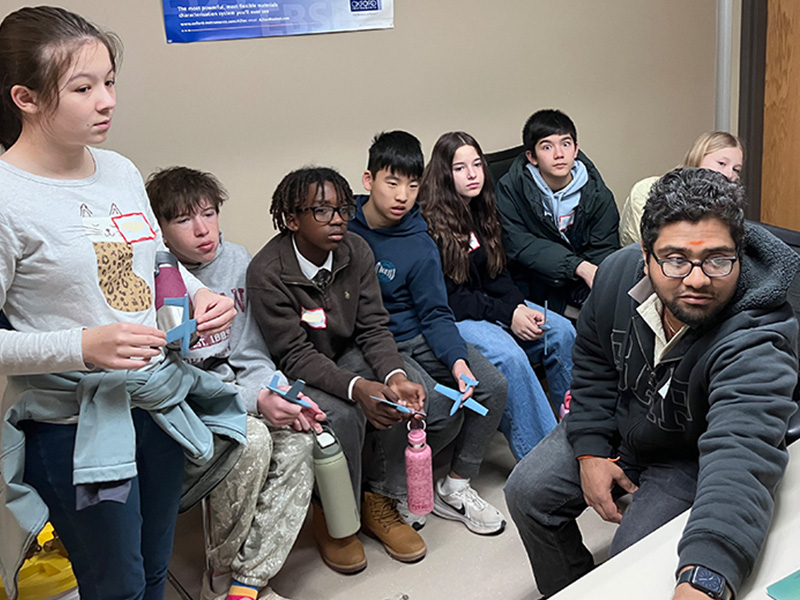
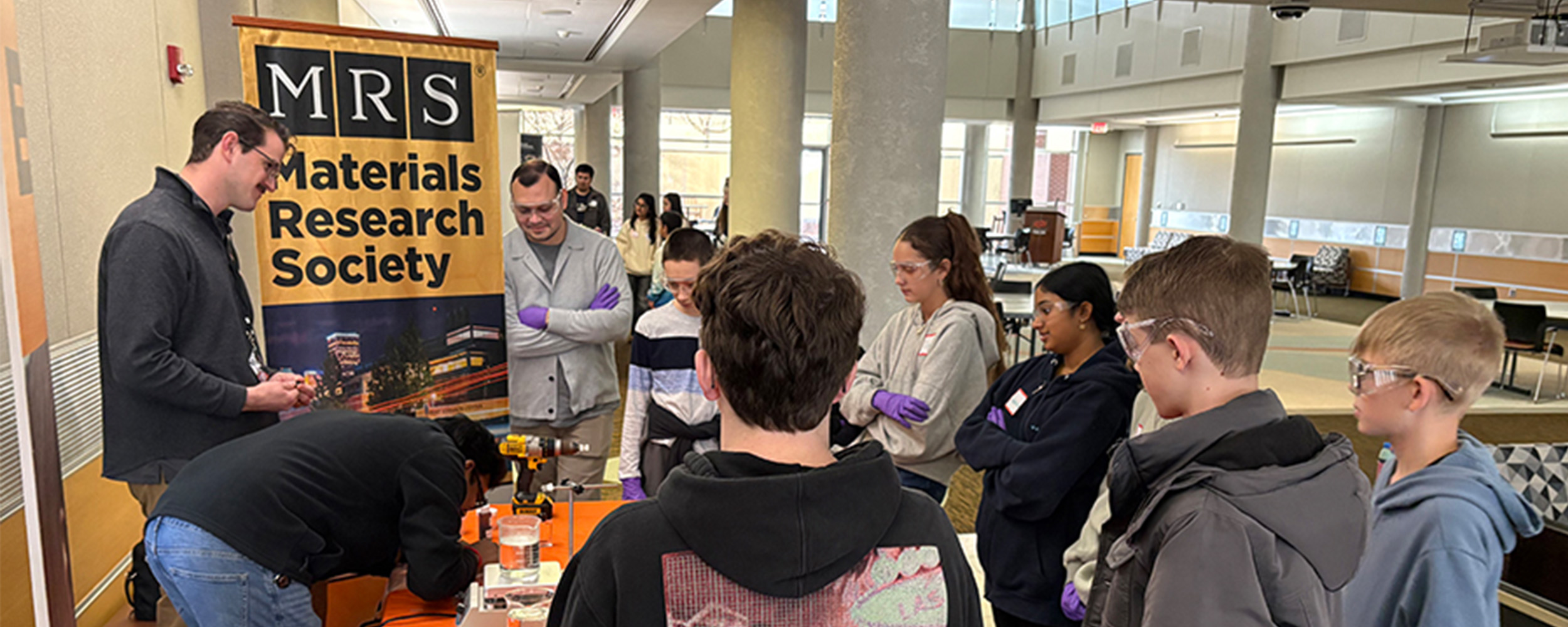
The Helmerich Research Center at Oklahoma State University-Tulsa recently welcomed middle school students from University School at the University of Tulsa for a hands-on STEM outreach event designed to spark curiosity about science, engineering and advanced research tools.
Held on Feb. 24, the half-day event introduced 31 seventh- and eighth-grade students and four teachers to the world of materials science and engineering through interactive demonstrations and laboratory experiences. The event, organized under the theme “EXPLORE,” highlighted how materials shape technology and everyday life while offering a glimpse into future innovations.
The visit was hosted by faculty, staff and graduate students from the School of Materials, Mechatronics and Manufacturing Engineering, the School of Mechanical and Aerospace Engineering, and the HRC Core Laboratories.
Introducing students to the world of materials
The day began with a brief interactive presentation led by Dr. Pankaj Sarin, an associate professor in MMME, who introduced students to the fundamental role materials have played throughout human history — from early tools and infrastructure to modern technologies.
Students learned how materials are structured, why their properties matter and how researchers at the HRC study and develop new materials for emerging applications.
Following the introduction, students were divided into four small groups and rotated through a series of hands-on STEM activities, each lasting about 30 minutes.
Exploring the microworld with electron microscopy
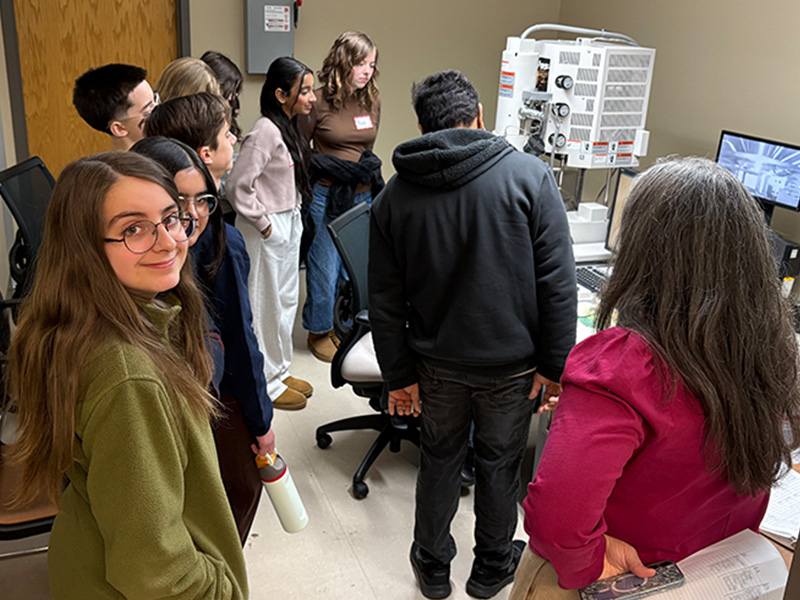
Led by Dr. Feng Lu, a research scientist in MMME and Lakshmi Ramasubramanian, a graduate student of MMME, students began their exploration of the microscopic world using a Scanning Electron Microscope.
Under magnifications as high as 100,000×, they observed the detailed microstructures of various materials and learned how scientists identify elemental composition using advanced analytical tools.
Students had previously selected sample materials with their teachers, which they examined during the activity.
Cool science with liquid nitrogen
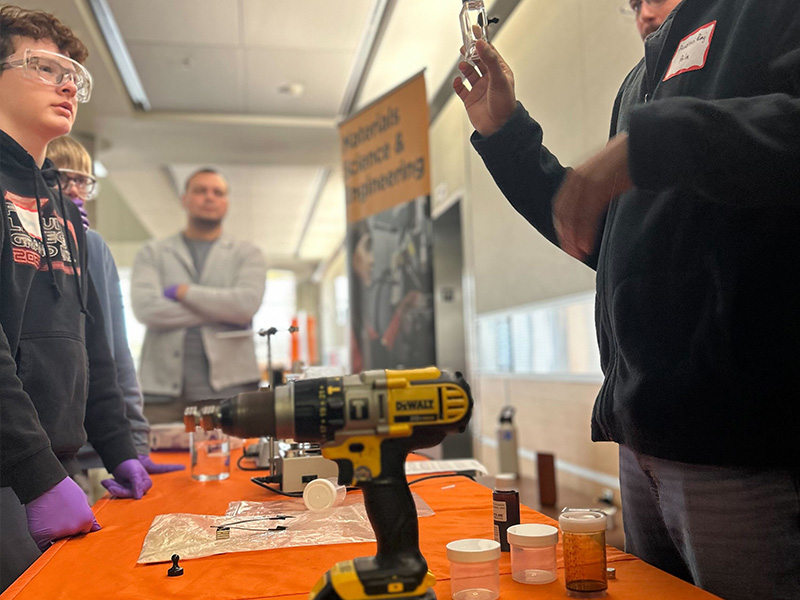
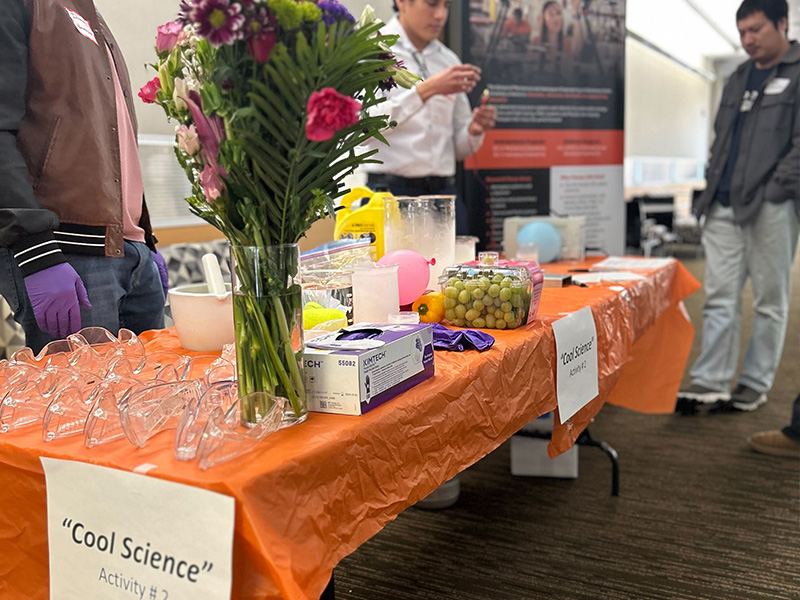
One of the most exciting sessions of the day demonstrated the fascinating effects of liquid nitrogen at −320°F, well below ordinary freezing temperatures.
Students observed dramatic changes in different materials when exposed to cryogenic temperatures, including balloons, marshmallows, flowers and other everyday items. Demonstrations led by graduate students Dammy Odunoso and Aaron Villacis included:
- Magnetic levitation using superconductors
- Changes in LED light emission at low temperatures
- Cryogenic grinding experiments
Discovering “smart” materials
Students were introduced to smart materials, a class of engineered materials capable of responding to external stimuli such as temperature, stress, light or moisture.
Through hands-on demonstrations led by graduate students Prudhvi Raj Pola and Kellen Stauder, students observed how shape memory alloys (Nitinol) can return to their original shape after deformation when heated. They also explored the fascinating behavior of ferrofluids, liquids that respond dramatically to magnetic fields.
These materials are widely used in applications ranging from biomedical devices to sensors and adaptive structures.
3D printing and drone technology
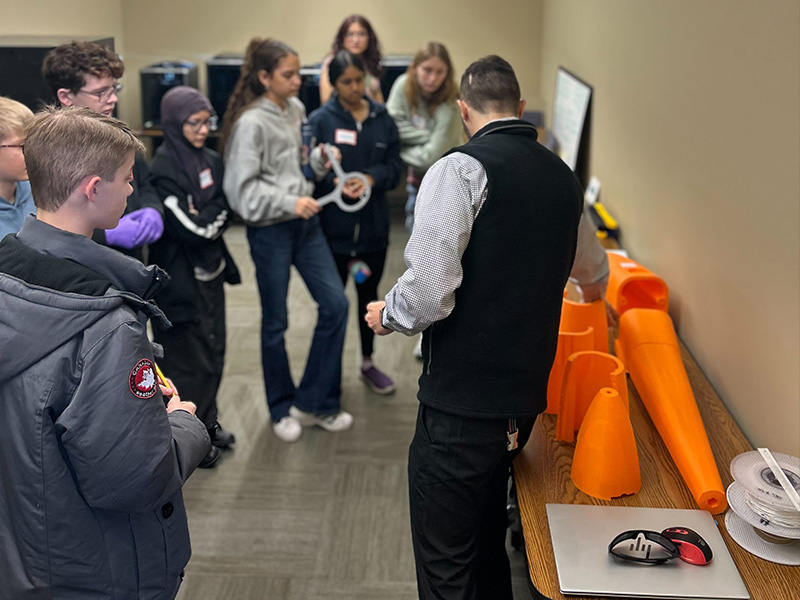
Led by Dr. Anthony Comer, an assistant professor in MAE, and graduate students Tony Chappell, Zachary Atkinson and Pratibha Bhandari, students also explored how additive manufacturing (3D printing) is transforming aerospace engineering.
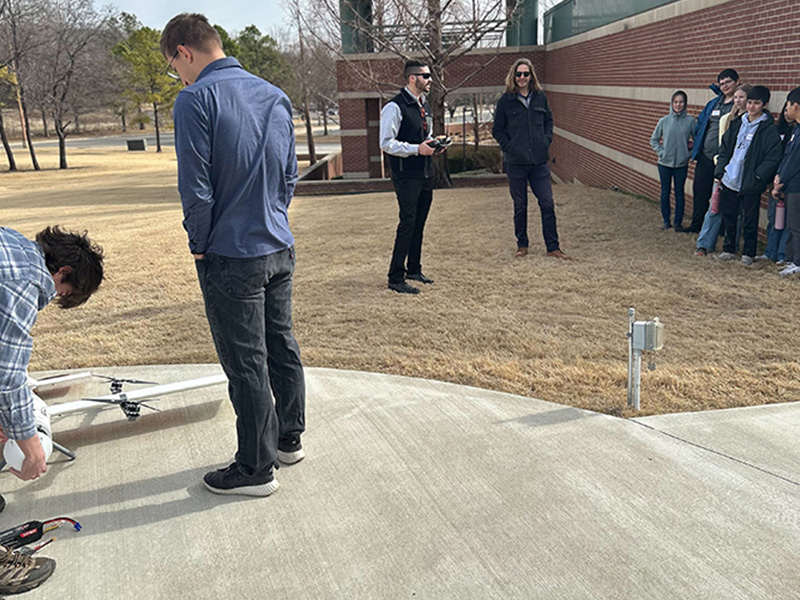
The activity showcased a small 3D-printer farm producing drone components for unmanned aerial vehicles. Students examined several 3D printed drones and learned how additive manufacturing enables rapid prototyping and lightweight structural design.
The highlight of the session was a live outdoor flight demonstration, allowing students to see a drone designed and printed at the HRC take flight.
A collaborative effort across HRC
The outreach event was made possible through the collaboration of numerous HRC faculty members, staff and graduate students.
Key contributors included: Dr. Jim Smay, department head of MMME; Dr. Raman Singh, associate dean of engineering at OSU-Tulsa; Dr. Sarin; Dr. Comer; Dr. Srinivas Kolla, adjunct instructor in MMME; Dr. Lu; and Dr. Tai Nguyen, professor in materials science and engineering.
Graduate student volunteers from MMME and MAE also played a critical role in guiding students through the activities and demonstrations.
Inspiring the next generation of scientists and engineers
Events like this provide young students with early exposure to cutting-edge scientific tools and research environments.
By interacting directly with researchers and graduate students, participants gain a clearer understanding of how science and engineering impact everyday life and future technological developments.
The HRC continues to support STEM education initiatives and looks forward to welcoming more students in the future.
Teaching Tech in Tulsa Helmerich Research Center hosts STEM event