

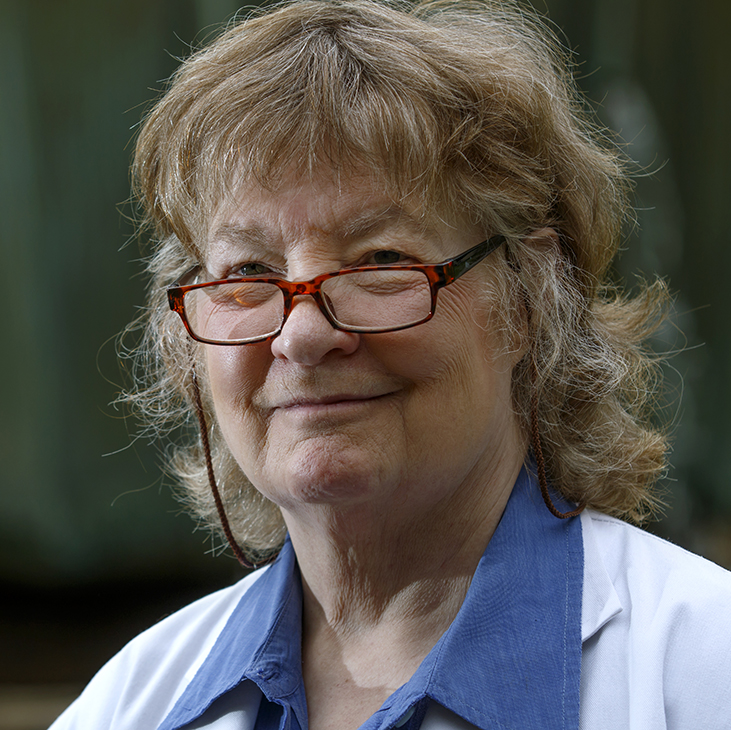
Doctor with Oklahoma ties establishes endowed lectureship to improve rural and tribal health
Monday, March 30, 2026
Media Contact: Sara Plummer | Senior Communications Coordinator | 918-561-1282 | sara.plummer@okstate.edu
Although Dr. Sharon Anderson didn’t grow up in the state, she’s still proud of her Oklahoma roots.
“My mother was born and raised in Oklahoma, and I still have relatives there,” Anderson said. “Another connection is my Cherokee heritage through my mother. I am a proud member of the First Families of the Cherokee Nation.”
Anderson grew up primarily in Maryland, where she attended high school and college. She never thought about a career in medicine until her own experience as a patient in her early 20s.
She then took night classes to finish her pre-med requirements, graduated from Louisiana University Medical Center in New Orleans and then moved to Oregon, where she practiced medicine and taught at the School of Medicine at the Oregon Health and Science University. She retired in 2022 after serving as the medical school’s dean.
“I have been an academic physician my entire career. I loved academics because it allowed me to pursue all three vocations — clinical care, education and research — but my primary passion was always clinical care, particularly care for the underserved,” said Anderson, who also worked as a VA physician and maintained a rural clinical practice.
Anderson first heard about the OSU College of Osteopathic Medicine at the Cherokee Nation while watching a PBS news story about the first tribally affiliated medical school.
“Programs to help Native American students achieve their dreams of a medical career are so very important. At my own institution, I was pleased to be able to appoint our first associate dean for Native Health,” she said
Anderson reached out to OSU-COM at the Cherokee Nation Dean Natasha Bray about how she could help support the school and its mission.
“As a former medical school dean herself, she expressed a deep trust in our mission and desire to contribute in a way that would allow resources to be directed where the need was greatest,” Bray said.
Anderson gifted the OSU Foundation with $100,000 to establish the Dr. Sharon Anderson Endowed Lectureship in Tribal and Rural Innovation, which will directly support the annual Symposium on Tribal and Rural Innovations in Disparities and Equity for Health (STRIDE) held on the OSU-COM at the Cherokee Nation campus in Tahlequah.
Bray said the endowed lectureship ensures sustained access to nationally respected voices who can challenge, inspire and advance innovation in tribal and rural health.
“Dr. Anderson has been deeply committed to faculty development and to ensuring that our faculty are supported to grow as educators and leaders because she understands that strong faculty are foundational to high-quality medical education and ultimately better care for patients and communities,” she said, and her gift bridges both professional commitment and personal connections. “As she reconnected with her Cherokee Nation ancestry, her support became not only an investment in education, but also an affirmation of place, history and community.”
Bray said Anderson is a steadfast supporter, thoughtful mentor and genuine partner. And the feeling is mutual.
“Dr. Natasha Bray, your amazing dean, we share a passionate belief in the importance of faculty career development,” Anderson said. “Becoming associated with OSU-COM at the Cherokee Nation allows me to bring together three of my priorities — medical care for the underserved, medical education, and my Cherokee heritage.”
Anderson said she wanted her donation to be sustainable over time because faculty career development is so important.
“I believe that when faculty can learn and practice new skills that can keep enthusiasm high, it helps with job satisfaction, reduces burnout and increases faculty retention,” she said. “The mission and accomplishments so far of OSU-COM at the Cherokee Nation are remarkable, and so are the prospects. I am honored to be able to help.”