

OSU paleontology student coauthors landmark ape evolution study in Science
Friday, April 24, 2026
Media Contact: Kayley Spielbusch | Digital Communications Specialist | 918-561-5759 | kspielb@okstate.edu
The discovery of a new ape fossil in Egypt is changing how scientists think about the geography of ape evolution.
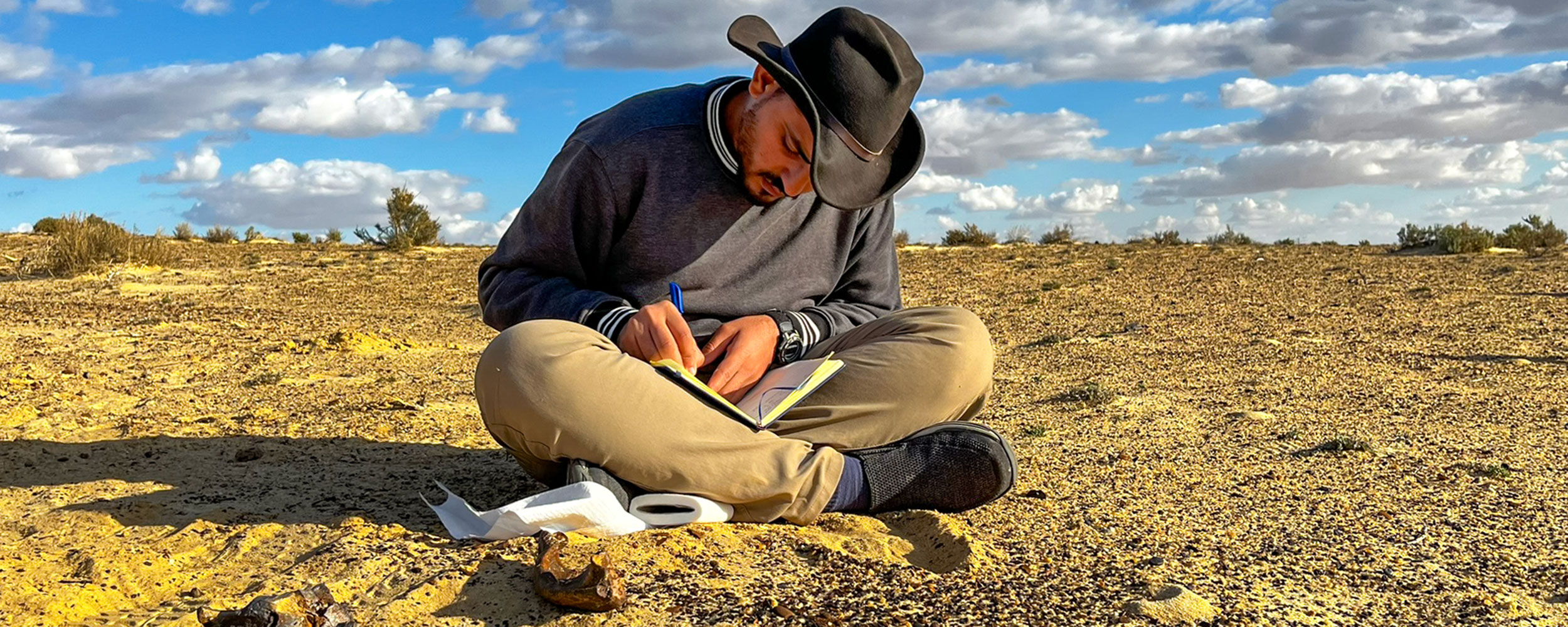
Abdullah Gohar, a Ph.D. student in anatomy and vertebrate paleontology at OSU Center for Health Sciences, grew up in Faiyum, Egypt, and has always been fascinated by fossils.
The Sallam Lab at the Mansoura University Vertebrate Paleontology Center (MUVP) gave his fascination a direction and home. MUVP is the first center of its kind for vertebrate paleontology in Egypt and the Middle East.
Gohar joined the Sallam Lab in 2017 and has remained involved with research there while studying at OSU-CHS under paleontologist and professor of anatomy Holly Woodward Ballard, PhD.
At OSU-CHS, Gohar’s research centers on whale evolution, exploring how extreme behaviors and lifestyles are preserved in bone tissue. His work spans topics such as prehistoric whale brain evolution and the effects of hibernation on black bears’ bone biology.
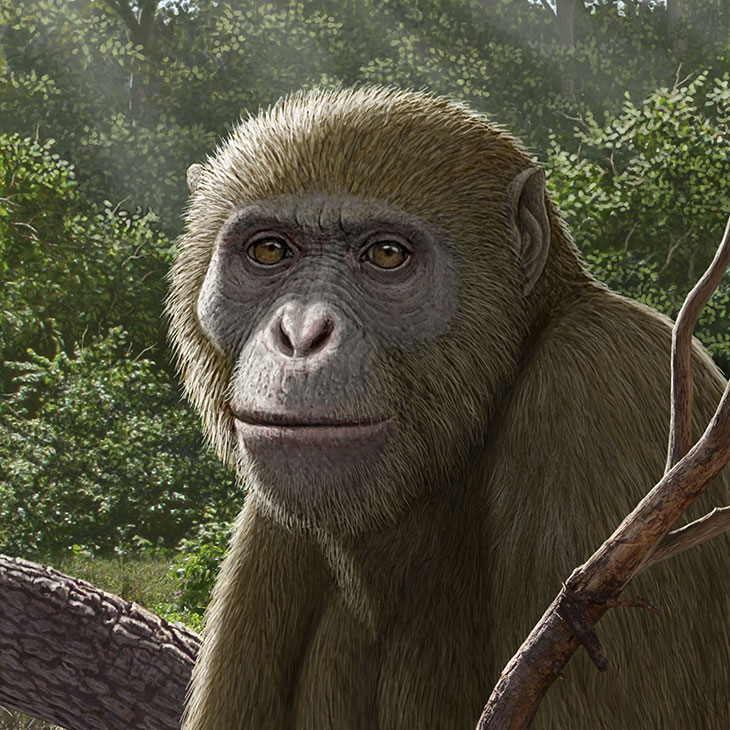
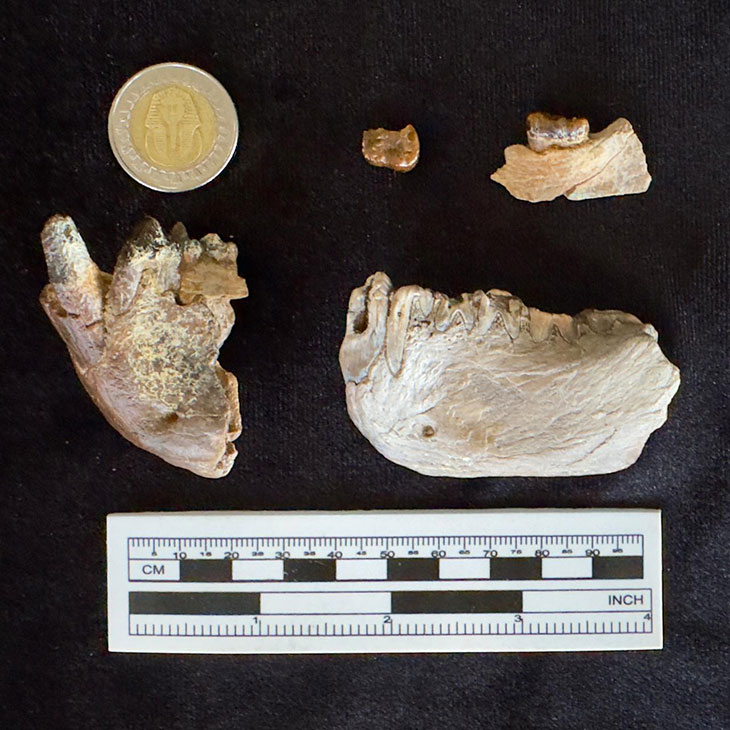
In 2023, he was a part of the international field research team with Sallam Lab that uncovered Masripithecus moghraensis, a 17-to 18-million-year-old fossil ape at the Wadi Moghra fossil site in northern Egypt.
Gohar and his colleagues at the Sallam Lab spent years exploring Wadi Moghra, driven by the belief that this region could help explain a gap in ape evolution.
Until recently, early Miocene epoch sites in North Africa produced only monkey fossils, leading scientists to believe that crown hominoids, the group containing the last common ancestor of all apes, were confined to East Africa.
The discovery of Masripithecus challenges that assumption, suggesting that northern Africa and the Middle East may have played a much more significant role in the evolution of modern apes.
“Masripithecus is the first definitive fossil ape from North Africa. Our analyses suggest that it is closer to crown hominoids than coeval fossil apes from East Africa, which means it helps clarify a poorly understood stage near the origin of the lineage that eventually gave rise to all living apes,” Gohar said.
Although the fossil consists only of the lower jaw, it displays a combination of features unseen in any known ape from that era. These include large canine and premolar teeth, rounded molar teeth with heavily textured chewing surfaces and a notably robust jaw—traits that point to a closer connection with modern apes than other early fossils from East Africa.
“Discoveries like this are built over years of searching, often in difficult conditions, with no guarantee that the fossil you hope for is actually there,” Gohar said.
In March 2026, Gohar and the Sallam Lab’s findings were published in Science, a leading academic journal. He is the first OSU-CHS graduate student to be a coauthor on a Science research article.
“I see it not simply as a personal milestone, but as something that reflects the importance of mentorship and collaboration across institutions. I am especially grateful to Professor Ballard, who believed in me and has supported me in every possible way and continues to do so throughout my journey at OSU-CHS,” Gohar said.
Coauthoring the research paper was simultaneously exciting and demanding for Gohar. The experience involved a lot of discussion, revision, critical thinking and teamwork.
Despite the challenges, he found the experience to be very valuable.
“To see an Egyptian-led discovery, built through Egyptian field work, reaching Science is deeply rewarding. For me, it also felt like the beginning of a new chapter in Egyptian vertebrate paleontology, one that I hope will bring many more discoveries from Egyptian teams to leading scientific journals,” Gohar said.
He looks forward to continuing his research at OSU-CHS while remaining involved with the Sallam Lab further to explore Wadi Moghra and its connection to ape evolution.
“This moment has culminated in my time at OSU-CHS, MUVP and the Egyptian team behind the discovery. I will do my best to uphold the high standards of OSU-CHS as I continue learning from the outstanding faculty here,” Gohar said.