Inside the OSU Library Auxiliary Building: Preserving collections, serving patrons
Monday, July 6, 2026
Media Contact: Jade Dudley | Marketing & Communications Coordinator, OSU Library | 405-744-7331 | jade.dudley@okstate.edu
At the corner of Willis Street and Hall of Fame Avenue, the Oklahoma State University Library Auxiliary Building houses hundreds of thousands of materials that support OSU’s land-grant mission and research initiatives.
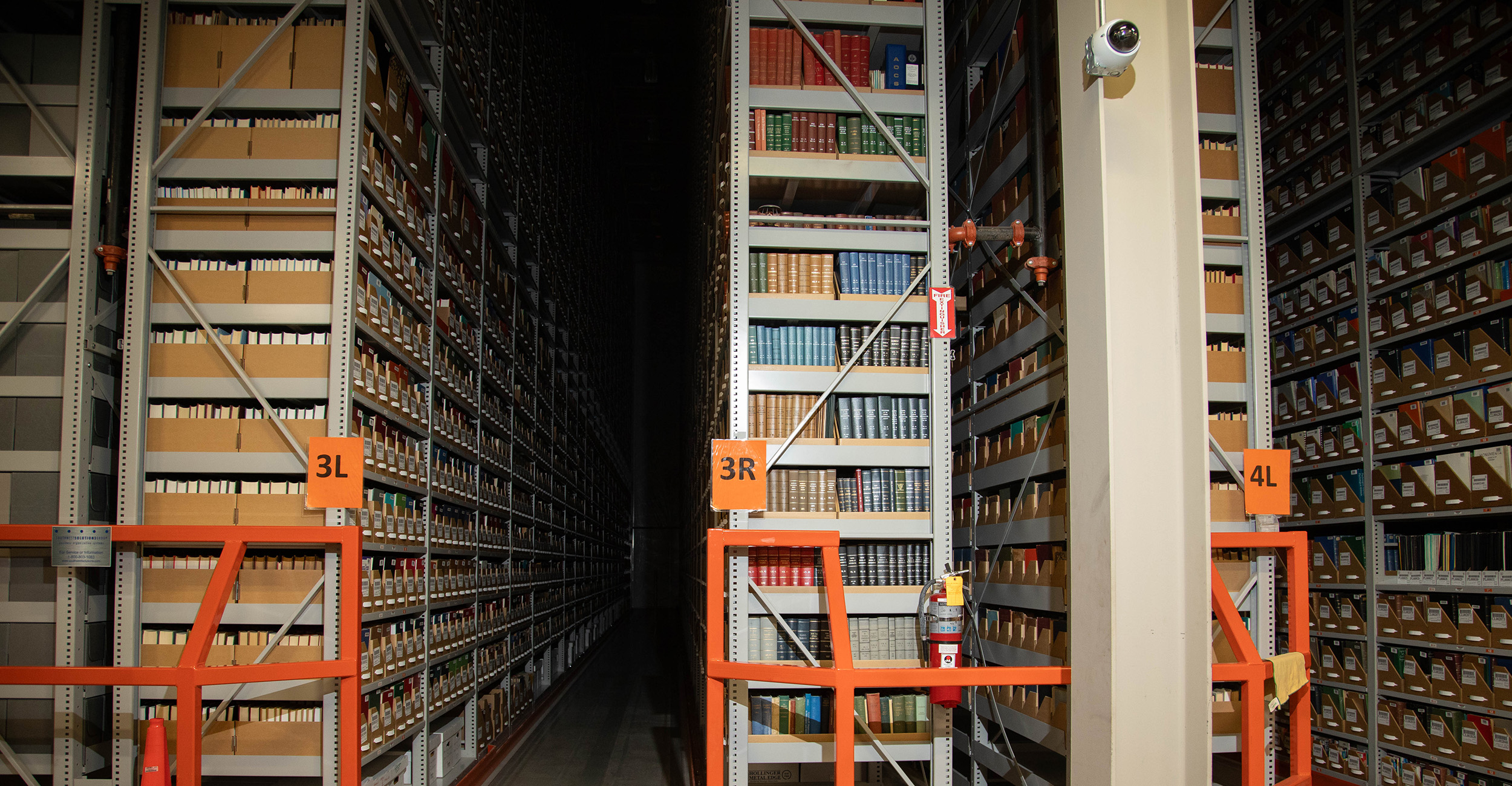
With more than half a million items in its possession, the auxiliary is responsible for preserving and maintaining significant materials from OSU Libraries. Notable items include T. Boone Pickens’ donated art collection, an early 1900s botanical illustrations collection and, interestingly, a rare 1950s DC Comics drawing course art guide.
“We are supposed to house up to 1.5 million items. Currently, we are at 900,000,” said Amanda Fortenberry, library auxiliary building manager. “Our goal is to make preservation seamless and efficient while keeping materials quick and accessible for patrons.”
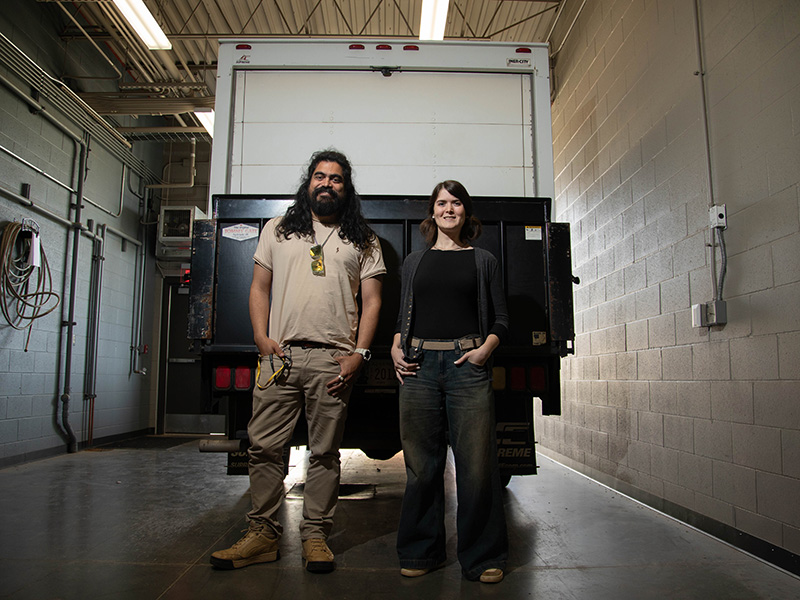
The auxiliary team manages every item that comes into the facility. A truckload of materials is routinely delivered under the direction of library coordinator Daniel Ochoa Morales. The materials are transported on eight wooden carts. After processing — which involves cleaning, vacuuming and sorting — Fortenberry’s team attaches barcodes before storing materials in a temperature-controlled room at 55 degrees.
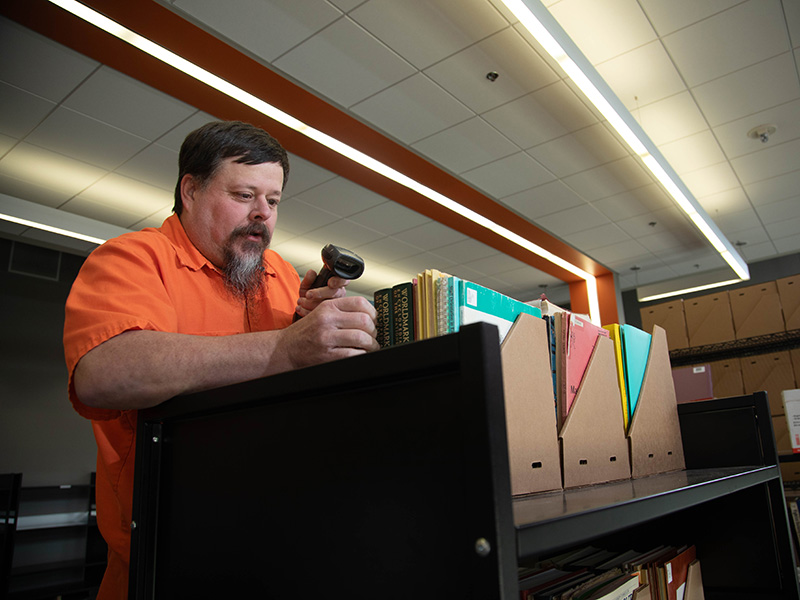
Library coordinator Robert Negelein assists with organizing and shelving materials, often working at elevated heights to store the stacks. Auxiliary operations intersect with both the OSU Library and the Library Annex, requiring coordination across multiple teams and locations. Library lead Chuck Austin manages that process.
“At any given time, we may be moving materials from multiple collections concurrently — whether for preservation needs, renovation projects, or to accommodate growing collections,” Austin said. “Part of my role involves coordinating logistics across departments, so projects stay on track while ensuring each team has the support and resources they need.”
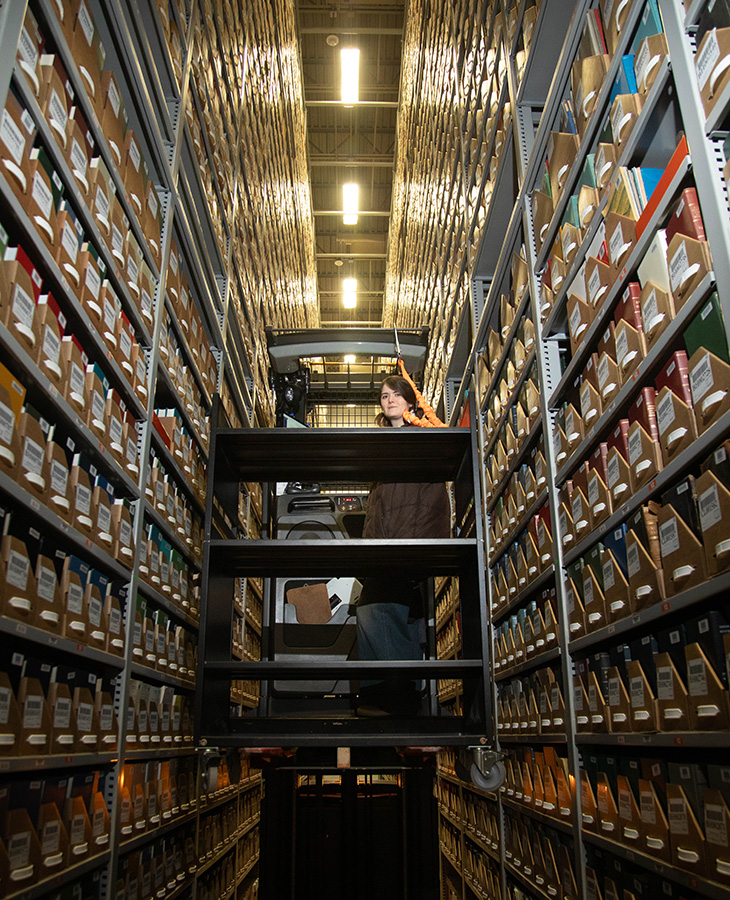
The team aims to process eight carts daily in preparation for the next delivery. Some carts contain more than 1,000 items and can take between one and two hours to complete. The team also finds any errors that may occur in the process. These can be materials with no bibliographic information or those that were incorrectly placed in the auxiliary building. This requires searching through the stacks.
“Sometimes we get errors where we’re receiving numbers for a material that we shouldn’t have received,” Fortenberry said. “Those numbers must be withdrawn and tracked. Ongoing maintenance tasks like this that keep the process moving smoothly.”
The auxiliary also supports the Interlibrary Services Department in OSU Libraries, which provides materials to other institutions through book loans and scanned articles. Because the auxiliary holds most of the Library’s collections, requests are sent directly to the auxiliary where staff retrieve and scan materials.
For OSU patrons, physical materials are typically retrieved within 24 hours; articles are available even sooner. Faculty and staff who make a request can often receive materials within two to four hours.
“The materials stored here are fully retrievable. They may not be available for browsing, but with one request away and a streamlined request process, we have significantly improved delivery times,” Fortenberry said.
On personal fulfillment, the staff says their work is driven by curiosity and experience. Comparing their work to “virtual world building,” they liken it to combining concepts, cultures and materials into one cohesive space.
“This role allows me to use my background in history and museum studies,” Negelein said. “It’s a rewarding role to be in. Plus, this is just a fascinating place to be every day.”
For more information about the OSU Libraries and its resources, visit its new webpage here.