


Always on a mission: Dr. Marc Tower’s trip from Army helicopters to Spears Business
Thursday, October 22, 2026
Media Contact: Stephen Howard | Director, Marketing & Communications | 405.744.4363 | stephen.howard@okstate.edu
Fast Facts
- Marc Tower flew the Bell OH-58 Kiowa as an AeroScout pilot with the 2/17 Cavalry of the 101st Airborne Division before leaving the Army in 1985 and building a career across tech, construction, business consulting and entrepreneurship.
- A Spears Business MBA graduate, Tower began teaching at the college as an adjunct in 2007, joined the Riata Center in 2018 and now serves as assistant dean for outreach and economic development, overseeing the Center for the Future of Work and the Riata Center for Innovation and Entrepreneurship.
- Tower helped design a custom mini-MBA through the CFW that has trained three cohorts of Love’s Travel Stops senior leaders, and he welcomes each new class of the Riata Center’s Veterans Entrepreneurship Program as a fellow veteran.
Keith Varner, manager of leader development for Love’s Travel Stops and Country Stores, was on a virtual call with a Spears School of Business administrator he had never met.
Somewhere in the introductions, Varner glanced over the man’s shoulder and spotted a framed print of a Bell OH-58 Kiowa, the nimble U.S. Army reconnaissance helicopter often used by the Air Cavalry. Varner had the same print hanging in his own office.
Varner stopped mid-sentence. “Hey, were you a Cav pilot?”
Dr. Marc Tower smiled. He was.
So was Varner. Within minutes, the two men were swapping stories the way only veterans can. It felt less like a business meeting and more like running into an old friend at a reunion. Different eras, same aircraft, same instinct for finding a mission worth flying toward.
That ability to find common ground — to walk into a room and immediately understand what it needs — and a unique sense of the mission have quietly become Tower’s most valuable professional assets. It also helps explain why Spears Business built a job around his unique skillset.
Tower serves as the assistant dean for outreach and economic development, overseeing the Center for the Future of Work and the Riata Center for Innovation and Entrepreneurship. Those two outward-facing centers connect Spears Business to companies, communities and people across Oklahoma and beyond.
But to understand how he got here, and why it makes sense that he did, you have to head to the mountains of Wyoming.
***
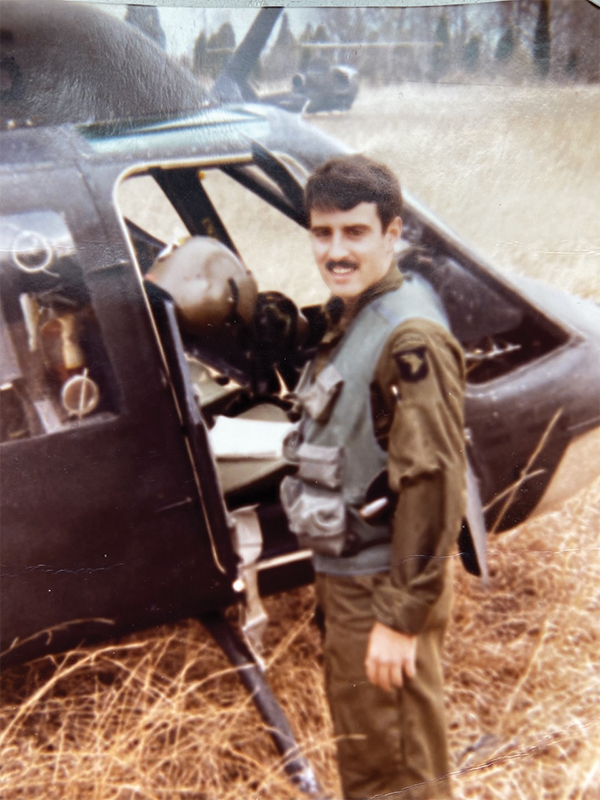
Halfway through his second semester at Oklahoma State University, and sporting a 0.7 GPA, Tower and a friend drove to Jackson, Wyoming, over a long weekend and made the decision to never go back. Tower was 18.
He and his friend found jobs and ended up staying in Wyoming for a year. Tower developed a love for the mountains and came home more certain than ever about one thing. He wanted to fly helicopters.
Tower grew up always wanting to fly. Not in an abstract, wouldn’t-that-be-nice kind of way. He wanted to fly in the way that shaped his decisions.
Tower enlisted in the U.S. Army and eventually earned his way to flight school, but he wasn’t going to be content with just any assignment. He wanted to compete for an AeroScout slot, the most coveted assignment in the program, and the one with the shortest life expectancy.
He got his wish. Tower was named an AeroScout pilot in the 2/17 Cavalry in the 101st Airborne Division, assigned to Fort Campbell in Kentucky. The Bell OH-58 Kiowa would be his new office. In the 1980s, the 101st served as the rapid deployment force, meaning its units were among the first deployed when a crisis broke out.
“If we deployed somewhere, I was the pointy end of the sword,” Tower said.
Tower, then 22, loved his time flying with the 101st, and even flirted with trying out for the Night Stalkers of the 160th, the Army’s elite special operations aviation regiment. But that’s when his story took another turn.
He met a girl.
Rhonda Canfield was in town from upstate New York to attend her sister’s wedding to another Cav pilot when she bumped into Tower at the rehearsal. The two hit it off immediately. They spent the evening at the city’s Oktoberfest celebration and were together every waking moment until she had to travel back to New York.
The courtship continued over letters and some painfully expensive long-distance phone calls. Rhonda returned to Fort Campbell over the Thanksgiving holiday, and the couple were inseparable.
After Rhonda left town the second time, Tower quietly bought an engagement ring. Days later, he learned that his unit was assigned to an extended field exercise. They would be cut off from the outside world for three weeks.
When he returned to the fort weeks later, Rhonda was there. Without telling Tower, she moved in with her sister not far from Fort Campbell. He popped the question in mid-December and the two were married in May.
“If you had asked us both the day before we met to describe the person you’re going to marry, neither one of us would have described each other,” said Tower about his wife of 43 years. “Then we met, and it literally was like, ‘oh, that’s the one.’”
The couple didn’t waste time starting a family, and it was time to make what Tower describes as, “an adult decision.” He hung up his wings and got out of the Army in 1985 with no real idea of what should come next.
***
“If we deployed somewhere, I was the pointy end of the sword.”
The Towers relocated to Stillwater and Marc spent the next stretch of his life bouncing between industries in a way that, with hindsight, feels like training for exactly what he does at Spears Business.
He spent time at Frontier Electronic Systems, where he took over a team of engineers that rewrote some troubled software for a missile test set project. That opened the door to more roles in tech and manufacturing, the first with Teubner & Associates. There, he programmed and managed product lines and even traveled to Australia for a project. In the late 1990s, he shifted again, joining a highway construction company.
In the middle of it all, Tower went back to school at OSU to finish his degree. After 11 years of starts, stops and major changes, he finally finished his bachelor’s degree in engineering technology. He likes to joke that his transcript is such a mess that it took about 174 credit hours to complete.
He then spent four years as the chief operating officer at Wittwer Construction and 12 years with Southwest Bancorp’s business consulting group. He went on to start his own consulting firm, First Ascent Consulting, a few years later.
His MBA from Spears Business came next, in 2005. That led to an adjunct position at the college in 2007, thanks to a faculty member who saw Tower’s potential to lead a classroom: Dr. Ken Eastman, who would go on to become the second-longest-serving dean in Spears Business history.
Every position Tower held came the same way. He didn’t search the want ads or find a job posting online. Each career shift came courtesy of someone who had watched Tower work and wanted him to help solve their problem. For his part, Tower was keenly aware of the opportunities presented.
The natural next step was, of course, to open a CrossFit gym. Tower and his family caught the workout bug, but he always saw the “hobby job” as more of a passion than a money-making venture.
“I’m pretty sure my youngest son made more money at the gym as an employee than I ever did as the owner,” Tower said.
In 2015, at age 55, while running Red Dirt CrossFit and his consulting agency, a friend and colleague convinced him to pursue his doctorate in aviation education. This would allow him to get back into a cockpit and give him the opportunity to consider teaching full time.
In 2018, with his dissertation nearly finished, Tower was leaving class when another colleague stopped him to ask if his ears were burning.
The Riata Center for Innovation and Entrepreneurship needed a director, the friend said, and his name had come up just moments earlier. Tower made a call that afternoon that would change his trajectory yet again. He joined the Riata Center in May 2018 and has now worked at Spears Business longer than anywhere else in his life.
***
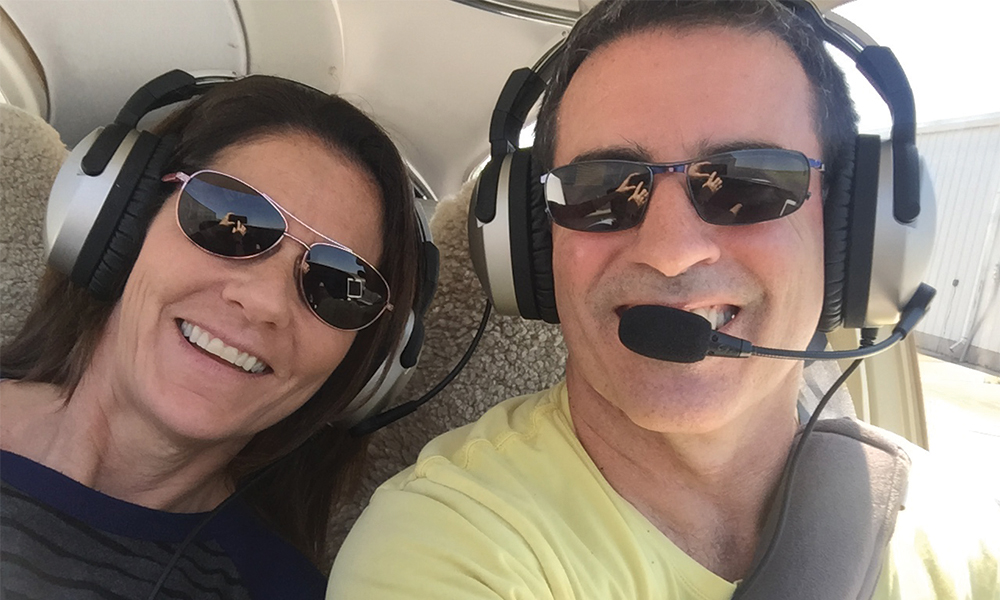
Varner has a theory about helicopter pilots. A fixed-wing aircraft wants to fly, he notes. If you shut off the engine of an airplane, it will still glide. A helicopter, with the aerodynamics of a brick, is fundamentally different.
“With a helicopter, you’re strapping on a piece of steel that is going to do its dead-level best to kill you every time you get in it,” Varner said.
That reality sorts helicopter pilots into two groups, Varner says. The first are the ones who become bitter and jaded. The second are the ones who become creative and deliberate. Those are the ones who have spent years living in worst-case scenarios, running risk analyses in real time and finding solutions to problems.
Tower is clearly the second kind, and Varner got to see it in action as the two former Cav pilots designed a custom training program for Love’s upper managers through the OSU Center for the Future of Work. Love’s has now sent three cohorts of senior managers and directors through the fully customized mini-MBA program.
The Love’s managers come to Stillwater for a week, stay at the Atherton Hotel and work alongside Spears Business faculty who have not just taught business but lived it. The curriculum is built around how Love’s actually operates, not how a textbook says a company should. One participant walked in skeptical, certain he had better things to do, and left calling it the best development program he had ever been a part of.
When asked why Love’s works exclusively with the CFW for its executive development needs, the University of Central Oklahoma alumnus cites the OSU faculty’s real-world leadership and business experience.
“The guys from Stillwater have been there, done that, and bought the T-shirt,” Varner said.
The same instinct that makes Tower effective with Love’s runs through everything he oversees at Spears Business.
Both the CFW and the Riata Center for Innovation and Entrepreneurship seek to understand what someone actually needs, then they work with the client to build something that delivers it.
Lindsey Ray, a senior program manager at CFW who has worked alongside Tower long enough to finish his sentences, describes his leadership style as thinking in months and years while his team thinks in days and weeks.
“He’s more big picture,” Ray said. “He’s up in the clouds all day, thinking long-term strategy, where we’re feet on the ground running the details.”
Chad Mills, director of the Riata Center, puts it more simply. Ask him to describe Tower to someone who has never met him and he does not hesitate.
“Buckle up,” Mills said with a chuckle.
What Tower brings that nobody else could, Mills says, is not just the ideas. It is the way he makes people believe the ideas are worth chasing. He sits back, asks a single question and waits. He wants people to find the answer themselves, not receive it from him.
Varner says this is also the secret for success for the Love’s Strategic Leaders Program.
“It’s great to watch him sit in a room with 11 senior leaders at Love’s, ask one question, and then just listen as they work it out,” Varner said. “He never jumped in with, ‘Here’s what you should do,’ it was always, ‘Why do you think that happened?’ or ‘Tell me more.’ He guided the interaction and helped them solve their own problems, and that cross-functional team is still working together two and a half years later. They’re better at their jobs because they were coached by Marc.”
Each spring, the Riata Center brings a new cohort of veterans to Stillwater for eight days of intensive entrepreneurship training, all housed at OSU at no cost to participants. Nearly 800 veterans have come through the Veterans Entrepreneurship Program over its history. Some VEP participants have little more than a business idea scratched on a napkin. Others are attempting to scale their 2-year-old company to a global audience. Still, the participants learn from one other, push each other and leave with relationships that outlast the week.
Tower walks into that room every year and lets them know he’s one of them. He was part of the green team, he says. Then he picks on the Air Force guys, and it lands the way it only can coming from someone who has earned the right.
“There’s an unspoken bond,” Tower said. “They’ll take it from somebody else who has worn a uniform.”
***
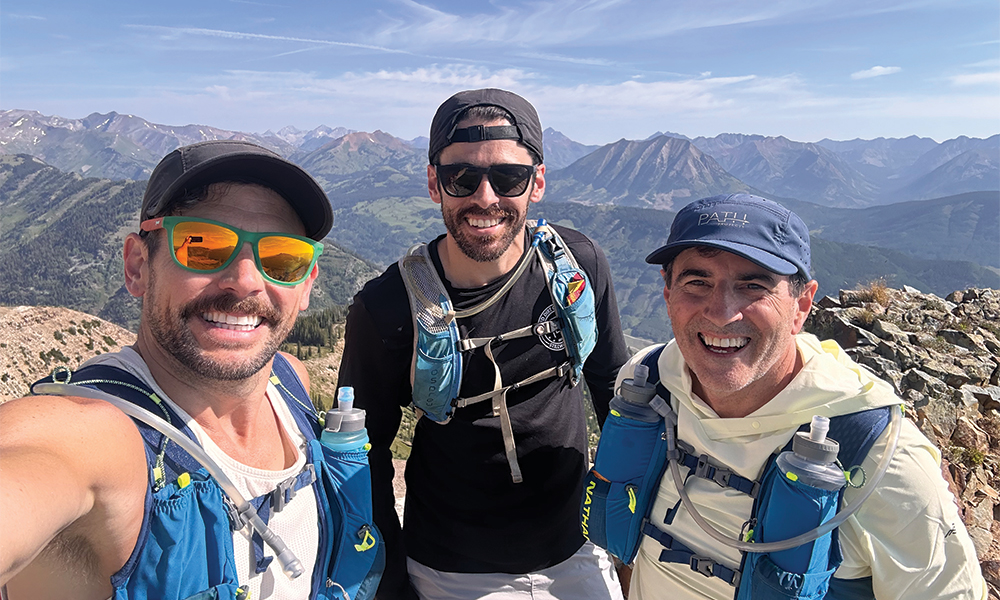
Tower is 66 now. He signed up for a 50-kilometer trail race this fall. Rhonda still coaches at Red Dirt CrossFit even though they sold the gym three years ago. Neither one of them has plans to retire, which surprises no one who has spent any time with either of them.
One night, at Grandparent University on the OSU campus, Tower watched a fire truck respond to a live call, lights and sirens cutting through the evening, while his three grandsons stood frozen in the parking lot with their mouths open. He turned to Rhonda and told her exactly what he was feeling.
“I’m a little jealous,” he said. “They’ve got a mission.”
Eight years into the longest stop of his career, Tower still knows the feeling.
Story by: Stephen Howard | Engage@Spears magazine
Photos by: Cole Weiberg and provided
Frequently Asked Questions
-
Who is Dr. Marc Tower?
Tower is assistant dean for outreach and economic development at the Spears School of Business. He is a former Army helicopter pilot, a Spears Business MBA graduate and a longtime consultant who oversees two of the college’s outward-facing centers.
-
What is the Center for the Future of Work?
The CFW equips individuals and organizations with the knowledge, skills and confidence to thrive in a rapidly changing workplace. From customized training and industry conferences to certificate programs, executive coaching, and consulting, they provide solutions that prioritize well-being, develop talent, and drive organizational and economic growth.
-
How does the CFW work with companies like Love’s?
The CFW builds custom programs around how a company actually operates. Love’s is a longtime partner, and has sent three cohorts of senior managers and directors to Stillwater for a fully customized mini-MBA taught by Spears Business faculty. Revenue generated by the center goes directly to academic departments within Spears Business, supporting research and student success.
-
How does the CFW connect to OSU’s land-grant mission?
Oklahoma State University fulfills its land-grant mission through teaching, research and extension. The work of the Center for the Future of Work promotes all three.
-
What is the Riata Center for Innovation and Entrepreneurship?
The Riata Center serves as the entrepreneurial catalyst for OSU students, faculty, staff, alumni and the state of Oklahoma. Its programs include the Riata Business Plan Competition and the Greiner Summer Business Accelerator, an eight-week program where selected participants develop their businesses under close supervision from Riata Center staff, School of Entrepreneurship faculty and outside mentors. The center also has a Tulsa office at Gradient, one of the nation’s largest innovation hubs.
-
What is the Veterans Entrepreneurship Program?
The VEP is designed for veterans interested in starting a business or growing an early-stage business into profitability. There is no cost to participate, and the program is funded through federal grants as well as OSU alumni and donors. The centerpiece is an eight-day residency in Stillwater each spring, and the Riata Center hosted its 15th annual boot camp in 2025.