


Small Molecules, Big Discoveries: OSU's proteomics labratory provides solutions for human and animal health
Wednesday, October 14, 2026
Media Contact: Sydney Trainor | OSU Brand Management | 405-744-9782 | sydney.trainor@okstate.edu
It’s no secret that Oklahoma State University plays a big role in scientific research and discovery, but what many might not know is the depth and impact of an OSU Agriculture lab’s work in protein research.
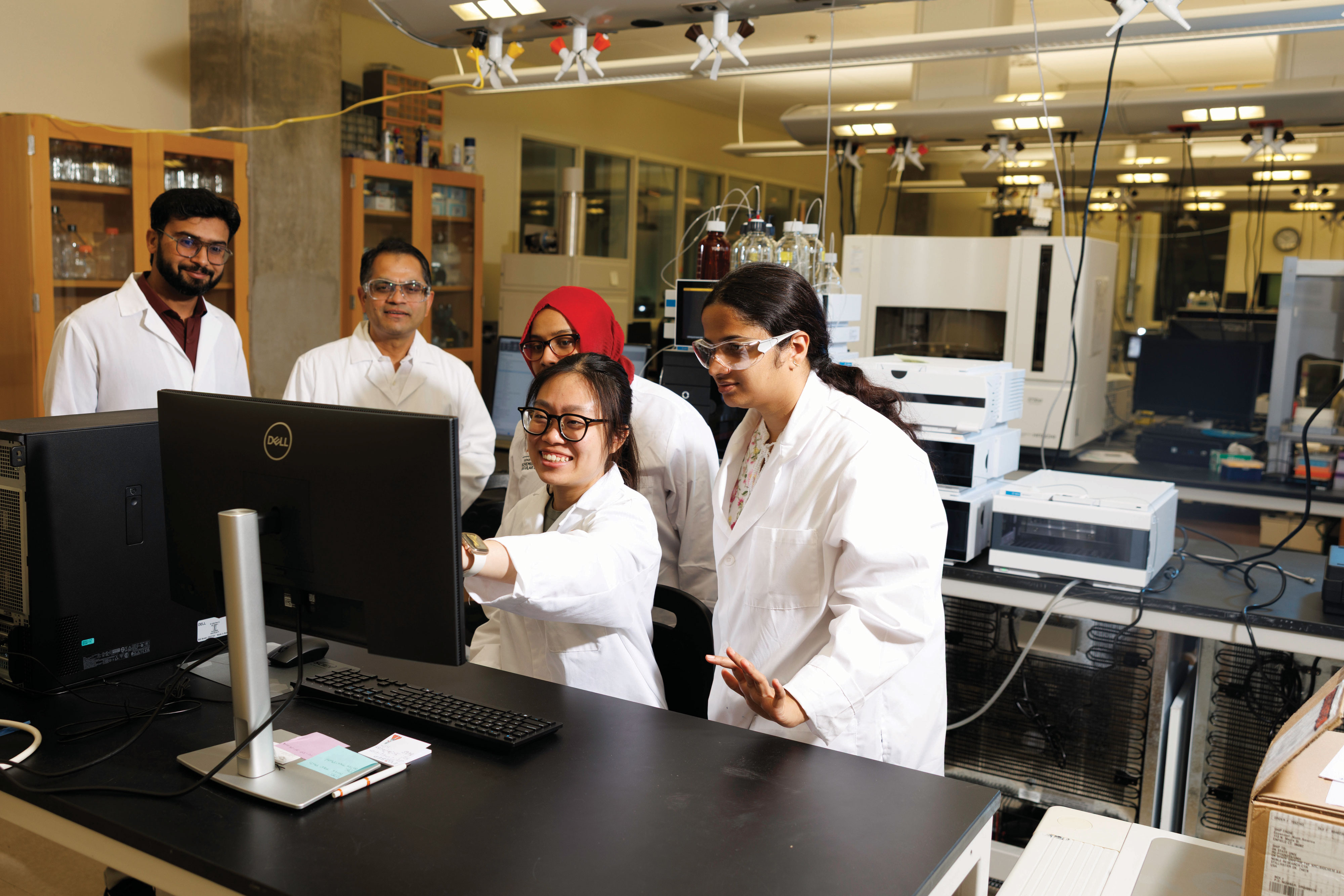
For more than 20 years, the OSU Proteomics and DNA Sequencing Core Laboratory has provided state-of-the-art technologies and expertise to hundreds of researchers across the OSU System, the state and the nation — all of whom are working to unravel the mysteries of protein chemistry within humans, animals and plants.
“We do much more than generate research data for the community,” said Dr. Uma Aryal, director of the Proteomics and DNA Sequencing Core Lab. “We also train the next generation of scientists in proteomics technology, contributing to the development of a critical, skilled workforce.”
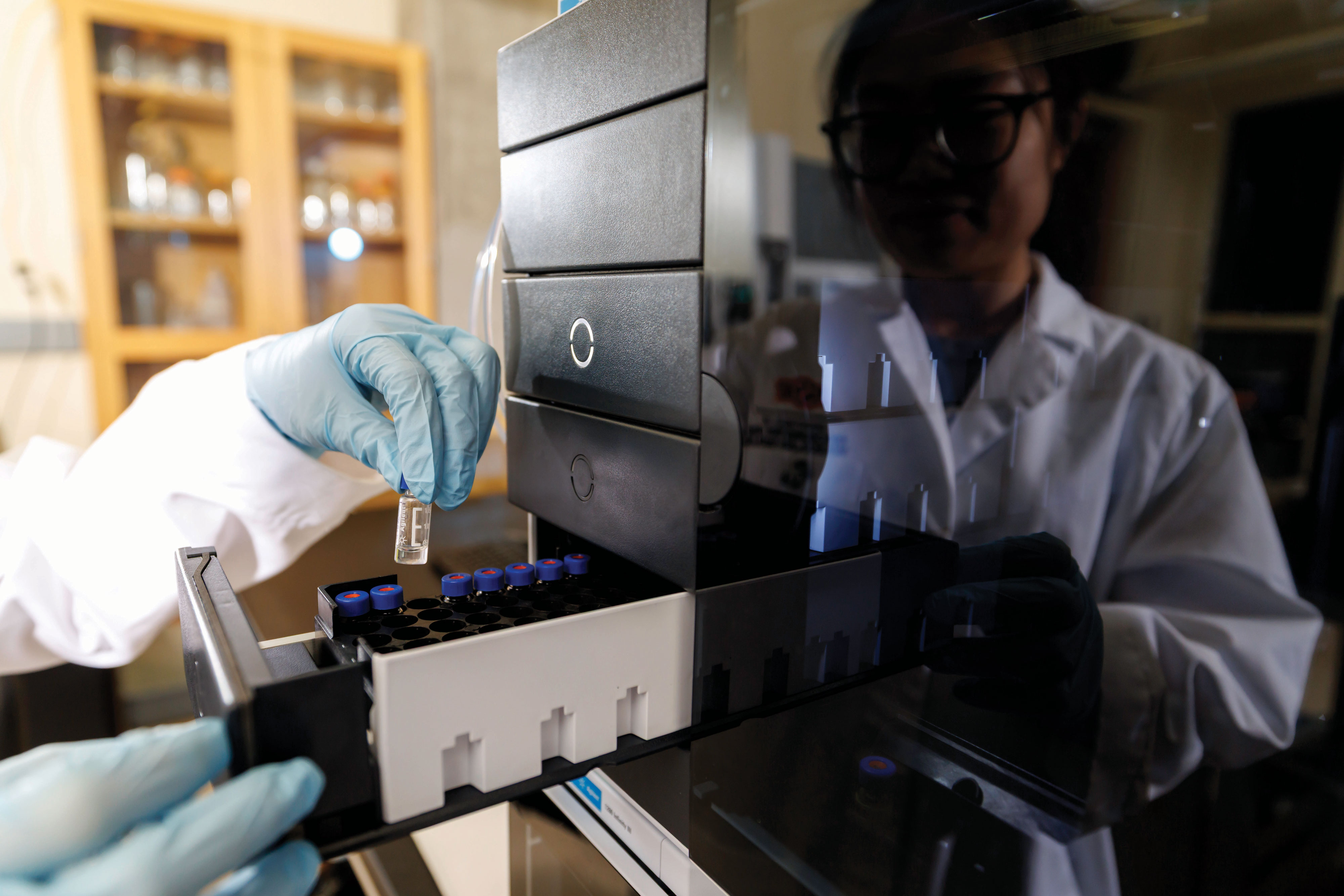
The core lab has recently expanded its capabilities with new state-of-the-art mass spectrometry technology — funded by Texas-based Select Milk Producers Inc. — which will accelerate research on colostrum and milk as well as animal and human health.
“The new mass spectrometer adds an important capability that we did not previously have in the lab: the ability to precisely measure the exact amounts of specific proteins and peptides, rather than broadly surveying many proteins at once,” Aryal said. “Our goal is to provide researchers with access to world-class proteomics technologies, and this investment expands the range of questions we can help researchers answer.”
Understanding the molecular recipe
DNA, RNA and proteins are the foundation of life.
“We call DNA the blueprint of life because there is information in our DNA called genes. This information is transcribed and translated,” Aryal said. “Proteins are the workhorses that carry out basic biological functions, and the genetic sequence made up of these proteins is the complete recipe.”
Think of DNA as a cell’s cookbook. It contains every recipe (genes) needed to build and maintain life, but not every recipe is used all the time. DNA can only tell us what could happen with the finished product from one of the cookbook’s recipes.
When the body needs a specific recipe, it makes a copy of that recipe/gene called RNA, which tells the cell which ingredients are being used and what the cell is actively preparing to make.
The finished product is a protein, which is the molecule that carries out nearly every function in the body, from building muscle and repairing tissue to fighting infection. Studying proteins tells scientists what is happening inside cells at any given time.
But the story doesn’t end there.
“Many proteins carry an additional layer of chemical information that scientists are still working to understand. This is known as post-translational modification, which are chemical changes that occur after a protein is created,” Aryal said.
Glycosylation is a type of post-translational modification that adds sugar molecules to a protein, such as an antibody, to prevent illness or disease.
If you were to compare a protein to a baked cake, most cakes aren’t ready to serve when they come out of the oven. They need frosting and other decorations, which affect how the cake looks, where it gets delivered, how long it stays fresh and how people interact with it. Glycosylation adds those decorations after the protein is “baked.”
“We do much more than generate research data for the community.
We also train the next generation of scientists in proteomics technology, contributing to the development of a critical, skilled workforce.”
Why it matters
Understanding how and where these chemical modifications are altered is critical for normal growth and development in a life form, as well as for understanding diseases.
Proteomics studies the properties of different types of proteins produced from RNA.
“Only proteomics can reveal how proteins are modified, how they interact and what they are doing in real time,” Aryal said. “A mass spectrometer allows us to monitor those proteins on a larger scale and study how they are functioning, which ones have been modified and how much they are changing in one condition versus another.”
Phosphorylation is when a cell temporarily attaches a chemical group called phosphates to a protein. These phosphates can switch a protein’s activity on or off, alter its function or direct its location within the cell. When phosphorylation goes wrong, it causes a variety of diseases, such as Alzheimer’s and Parkinson’s.
Aryal and several other researchers at OSU are using mass spectrometry to better understand the basic molecular mechanisms of aging and the diseases associated with it. By understanding the biological processes underlying these diseases, researchers hope to identify new, more effective treatments.
The technology also supports research on animal health, food safety and quality, infectious diseases and sustainable agriculture. Additionally, colostrum is being researched to identify molecular factors that support neonatal health and improve colostrum management.
A valuable partnership
Colostrum is the first milk produced immediately after birth and is one of the most valuable sources of early life nutrition. It transfers passive immunity during the first hours of life, when newborns are most vulnerable to disease.
Proteins in milk undergo chemical modifications that influence their biological functions and nutritional value. Modern mass spectrometry technology provides a comprehensive view of the molecular composition of milk and colostrum.
Select Milk Producers Inc. is partnering with the OSU proteomics lab to analyze its milk samples to better understand and improve the health benefits of its products.
“The partnership between Select Milk Producers/Bovita Labs and OSU reflects our shared commitment to innovation, scientific discovery and creating new value opportunities in dairy production,” said Dr. Anand Rao, vice president of product research for Bovita Labs of Select Milk Producers Inc. “We are excited to support the proteomics research led by Dr. Aryal’s team, which is deepening our understanding of the bioactive components in milk and colostrum to benefit both consumers and U.S. dairy farmers.”
Rao said the work in the proteomics lab has the potential to drive innovation in the food, nutrition and nutraceutical industries while enhancing the long-term competitiveness of U.S. dairy farmers and the dairy industry.
“OSU has a long history of delivering research-based solutions to challenges facing our state, nation and world,” said Dr. Kenneth Sewell, vice president of OSU Research. “Select Milk’s generous investment expands the university’s research capabilities by strengthening our advanced technology infrastructure, while supporting the next generation of scientific breakthroughs.
“As industry continues to invest in OSU, we will be even better positioned to advance discoveries that contribute to human, animal and plant health.”
Photos by: Mitchell Alcala and Sutton Cartmell
Story By: Alisa Gore | alisa.gore@okstate.edu