


How OSU transforms research into healthier communities, stronger industries and greater opportunity
Monday, September 7, 2026
Media Contact: Mack Burke | Associate Director of Media Relations | 405-744-5540 | editor@okstate.edu
You don’t have to set foot on Oklahoma State University’s campus to experience its impact.
It can be found in wheat fields outside of Enid, in veterinary clinics serving ranchers in the Panhandle, in food processing plants creating new products for local businesses and in rural hospitals where OSU-trained physicians are making a difference every day.
OSU supports all these aspects of life (and many more) as part of its land-grant mission to serve the state, with the ability to connect directly with people in all 77 counties in Oklahoma to improve lives and uplift communities.
With a bold new strategic plan — “Answering the Call: A Strategic Vision for The State’s University” — and increasing momentum of The Code Calls branding and fundraising campaign, OSU is making transformational investments in teaching, research and Extension programs and infrastructure.
“Stillwater is in many ways synonymous with Oklahoma State University, but that’s not what the ‘S’ in OSU stands for,” OSU President Jim Hess said. “We are The State’s University.
“For generations, OSU has proudly embraced its land-grant mission to serve the people of Oklahoma. We are accelerating that commitment through transformational investments in agriculture, veterinary medicine and rural health that strengthen communities across our state.
“Together, we are strengthening educational opportunity, driving economic growth in Oklahoma and ensuring OSU continues to earn and proudly carry the mantle of The State’s University for generations to come.”
“The $40 million commitment from the Oklahoma Legislature to the Agronomy Discovery Center will strengthen our ability to deliver cutting-edge research, develop new technologies and support the farmers and ranchers who drive Oklahoma’s economy.”
Modernizing Agronomy Facilities
For more than a century, Oklahoma farmers have counted on OSU research to improve their crops and their bottom line. Tomorrow’s harvest begins with today’s research, and the future of agricultural research is rooted at OSU.
In 2026, the Oklahoma Legislature approved $40 million in funding for a new Agronomy Discovery Center at OSU’s Agronomy Research Station in Stillwater. The center will modernize facilities that support wheat breeding, crop science, soil fertility, forage and turfgrass research, while expanding OSU’s nationally recognized agricultural research programs.
Dr. Jayson Lusk, vice president and dean of OSU Agriculture, said this investment ensures OSU can continue to provide real-world solutions that help farmers navigate evolving environmental and economic conditions, while feeding and fueling the state, nation and world.
“The Agronomy Discovery Center is far more than a building project; it is a strategic investment in the future of Oklahoma agriculture and in the farmers who depend on innovation to remain competitive in an increasingly challenging environment,” Lusk said. “The $40 million commitment from the Oklahoma Legislature to the Agronomy Discovery Center will strengthen our ability to deliver cutting-edge research, develop new technologies and support the farmers and ranchers who drive Oklahoma’s economy.”
OSU will continue to raise $10 million to support the Oklahoma Legislature’s investment. As of July 30, 2026, 50 donors, including nine major gift donors, have contributed $8.7 million toward the initiative.
OSU’s wheat breeding program alone has had a profound impact on agriculture in Oklahoma and across the nation and is recognized as one of the top programs in the world.
Additionally, the wheat program benefits ranchers and the cattle industry by providing forage for millions of cattle annually.
Since 2000, OSU’s Wheat Improvement Team has commercialized 43 wheat varieties, accounting for roughly 70% of wheat planted in Oklahoma and approximately 10% of wheat acreage nationwide.
Discoveries made at the OSU Agronomy Research Station significantly impact the state’s $42 billion agricultural industry and influence food security worldwide, as wheat supplies 20% of the energy from food people eat.
New and updated facilities will bring vitality and a competitive edge to the university’s teaching, research and Extension initiatives.
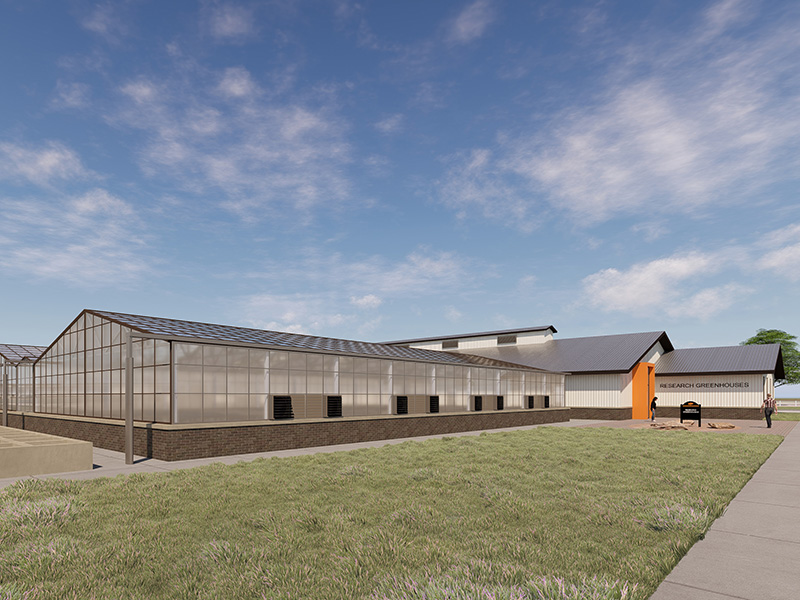
With the construction of a new headhouse and research greenhouses, the Agronomy Discovery Center will become the birthplace of all new OSU wheat lines. Plans also include a dynamic and multipurpose classroom and a lab building that will house the Wheat Quality Laboratory; Soil, Water and Forage Analytical Laboratory; and the Plant Disease and Insect Diagnostic Laboratory.
In 2025, OSU’s Soil, Water and Forage Analytical Laboratory analyzed 66,765 samples from across the state for farmers, ranchers, homeowners, consultants, government agencies and researchers to help protect Oklahoma’s natural resources and support efficient agricultural production.
The Plant Disease and Insect Diagnostic Laboratory serves all 77 Oklahoma counties with accurate diagnoses of plant diseases and insect pests, along with recommendations for their control. Operating year-round, the lab provides plant disease and insect identification services to Extension educators, individuals, consultants and commercial producers.
Oklahoma residents can submit up to 10 samples per year at no charge through their local OSU Extension county office.
“Facilities like these labs are essential to safeguarding Oklahoma’s agricultural economy and public health,” Lusk said. “They allow us to rapidly detect and respond to animal and plant diseases, protect our food supply and support producers with trusted science. Ultimately, these labs serve every Oklahoma resident, supporting soil health and helping our state remain resilient in the face of emerging threats.”
From Farm to Marketplace
Through the Robert M. Kerr Food and Agricultural Products Center, OSU is helping farmers, entrepreneurs and food manufacturers transform agricultural products into thriving businesses, creating jobs and strengthening rural economies across the state.
FAPC is undergoing a major modernization effort supported by a $6 million investment from the Oklahoma Legislature in 2024.
The upgrades include advanced food-processing technology, expanded meat-processing tools, dairy and beverage equipment, updated bakery and grain-analysis instruments and new packaging and product-development technologies.
Among the most significant additions is Oklahoma’s first cold pasteurization, high-pressure processing unit, which enables food businesses to extend shelf life, enhance food safety, reduce food waste and expand distribution opportunities without relying on preservatives.
For many small and rural food businesses, access to these resources can reduce the cost, risk and complexity of moving a product from idea to market.
“The modernization of FAPC is about creating new opportunities for Oklahoma’s food and agricultural industries to grow and thrive right here at home,” Lusk said. “For entrepreneurs and food manufacturers, these improvements mean products can now be developed, tested and produced in Oklahoma rather than outsourced elsewhere. That matters deeply for rural economies because it helps create jobs, supports local businesses and encourages innovation and investment in our state.”
Beyond equipment, FAPC serves as a support system for Oklahoma food businesses by providing technical assistance in product development, food safety, microbiology, processing and scale-up, labeling, packaging, process validation and commercialization.
Education Everywhere for Everyone
OSU Extension: Oklahoma’s statewide system for translating research into practical guidance for residents, farmers, businesses and communities.
Operating in all 77 counties, OSU Extension provides research-based education in agriculture, natural resources and community development, family and consumer sciences and community health, and 4-H youth development.
Building the Future of Beef
From healthier herds to more prosperous producers, OSU is bringing together research and industry to help shape the future of beef production and strengthen one of Oklahoma’s most important industries.
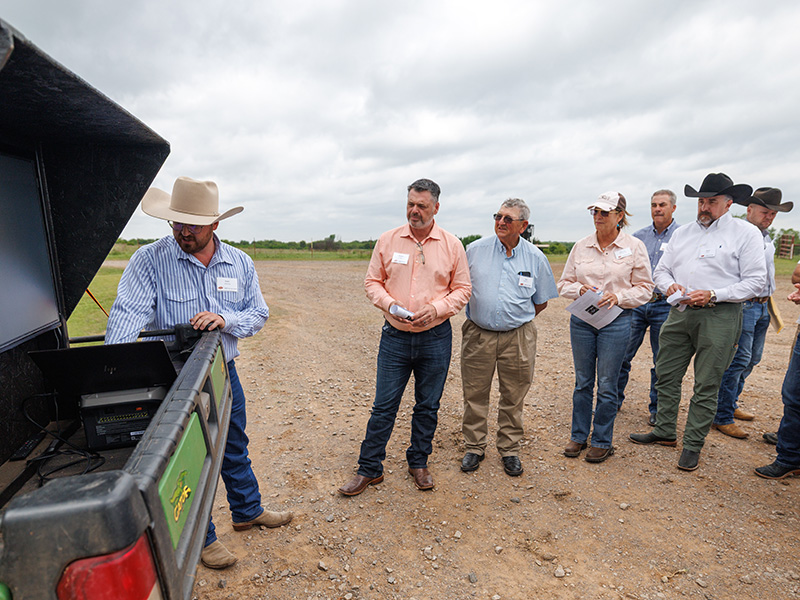
The Animal Excellence initiative is a comprehensive effort to elevate teaching, research and Extension programs that impact animal health. At the heart of this initiative is the Beef Center of Excellence, a cross-disciplinary hub that unites experts across the beef supply chain.
Supported by an advisory board of individual and corporate members, as well as a director and endowed chairs in areas such as artificial intelligence, beef cattle economics and rangeland management, the Beef Center of Excellence will fund impactful research and outreach.
“There are so many issues we can work on,” said advisory board member Dr. Barry Pollard, of Pollard Farms. “We can work on fertility, feed efficiencies, health, disease resistance and a number of things that are meaningful to the industry. We can work together and find ways to coordinate the research that’s being done into meaningful messages that have practical applications.”
The Oklahoma Beef Council serves as a corporate member of the advisory board. Heather Buckmaster, Oklahoma Beef Council executive director, said collaboration between producers and academia is the key to unlocking progress.
“We’ve overcome so many challenges in this industry when producers and academia work together, and the industry unites,” said Buckmaster. “I think this focus of the Beef Center of Excellence is going to give us an opportunity in a multidisciplinary approach to really focus on those challenges that we have. It’s an opportunity for Oklahoma State to really plant that flag and say, the beef industry of Oklahoma is important.”
OSU remains one of the few universities with operating units for all food animal species and is nationally recognized for the superior quality of livestock, and excellence in teaching and research. The Animal Excellence initiative also includes upgrades to facilities and technology to modernize OSU’s animal teaching and research units.
A New Era for Veterinary Medicine
Through the construction of a new facility for veterinary education, clinical care and research, OSU Veterinary Medicine is making a lasting impact on animal health in Oklahoma.
The university received a historic $329 million state funding appropriation from the Oklahoma Legislature to support the construction of a new, state-of-the-art teaching hospital for the College of Veterinary Medicine.
For Oklahoma ranchers, veterinarians and animal owners, the impact will extend far beyond Stillwater.
The new veterinary medical teaching hospital will help address veterinary workforce shortages, strengthen food animal medicine and support research that improves livestock health and production, while also creating expanded opportunities for student training in both companion and large-animal medicine.
OSU is also working to address Oklahoma’s veterinary shortage that continues to plague the state. In 2024, House Bill 3196 – also known as the Dr. Lee Denney Act – was passed to provide financial assistance to students pursuing a Doctor of Veterinary Medicine degree at OSU CVM. These students plan to practice in rural Oklahoma communities — those consisting of 25,000 or fewer — and receive training to meet the needs of livestock producers. To date, $1.8 million has been awarded to OSU veterinary students.
“Veterinarians serve as frontline animal health professionals, working alongside Oklahoma producers to provide a safe and wholesome food supply,” said Dr. Richard Prather, OSU CVM dean. “Investment in veterinary education advances enduring animal health solutions that protect public health and support the stability of the rural economy.”
“We’ve overcome so many challenges in this industry when producers and academia work together, and the industry unites.”
Powering One Health
These investments reinforce OSU’s broader vision of integrating agriculture, animal science and human health into a unified framework for solving complex problems.
This framework, known as One Health, recognizes that the health of humans, animals and the environment is interconnected and that many of today’s greatest challenges require collaboration across disciplines to find solutions.
At OSU, that collaboration is taking shape through partnerships among OSU Agriculture, the College of Veterinary Medicine and the Center for Health Sciences.
And while OSU veterinarians are meeting patients where they are with the CVM’s new ambulatory services, OSU physicians are answering the call to serve where the need is greatest.
For the third consecutive year, the Center for Health Sciences earned the No. 1 national ranking in the percentage of graduates practicing in Health Professional Shortage Areas, according to U.S. News & World Report medical school rankings.
Those shortage areas, often called medical deserts, include communities facing significant shortages of physicians and other health care providers. The Center for Health Sciences also ranked No. 8 nationally for graduates practicing in rural areas and No. 13 for graduates entering primary care.
Hess said these outcomes don’t happen by accident. They reflect OSU’s commitment to strengthening communities.
“Being The State’s University means showing up for Oklahoma every day. It means preparing students to lead, conducting research that solves real problems and working to cultivate opportunity in every corner of our state,” Hess said. “That’s what a land-grant university is called to do, and we’re proud to answer the call.”
Photos by: Mitchell Alcala and Kinsey Reed
Story by: Mandy Gross | STATE Magazine