

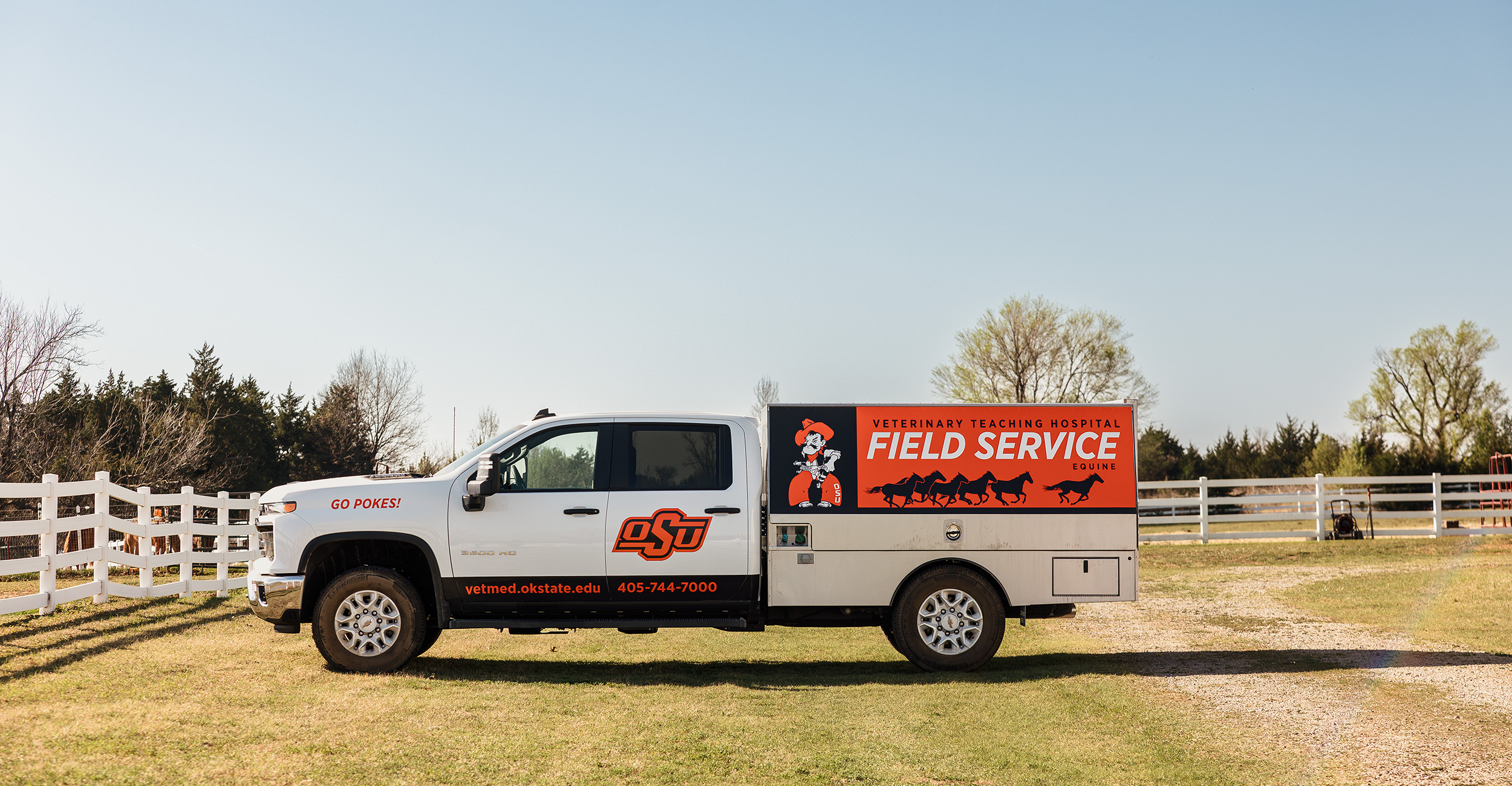
OSU veterinarians bring expertise to the barn, field, coop — wherever your animals call home
Wednesday, May 13, 2026
Media Contact: Mack Burke | Associate Director of Media Relations | 405-744-5540 | editor@okstate.edu
For livestock owners, the work is never finished.
Before daylight breaks and long after it fades, there are always calves to check, horses to feed and herds to protect. Illness doesn’t wait for business hours, and neither does the responsibility of caring for those animals.
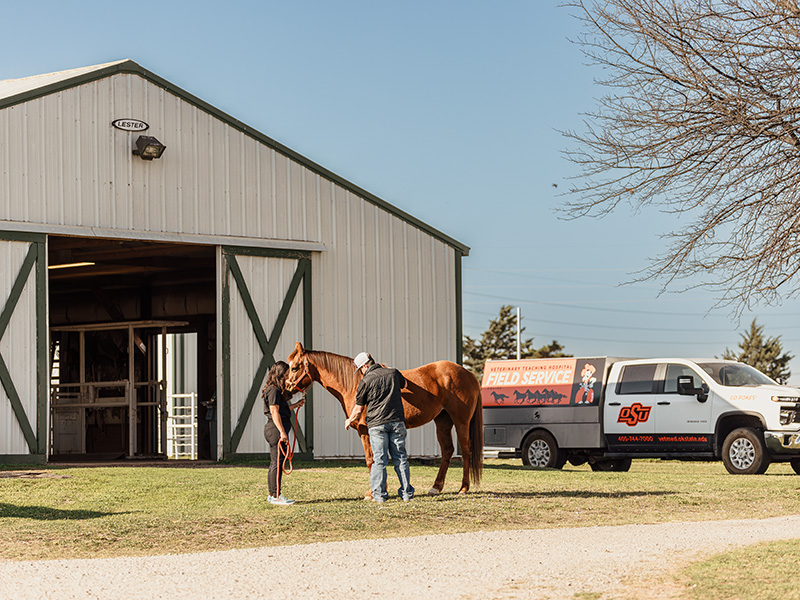
Before the sun rises over Stillwater, Oklahoma State University ambulatory veterinarians and fourth-year students load a mud-splattered ambulatory truck for another day in the field. Veterinary medicine has no boundaries. It does not end at 5 p.m., wait for the next business day or remain confined within the walls of a clinic.
The OSU College of Veterinary Medicine ambulatory service has been assisting Stillwater and surrounding communities for decades.
Drs. John Gilliam, clinical professor in food animal production medicine and field services; Myriam Jimenez, assistant professor in food animal production medicine and field services; Jason Anton, clinical assistant professor in production medicine, field services and extension; Lionel Dawson, professor in theriogenology with and emphasis in production animal theriogenology; and Chase Whitfield, clinical associate professor in equine medicine and field services, are at the forefront of the ambulatory service.
The ambulatory service delivers comprehensive veterinary care to equine and food animal patients, bringing clinical expertise directly to farms and ranches. The team provides services such as herd health programs, including calf processing, pregnancy diagnosis, and disease outbreak prevention and investigation. In addition to routine care, OSU veterinarians provide diagnostic imaging and treatment for individual animals.
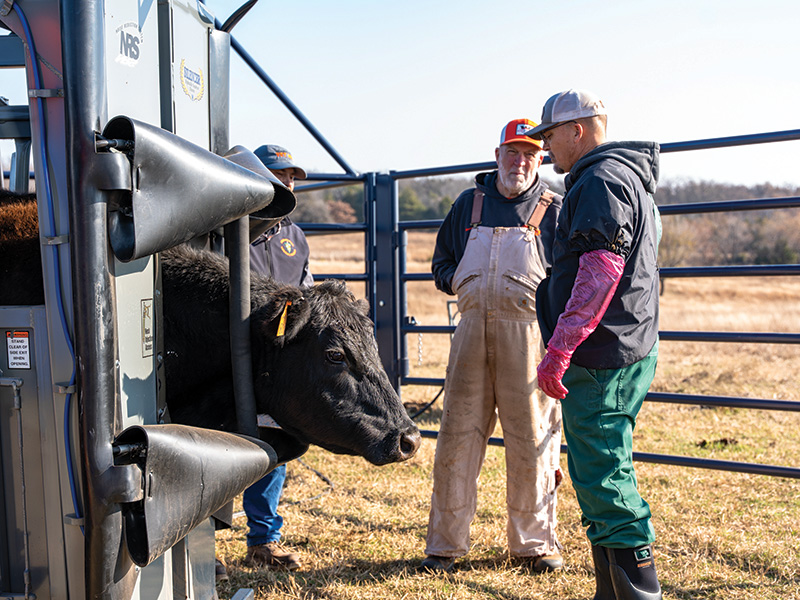
“We offer a full range of food animal medicine services, ranging from care of sick individual animals to production work with groups of animals,” Gilliam said. “We also offer fertility evaluation and artificial insemination, just to name a few.”
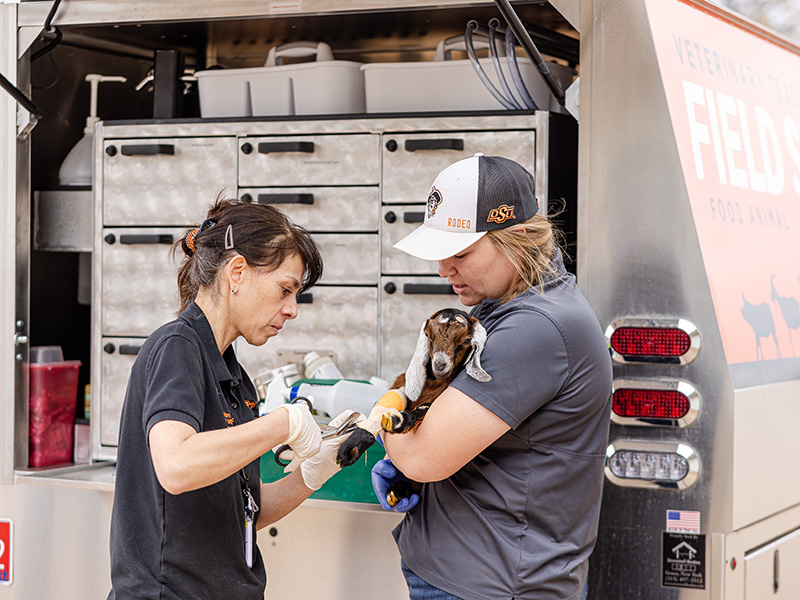
Transporting large groups of animals is often impractical, making on-farm care essential to delivering high-quality herd health services. An ambulatory model allows veterinarians to evaluate and treat animals in their own environment, which is especially beneficial when investigating disease concerns or assisting producers with management decisions. Seeing conditions firsthand provides critical insight that cannot be replicated in a hospital setting.
Since joining the service, Jimenez has expanded and strengthened its small ruminant, alpaca and swine offerings.
“The service allows large animal patients to receive care at their farm, which allows for more animals to be seen, and alleviates the stress of being hauled,” Jimenez said.
Recently, the college added a full-time equine ambulatory veterinarian to better serve the equine industry in Stillwater and surrounding communities. The addition allows Whitfield to focus more closely on the needs of our equine owners.
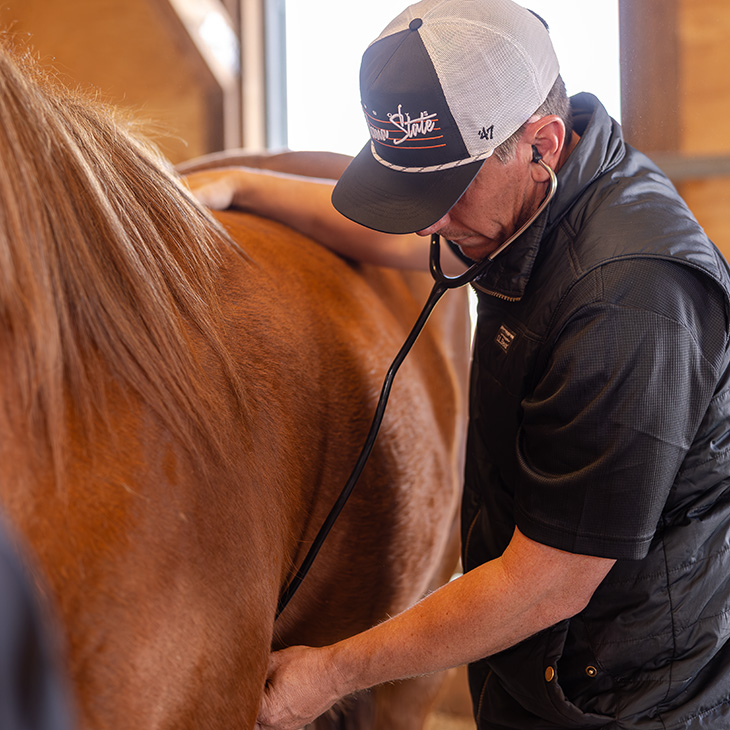
The service provides comprehensive equine veterinary care, including wellness exams, dental exams and floats, castrations, lameness evaluations and joint injections, prepurchase exams, advanced medical exams and consultations and neurologic evaluations.
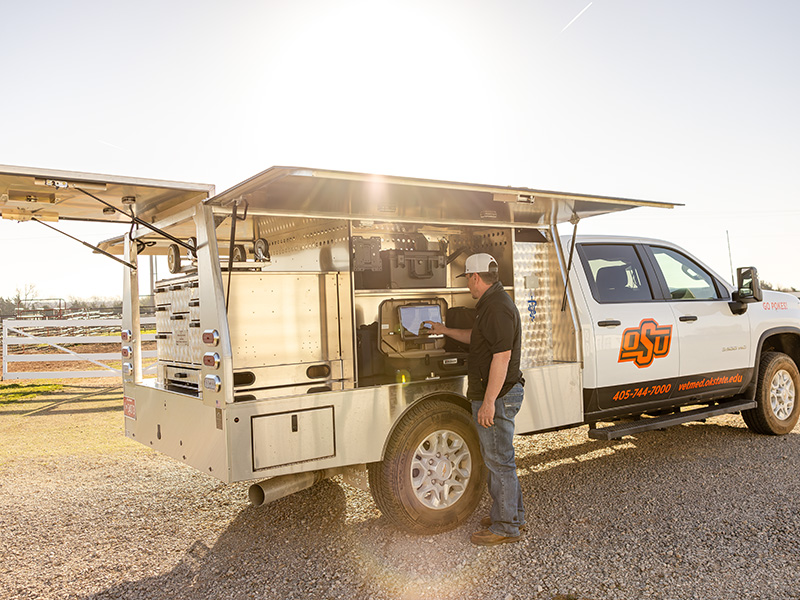
In addition, Whitfield offers on-farm ultrasonography and radiography, upper airway and gastric endoscopy, shockwave therapy and orthobiologic joint therapy to diagnose, treat and manage lameness and other performance-related conditions.
“In addition to routine care, it is beneficial to provide emergency service on the farm to help patients and clients when they need you most,” Whitfield said.
Placing veterinarians in the field is helping combat the ongoing shortage of rural veterinary practitioners and strengthening access to care in underserved communities.
“The addition of our new ambulatory trucks and mobile, expandable chute/corral system allows us to provide services to clients who don’t have, or have inadequate facilities,” said Dr. Jerry Ritchey, interim dean of OSU CVM.
Serving the community is one of the many benefits the service provides. Having an ambulatory service is vital for educating students as it gives them the chance to experience real-world scenarios and think outside the box.
“Having the opportunity to work in on-farm environments before they leave school is invaluable,” Gilliam said. “Students also learn valuable critical thinking and client communication skills.”
The ambulatory service provides students with hands-on experience beyond the clinic walls, immersing them in real-world rural practice. This training is vital to the college’s mission of addressing the ongoing shortage of veterinarians in rural communities.
“I am so grateful to the producers who let us learn on their animals,” said Katelyn Massersmith, a fourth-year veterinary student. “During this rotation, I felt like an actual doctor and was able to sharpen my skills. Because of this service, I feel more confident.”
The food animal and equine ambulatory service continues to expand, strengthening the CVM’s ability to serve farmers and ranchers across the state. With new resources and additional faculty, the program is enhancing access to high-quality veterinary care and ensuring producers in rural communities receive the support they need.
“Ambulatory medicine is where our mission meets the road — literally,” said Dr. Julia Montgomery, department head of veterinary clinical sciences. “Our growing ambulatory programs ensure that no corner of Oklahoma is beyond the reach of OSU veterinary expertise — and I could not be prouder of the direction we are heading.”
Veterinary Ambulance Service
Photos by: Ellie Piper, Eric Priddy and Kinsey Reed
Story by: Kinsey Reed | STATE Magazine