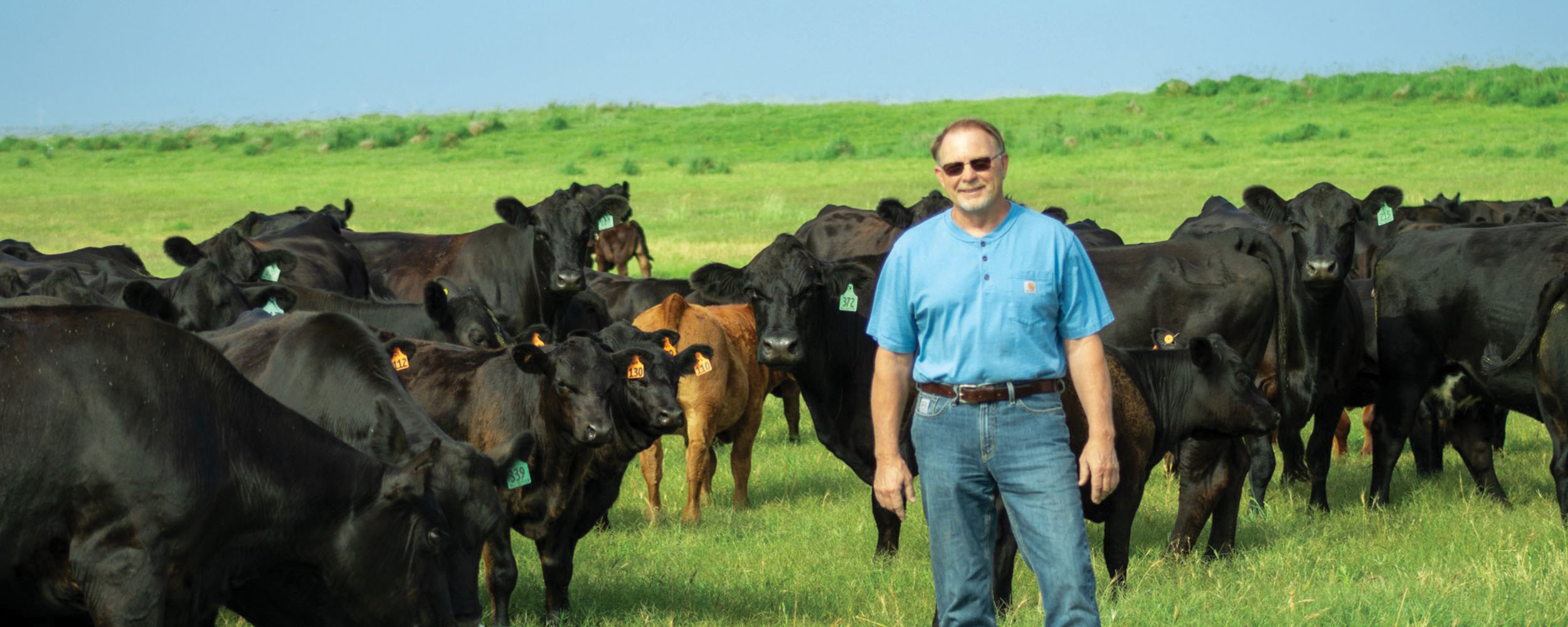
Chow Time: From pasture to production — a solution made in Oklahoma
When an Oklahoma rancher found his cattle overturning protein tubs for the third time in a week, he didn't just fix the problem — he invented a solution.
When an Oklahoma rancher found his cattle overturning protein tubs for the third time in a week, he didn't just fix the problem — he invented a solution.
In rural America, veterinarians are more than just doctors — they are the backbone of thriving animal agriculture communities and essential partners in local economies. They care for livestock that sustain our agricultural industry, keep beloved
Lumpy jaw, or actinomycosis, is a long-lasting bacterial infection in cattle caused by Actinomyces bovis. This bacterium normally lives in the mouths of healthy animals without causing harm.
Common eye problems in cattle include irritation from plant awns, pinkeye, and cancer eye. This article outlines the predisposing factors and clinical signs associated with these conditions to aid in early detection within your herd.
Originally from eastern Asia, the Asian longhorned tick, Haemaphysalis longicornis, has successfully established itself in Australia, New Zealand, several Pacific Region island nations, and now the United States. Detection of the tick in 2017 on a
The Oklahoma State University College of Veterinary Medicine played a vital role in the 2024 Annual Society for Theriogenology Conference in Oklahoma City.
In Oklahoma, ticks are detected on livestock throughout the year, and tick-borne disease is commonly diagnosed. With milder winters and high humidity, tick numbers appear to be increasing across the state, so let Oklahoma State University summarize
Coccidiosis is an intestinal disease that primarily affects younger cattle. Clinical disease most commonly occurs in calves around weaning due to an increase in stress and is rare in adult cattle. The disease may occur in confined cattle or cattle