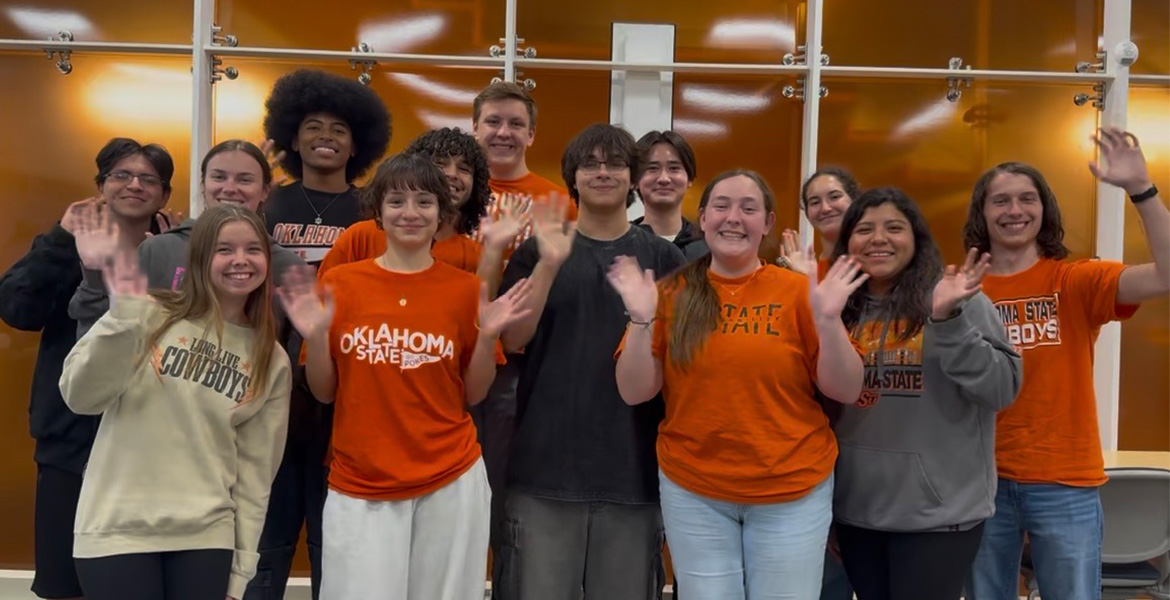
Student team develops new astronaut tool dock
Tuesday, February 17, 2026
Media Contact: Desa James | Communications Coordinator | 405-744-2669 | desa.james@okstate.edu
A student team from Oklahoma State University has been selected by NASA for the 2026 Microg Neutral Buoyancy Experiment Design Teams (Microg NExT) Challenge, a national program that invites undergraduate teams to design and build equipment used in astronaut training and future missions.
Under the guidance of Dr. Alyssa Avery, teaching assistant professor for the School of Mechanical and Aerospace Engineering in the College of Engineering, Architecture and Technology, the team divided into design, testing and outreach subgroups to manage the engineering and public engagement aspects of the project.
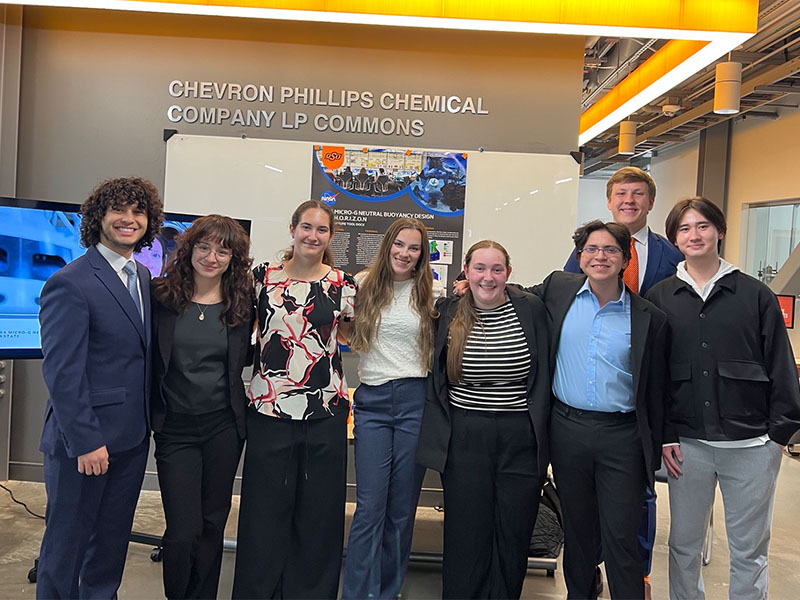
H.O.R.I.Z.O.N. (Hardware for OneHanded Retention in ZeroGravity Operations and Navigation) includes undergraduate students across mechanical and aerospace engineering, physics, management and finance.
Gustavo Rivera Garcia, an MAE junior, learned the value of working on a team with various educational backgrounds.
“Having students from other majors allowed me to focus on my role as an engineer, while still communicating with members who have other duties,” Garcia said. “It also allowed me to have some insight into the different roles on a team, like outreach, which is something I do not usually get into.”
H.OR.I.Z.O.N. earned selection with its proposal for a passive capture tool dock, a new method that allows astronauts to safely stow tools during spacewalks. The fully mechanical device requires no power and prevents accidental tool release, thereby improving safety and efficiency during extravehicular activities (EVAs).
“The largest problem that we set out to fix was the ease of use,” said Jacob Witthuhn, an MAE junior on the design team. “The current technology requires that the astronaut use both hands during retrieval and stowage of the tool. Our design only requires one hand to stow and retrieve. On top of this, the stowage only requires replacing the probe into the dock, with automatic locking.”
Astronauts performing EVAs often manage tools in low visibility, thick gloves and microgravity conditions that make reliable tool storage essential. The device uses a spring-based buckle and receptacle system that locks when a tool is slid into place and releases only when intentionally pinched. No vision or external force is required, allowing astronauts to quickly retrieve or store tools such as tongs, shovels and geological sampling equipment.
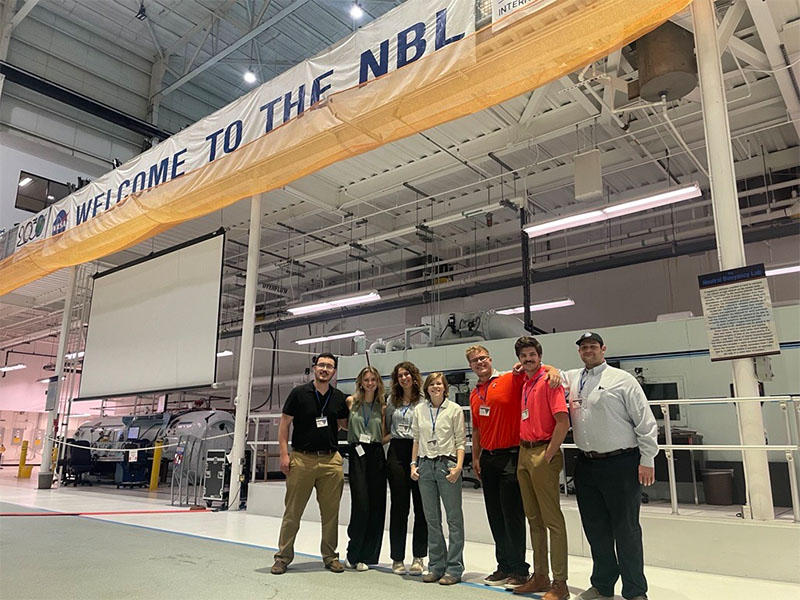
The design also includes single-fault tolerance, meaning the dock will still retain a tool even if one mechanical arm fails, which is a critical safety requirement for NASA. Early 3D-printed prototypes have already passed initial strength tests, supporting up to 20 pounds without damage. Full-scale aluminum prototypes will undergo further testing, including Neutral Buoyancy Laboratory underwater trials at NASA’s Johnson Space Center.
The Zink Center for Competitive Innovation, established in 2022 through a generous gift from the Zink Family Foundation, supported the team by funding all materials for the project. The center was created to strengthen the engineering curriculum by equipping students with the resources and hands-on experiences needed to excel in advanced technology and innovation.
The OSU team created detailed design specifications, a full manufacturing plan, safety analysis and operational procedures to meet the challenge requirements.
The device:
- fits within a 5×5×5inch volume
- weighs under 2 pounds
- contains no sharp edges or pinch points
- is designed to operate the same way in microgravity as it does on Earth.
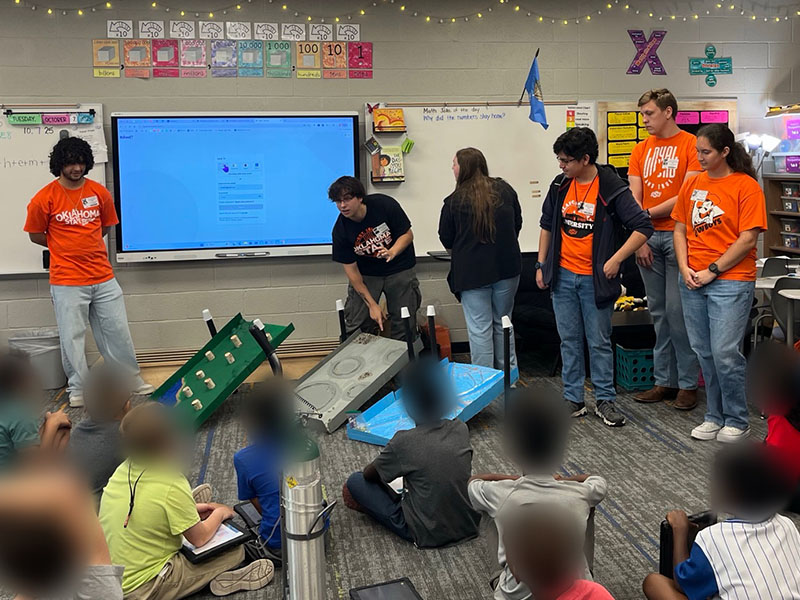
As part of the Microg NExT requirements, H.O.R.I.Z.O.N. created a comprehensive outreach program to inspire the next generation of engineers and scientists. The team visited Scissortail Elementary School in Oklahoma City, OK, where they led hands-on STEM activities including gravity marble races, a Kahoot space quiz and an eggdrop challenge. Additionally, they showcased their prototype at the CEAT Senior Design Expo and provided a social media outreach.
The team has presentations planned for Jenks High School’s Prime Movers robotics team and Stillwater High School students in the spring semester of 2026.
“Being selected for Microg NExT is incredibly exciting,” said Jessi Varela, a Spears School of Business student and outreach team lead. “We’re honored to contribute ideas that could support NASA’s future moon missions and help astronauts work more safely during spacewalks.”
The team was also selected for final testing in Houston, allowing them to evaluate the tool dock in a simulated microgravity environment, where divers reenact astronaut tasks underwater to validate performance and safety. This could lead NASA to incorporate elements of its design into future astronaut training tools and, potentially, into hardware supporting missions under the Artemis program.
Avery notes that she is eager to work alongside the student researchers as they develop their prototype and engage with NASA engineers to strengthen the tool and test design.
“This is an incredibly dynamic process in which the team holds pride and responsibility for their process and creation,” Avery said.
Micro-g NExT competition provides a host of benefits for students. Molly Dolan, a senior majoring in mechanical engineering and the team lead, notes that while the experience has been challenging, it has been just as rewarding.
“My collaboration and organizational skills have strongly improved as the team has gone through the initial planning and design stages,” Dolan said. “As a mechanical engineering major with a passion for aerospace, getting to go to NASA in June with a successfully tested, designed, and manufactured device that could potentially help EVA missions is a step in my career that elevates my passion for innovation and gives me irreplaceable connections in the industry – friends and mentors alike.”
Teams like H.O.R.I.Z.O.N. reflect OSU’s commitment to preparing students to lead with ingenuity and purpose. Through hands-on design, collaboration and service to others, the team embodies the spirit of the Cowboy Code, pursuing ambitious ideas while upholding the responsibility to make them matter beyond the classroom.