

Schweitzer Fellows empowering high school athletes through injury prevention
Friday, February 6, 2026
Media Contact: Kayley Spielbusch | Digital Communications Specialist | 918-561-5759 | kspielb@okstate.edu
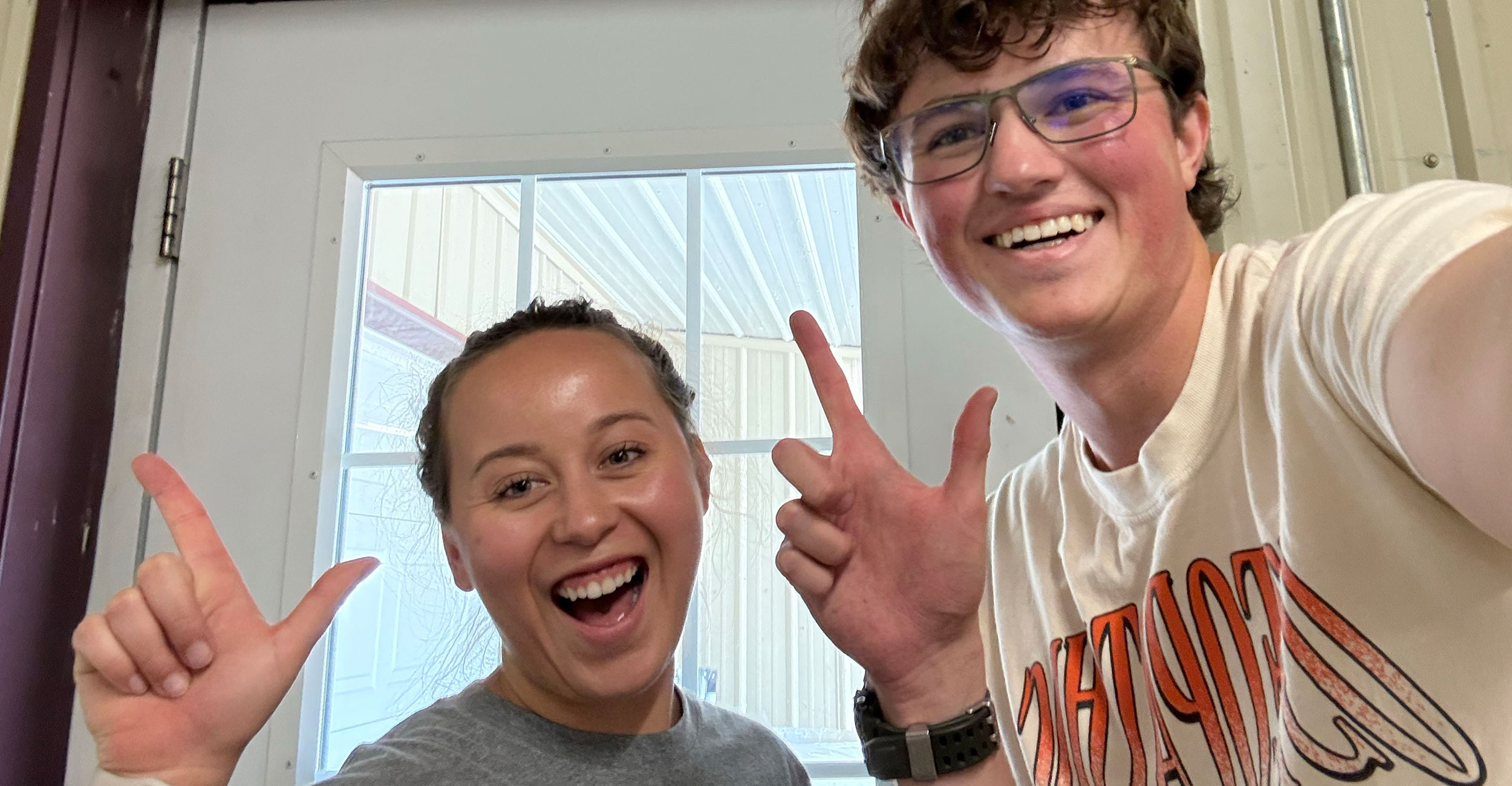
Jake McAlester and Maria Nolan are using their interest in sports medicine to prevent injuries in high school athletes.
McAlester and Nolan are second-year medical students at Oklahoma State University's College of Osteopathic Medicine at the Cherokee Nation and a part of the Albert Schweitzer Fellowship 2025-26 Tulsa cohort. The fellowship aims to develop graduates who will enter the workforce with the commitment and leadership skills to address unmet health care needs in their communities.
The pair’s experiences with medicine began when they were growing up.
McAlester grew up on a ranch where he helped his parents with injured horses and worked with cattle, and he spent time shadowing his father, who was an emergency department physician.
“For a while, I thought I wanted to be a veterinarian. But as I got older and started shadowing my dad, those two things grew off of each other. That’s where I first started getting interested in medicine,” McAlester said.
The connection between music and the brain is what first drew Nolan to medicine.
Nolan has been a cellist since she was 5 and taught herself how to play guitar in high school. She spent a lot of time with her grandfather in Phoenix. One night when he was sick, she didn’t know how to help, so she picked up his guitar and started playing for him.
“I noticed the music helped him feel better and he slowly started to come out of it. Then, he was in the hospital for a month before he passed, and his PTSD was bad there. One of the things he was able to lock onto to stay present was when I would come play guitar for him. I wanted to figure out why there was a correlation with that,” Nolan said.
McAlester and Nolan met at OSU-COM CN and connected over their interest in athletics and sports medicine. After McAlester attended an information session on the Albert Schweitzer Fellowship, he realized it was an opportunity and approached Nolan about starting a project.
“I thought it was a cool concept to do a new project to help underserved populations. It was a chance to do something meaningful while directly helping people,” he said.
Their project site is Warner Public Schools, where they are educating high schoolers on sports injuries and how to proactively prevent them.
The project is inspired by their own experiences in high school with seeing friends and athletes get injured, then missing whole seasons because they didn’t have the tools to recover.
“High school athletes want to shake it off, get through practice and get to the next game. We’re trying to keep sports, health and injury prevention tangible to them and show them that they can do it. It’s about meeting them where they’re at and building them up,” Nolan said.
Once a week, McAlester and Nolan visit Warner Public Schools during the athletes’ weightlifting hours. They do four 25 to 40-minute classes with presentations featuring evidence-based research on injury prevention. Additionally, they will lead mobility exercises and warm-ups focusing on one body area per week and explain how the muscles are working.
"[The Schweitzer Fellowship] was a chance to do something meaningful while directly
helping people."
McAlester said they keep the classes engaging by hosting competitions where they compete against him and Nolan.
“They’re super competitive, and if they win, they get to skip an exercise or two. It’s a great motivator,” he joked.
Nolan enjoys seeing the strength increase and improvements in the kids. She had one student who could not do a push-up when they began, but with her help, was able to complete one repetition.
“Seeing the improvement and seeing how excited they get when they see it in themselves has been so incredibly rewarding,” she said.
McAlester and Nolan agree that the project is helping them develop interpersonal skills that will be helpful to them as future providers.
“Learning how to engage with the kids and enhancing the people skills we’re learning as medical students before we go on rotations has been incredible,” Nolan said.
McAlester stated that their next step is to find a way to sustain the project beyond their fellowship year, but emphasized that this is just the beginning.
“This project has been great for us to learn how to do that on our own, especially as we get older and become leaders in our community as physicians. Hopefully someday, we can start new projects like this that are meaningful for a wide range of people,” he said.