

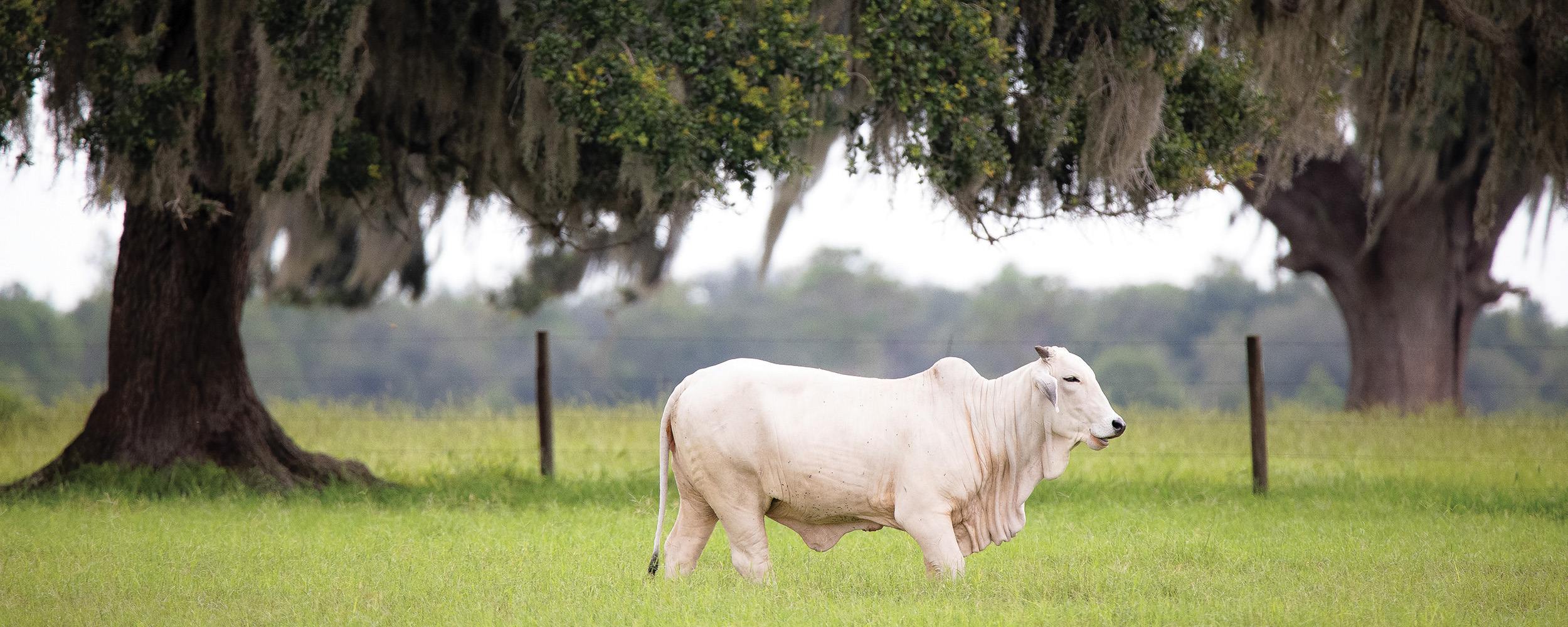
Beef Without Borders: Growing partnership between Oklahoma and Florida strengthens beef in the southern region
Friday, December 19, 2025
Media Contact: Sophia Fahleson | Digital Communications Specialist | 405-744-7063 | sophia.fahleson@okstate.edu
Whips once cracked through the thick Florida air as cowboys drove cattle out of the swamp years before Oklahoma’s red dirt pastures became home to a herd of their own today.
In April 2023, the shared legacy in cattle production came full circle as a group of Oklahoma producers and Extension specialists visited Florida to tour several cow-calf operations, hear from local producers, and learn about Florida’s beef industry.
This trip reinstated a longstanding tradition of the Oklahoma Cattlemen’s Association ranch tours. They are organized by OCA, in collaboration with Oklahoma State University Extension.
These tours create impactful learning experiences and educate beef producers and educators about the diversity of agriculture globally.
After years of ranch tours across Oklahoma, OCA approached Derrell Peel, OSU Extension livestock marketing specialist and agricultural economics professor, to organize an international ranch tour in 2015.
The inaugural international tour was in 2016, with Peel and a group of OCA members visiting tropical cattle production operations in Veracruz to the highlands in Tlaxcala, Mexico, and ending the tour in Mexico City.
A second tour followed in 2018, with Oklahoma producers visiting cattle ranches and cattle feedlots in the arid regions of Chihuahua and Durango, Mexico, and the border crossing into Santa Teresa, New Mexico.
Another tour to Canada was planned for 2020, but COVID-19 put this trip and future ones on hold.
Eager to provide this opportunity again, Peel said the OCA approached him about reinstating the ranch tours in 2023, and he pitched Florida as the next ranch tour site.
“It’s not international, but a unique environment, and I believed it would be fun for our producers,” Peel said.
Florida is historically significant as the place where cattle were first introduced in what is now the U.S. It was also a strong candidate given the interdependence of the two states in beef production.
Oklahoma is currently ranked second in the nation for beef cattle production, while Florida ranks 10th, according to Hannah Baker, OSU alum and state specialist in beef cattle and forage economics for the University of Florida Institute of Food and Agricultural Sciences Extension.
Kellie Curry Raper, agricultural economics professor and OSU Extension livestock marketing specialist, attended the Florida trip. Raper said due to differences in climate and geography, producers in each state represent different sides of the cattle industry.
“Producers from Oklahoma and Florida are having to make the same decisions, but their circumstances are different,” Raper said.
Florida producers run a different production system due to the climate and geographic location, Raper said. Many Florida producers send calves to Oklahoma and Texas at the end of June to avoid most of the rainy season, Raper said. This also reduces stress on the calves, she added.
Meanwhile, Oklahoma cattle are raised to withstand more variable conditions, Raper said.
“The cattle we produce in Oklahoma would struggle in Florida with how much hair and meat they have on them,” Raper said. “This is one of the small things while on the visit that made me say, ‘Wow.’”
Oklahoma producers and Extension educators’ visit to Florida provided more than a chance to compare operations — it also offered an opportunity to build relationships and identify ways to improve beef production.
“Everyone loved the trip, and the idea was that Oklahoma would reciprocate the generosity,” Peel said.
In September 2025, the group of UF/IFAS Extension agents flew into Oklahoma City for their visit, which was packed with tours of Oklahoma and Texas operations and visits to research facilities.
The group started their trip by visiting the OKC West Livestock Market and, after dinner, met with representatives from National Livestock and Superior Livestock Auction. Later in the week, the trip continued with a drive to Amarillo, Texas, where they began feedlot tours, starting with West Texas A&M University’s research feedlot, Baker said.
“All the feedlots welcomed us with open arms, and were more than willing to show us what a Florida calf’s life looks like after Florida,” Baker said.
The UF/IFAS Extension agents also observed Florida cattle that had been moved to each of the visited feedlots in Texas, Baker said.
“The importance of this trip for us as Extension agents from Florida to Oklahoma and Texas was to see the lives our calves have after they leave Florida,” Baker said. “We wanted to see how our cow-calf management practices in Florida affect the performance of those calves in the feedlot.”
Lauren Butler, UF/IFAS Extension livestock agent, was also one of the Florida attendees on the most recent Oklahoma trip. Butler, also a beef cattle producer, indicated Florida must place greater emphasis on the maternal part of the production system.
Hearing that feedlots and buyers are not going to pay as much for high-risk cattle reinforces the importance of shot placement, dehorning, castration and vaccinations for beef producers, Butler said.
As producers consider how management practices impact market value, collaboration and shared learning across state lines becomes increasingly essential, Raper said.
Helping producers understand that partnerships and relationships nationwide can strengthen the entire beef supply chain is a common goal of continuous improvement, she added.
“Everyone’s goal is to produce healthy calves, which then feed them into the system and the supply chain,” Raper said. “But Florida does it differently than Oklahoma. And it is important we learn from others.”
A relationship between a cow-calf producer, a feedlot manager and even the packing plant is vital for the beef industry, Baker said. The life of Florida calves does not stop when the producer puts them on the truck.
How producers care for their cattle not only affects their performance, but also their value. That is why Florida cow-calf producers need to be aware what feedlots look for, she added.
“Your steak may have come from a Florida calf that could have ended up at a Texas or an Oklahoma feedlot; its environment was different in the beginning, but the end goal is all the same,” Raper said.
These trips are pushing producers and Extension agents to better themselves, Raper said. The trips may even help them change their perspective to improve their operations, she continued.
“The bottom line of these trips are the relationships,” Butler said.
The opportunity to visit other operations — whether it is the exact product a producer hopes to put on the table or something different — allows anyone in agriculture to learn something, Raper said.
“Make it happen,” Raper said. “Go make partnerships, friends and relationships because in the end, it’s going to make our cattle industry grow for the better.”
Story by: Emma Moore | Cowboy Journal