

Prepared to Protect: OSU Extension experts activate statewide to proactively manage screwworm risks
Friday, December 19, 2025
Media Contact: Sophia Fahleson | Digital Communications Specialist | 405-744-7063 | sophia.fahleson@okstate.edu
In Oklahoma, the last recorded outbreak of the New World screwworm, the parasitic fly that once devastated livestock, pets and wildlife, was in 1976.
As the NWS advances through Mexico, Oklahoma State University Extension specialists and educators are working to ensure producers stay informed and prepared for the U.S. threat many have only heard about.
The NWS could have major effects across animal agriculture, wildlife populations and public health, said Dr. Rosslyn Biggs, OSU Extension veterinary medicine director of continuing education and beef cattle specialist. Biggs is also a veterinary clinical sciences assistant professor.
“The time to develop a relationship with a veterinarian is not during an emergency,” Biggs said. “Every animal owner needs a veterinarian on their team, not just for screwworms, but to ensure animal health and welfare every day.”
Awareness of the parasite is the first line of defense, she added.
“We want to raise awareness among producers while ensuring that we’re keeping consumers informed and reassured,” Biggs said. “This is not a food safety concern, but it is a real animal health threat. And we need eyes looking for it.”
The NWS, a zoonotic parasite, does not discriminate between species, as it can affect all mammals, including humans, she added.
Through the use of sterile male flies, the NWS was eradicated from the U.S., said Jonathan Cammack, OSU Extension livestock entomology and parasitology specialist.
“The main way we control NWS is through the sterile male insect technique,” said Cammack, who is also an OSU entomology and plant pathology assistant professor.
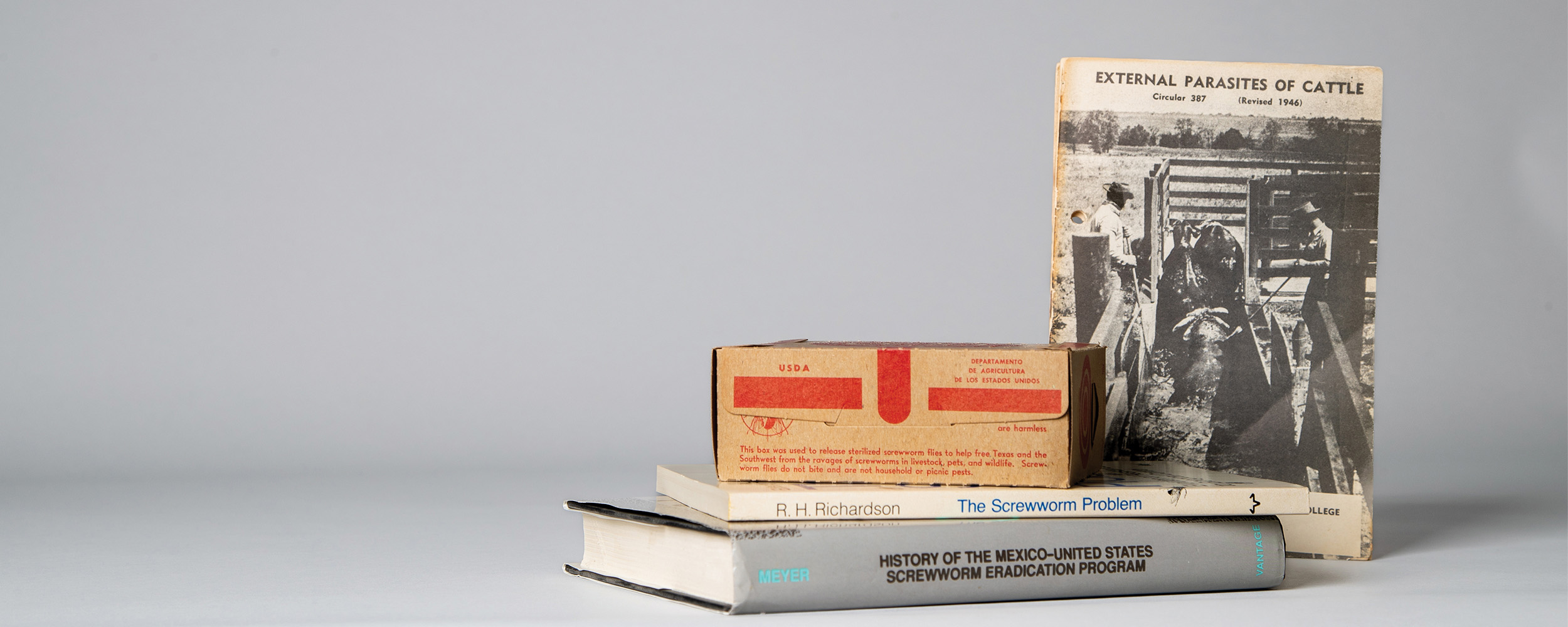
The male flies are raised in a factory and sterilized with radiation before being loaded into boxes and released by airplane, he said.
Female NWS flies only mate once in their life cycle, Biggs said. When they mate with the sterile male NWS fly, it stops the lifecycle.
Part of the challenge with the spread of the NWS is the closure of a few facilities that were used to sterilize male flies as the parasite was largely controlled, Cammack said.
The flight distance of the NWS fly varies depending on weather conditions, said Justin Talley, OSU entomology and plant pathology department head. Locally, the flight distance of the NWS is around 5 kilometers, though it usually travels until it finds its next host, he added.
The NWS fly can lay eggs near wounds as small as a tick bite, Biggs said. Once the eggs hatch, the NWS larvae feed on live tissue, Biggs added.
The scientific name of the NWS is Cochliomyia hominivorax, which translates to “man eater,” and they are part of the blow fly family, Talley said
NWS poses a serious threat to the Oklahoma agricultural economy, said Damona Doye, OSU Extension associate vice president and OSU Regents’ professor. While other sectors are affected, the beef industry is the largest sector of Oklahoma’s agricultural economy. An outbreak could restrict the movement of livestock within the state and across the nation, she added.
“We have a lot of people raising cattle, who are not familiar with this problem that was once a daily issue. We are doing everything we can to educate our county educators to help address the threat of the NWS,” Cammack said.
Through resources, communication and outreach, OSU experts are taking a proactive approach in helping Oklahoma producers detect early warning signs of the parasite.
Depending on the site of infection on an affected animal, NWS infestation could easily be missed, Biggs said.
The classic signs of NWS include maggots present in wounds, often arranged in a distinct, ridged patterned formation, Biggs said. Infected animals may show head shaking, irritation, signs of pain, depression and a strong, foul odor coming from the wound.
If left untreated, NWS can cause death in an animal within 14 days, Biggs said. Monitoring newborn animals is essential as the parasite can infect the umbilicus. Infections in newborns, if left untreated, can lead to 100% mortality, she added.
County Extension educators are receiving training and resources about the ongoing threat of the NWS, Cammack said. OSU Extension has a dedicated webpage to keep state educators and producers up-to-date on the latest information and resources.
Collection kits have been distributed to support quick response and sample submission if a suspected NWS case occurs, said Bradley Secraw, Clemson University Extension consumer horticultural agent, and former OSU Cleveland County agriculture and 4-H Extension educator.
“All 77 counties in Oklahoma have an Extension presence, and Extension educators play a key role in surveillance,” Biggs said. “They have received training on how to recognize potential cases, collect samples and submit those samples.”
Samples can be sent to the Plant Disease and Insect Diagnostic Laboratory, or PDIDL, and the Oklahoma Animal Disease Diagnostic Laboratory, or OADDL, on OSU’s Stillwater campus, which are equipped to identify NWS, Cammack said.
There are also educational opportunities for producers that county Extension educators host, Biggs said.
Extension specialists also offer information sessions geared toward producers, which are helpful in establishing community relationships, Secraw said.
“The important message for producers is do not panic and be vigilant,” Cammack said. “Look for wounds, interact with your animals and treat injuries so they are able to heal as fast as possible.”
As events with the NWS continue to change, OSU Extension remains committed to protecting Oklahoma wildlife, livestock and companion pets by providing current, relevant and timely updates.
Story by Malana Unsell | Cowboy Journal